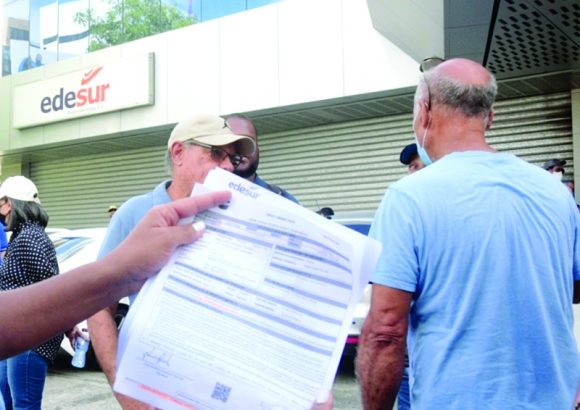
In the Dominican Republic’s capital Santo Domingo, a long-standing regulatory framework for the national electricity market continues to shape consumer protections and industry accountability, with key provisions bringing clearer obligations for power suppliers and expanded rights for residential and commercial users. At the core of this regulatory structure is Law 186-07, legislation explicitly crafted to codify user rights for electricity services and bring much-needed structure to the country’s power market. This law updates and amends the earlier 125-01 legislation, with a sharpened focus on two key areas: stiff criminal penalties for electricity fraud, and formalized definitions of binding responsibilities for both energy distribution companies and their customers.
One of the most impactful clauses of Law 186-07 is found in Paragraphs I and II of Article 93, which sets out a mandatory compensation requirement for users affected by unplanned service outages that stem from company error or systemic failures. The regulation refers to interrupted power as “unserved electricity,” and mandates that any compensation paid to affected users cannot fall below 150% of the value of the lost power at the applicable tariff rate. The full text of the regulation clarifies that distribution firms are legally required to compensate users for unserved electricity, aligned with binding service quality technical standards issued via resolution by the Superintendence of Electricity. The regulatory body is also tasked with formalizing compensation calculation rules, with the non-negotiable minimum payout threshold of 150% of the corresponding tariff written into the legislation.
To administer the compensation process, the law requires the Wholesale Electricity Market (MEM) to appoint a dedicated official to oversee unserved energy claims. This official will work alongside a Failure Committee that operates under the umbrella of MEM’s governing Coordinating Body, while the Superintendence of Electricity retains authority to set the specific procedural rules and eligibility conditions for all compensation claims.
Complementing the compensation rules laid out in Law 186-07 are consumer protection provisions for general claims contained in Decree No. 555-02, whose Articles 443 through 450 outline a full framework for user complaint processes, from initial filing to required response timelines. Article 445 explicitly guarantees users the right to have any claims or complaints formally reviewed and processed by their distribution provider, requires providers to issue written responses to all complaints, and mandates that distribution companies share a monthly summary of all received complaints with the national Consumer Protection Office.
The decree reinforces that distribution firms must adhere strictly to all procedural requirements for analyzing and responding to claims from account holders, aligned with existing regulatory standards. Critically, the regulation also protects users from service disconnection while a claim related to a disputed bill is still pending resolution, as long as the user filed the claim following official protocols.
Under the decree’s rules, users may file claims with their assigned power distribution company (known locally as EDES) via three channels: formal letter, telephone, or in-person submission. All claims are issued a unique receipt or reference number, with strict response timelines tied to the type of complaint: billing disputes must receive a response within three to 10 business days. For technical fault repairs, response and resolution windows range from 8 to 16 hours depending on the user’s geographic location; equipment replacements must be completed within two days, and meter calibration requires a maximum three-day turnaround, all without service disconnection during the process.
For users who do not receive a satisfactory resolution from their EDES in the first round of review, Article 448 grants the right to escalate the claim to the specialized Office of Consumer Protection of Electricity (Protecom), with a guarantee that power service will remain active throughout the escalation process. If a provider has already suspended service while the claim is pending, the regulation requires immediate reconnection as soon as Protecom notifies the provider of the escalated appeal.