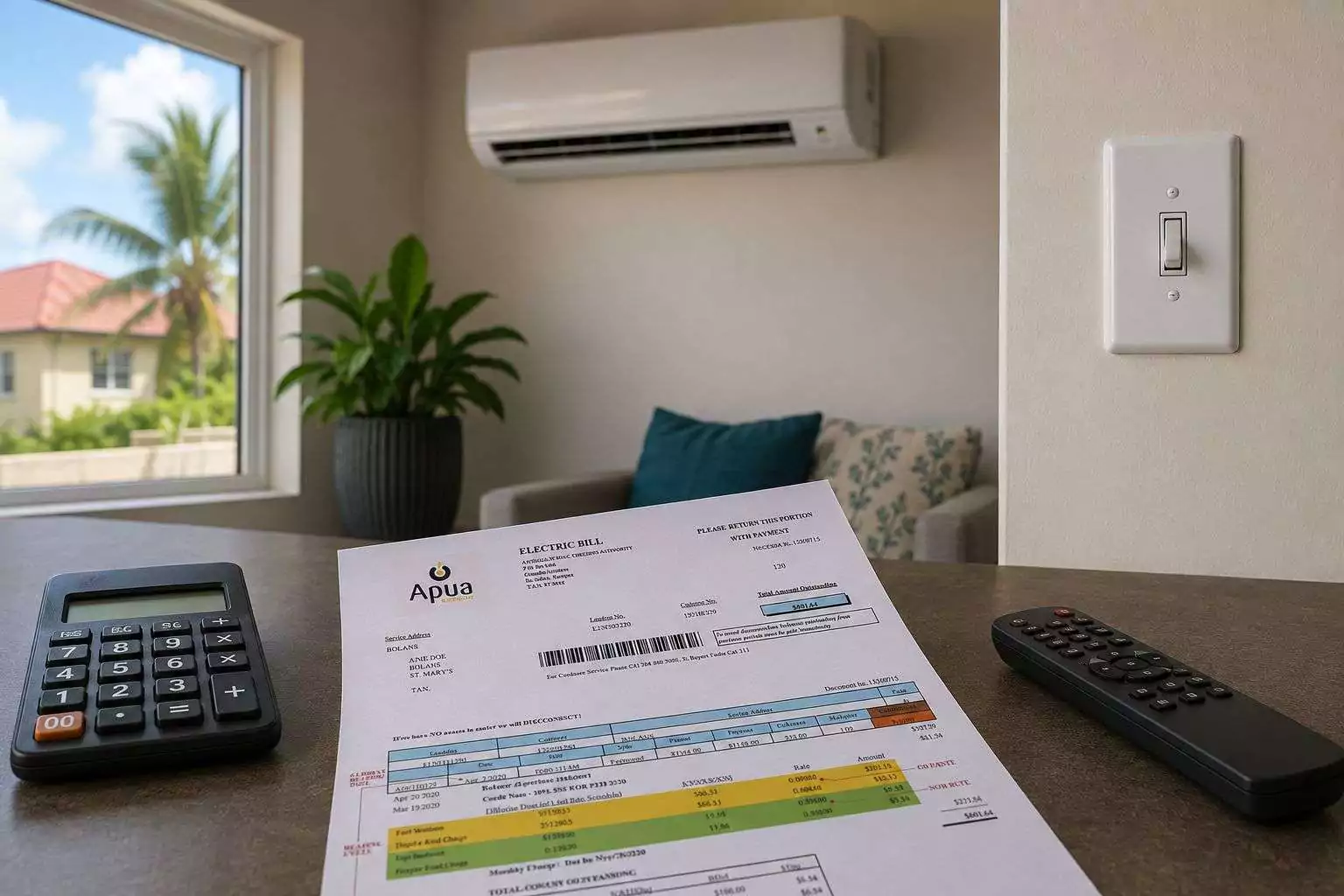
Antigua’s primary energy provider, the Antigua Public Utilities Authority (APUA), has issued a public call for reduced electricity use across residential and commercial sectors, as soaring global fuel costs and swelling local consumption combine to create unprecedented cost pressures on the island’s energy system.
Acting Financial Controller Sabrina Benjamin has urged all customers to take a proactive approach to managing their energy spending, advising households and business owners to closely track how adjustments to daily electricity usage translate to changes in monthly billing statements. To cut consumption, Benjamin outlined several accessible, high-impact steps: limiting the daily runtime of air conditioning units, unplugging and switching off electronic devices that are not in active use, and regularly reviewing billing details to spot unnecessary usage patterns.
Andre Matthias, head of APUA’s Electricity Business Unit, explained that the recent spike in local energy demand is closely tied to unseasonably high temperatures across the region. Even properties equipped with modern energy-efficient inverter air conditioning systems have seen notable jumps in consumption, Matthias noted, as residents run cooling units more frequently and for longer stretches to stay comfortable.
Melford Nicholas, Antigua’s Minister of Utilities, emphasized that collective energy conservation delivers dual benefits for both the utility and consumers. For APUA, reduced demand eases the financial strain of elevated global fuel prices, allowing the organization to stabilize operational costs. For households, cutting unnecessary energy use directly supports more manageable monthly budgeting, helping residents avoid unexpected high bills that can strain household finances.
APUA has also advised customers to reframe how they evaluate their energy bills: instead of focusing solely on the total monthly amount, consumers should compare average daily usage across billing cycles. This method makes it far easier to identify whether higher total charges stem from increased energy consumption or simply a longer billing period, which can happen when scheduled meter reading dates shift.
For customers who suspect their bill contains inaccuracies after reviewing their usage data, APUA noted that formal investigation requests can be filed in person at any APUA customer service center, where staff will review meter readings and billing records to resolve disputes.