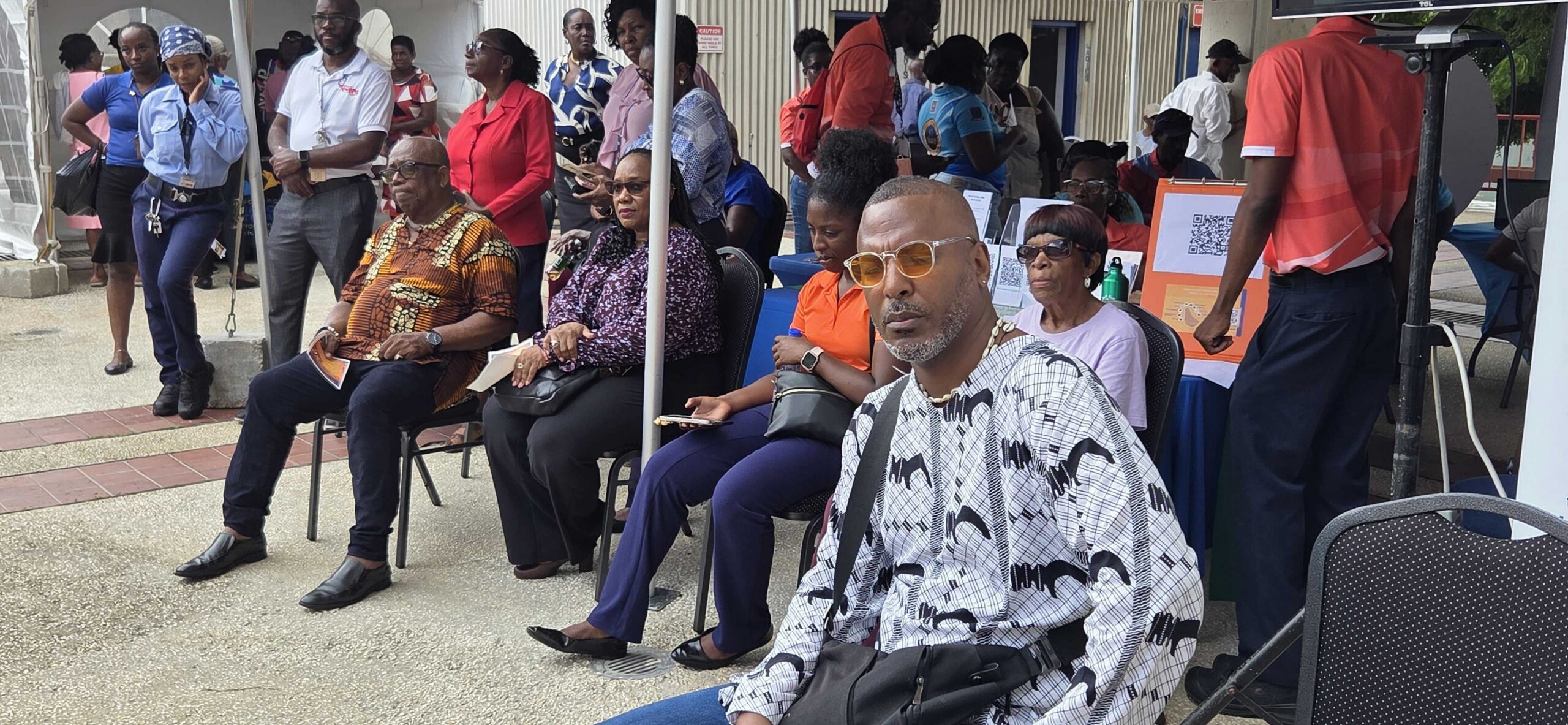
On the 89th anniversary of legendary musician Jackie Opel’s birth, a new tribute initiative launched in Bridgetown has reignited calls for a nationwide renewal of spouge, the iconic Barbadian music genre Opel pioneered half a century ago. Speaking at the official opening of *This One’s For Jackie* held at the Jackie Opel Amphitheatre, Barbados’ Heritage Minister Trevor Prescod has pushed for the country’s citizens to reclaim and rebuild this one-of-a-kind musical style, while expressing deep regret that the genre has not seen sustained development over the past 50 years. Prescod framed Opel as a revolutionary cultural figure who forged a distinct sense of national pride and identity for all Barbadians. As the minister explained, Opel’s greatest innovation was a masterful fusion of reggae and soca rhythms that produced a completely original sound, which quickly became woven into the cultural fabric of Barbadian society. “It is troubling that the music of that type – the only type that Barbados has produced in the 20th century – could not continue to be developed by our musicians,” Prescod noted. Drawing from personal memories of Opel’s career, Prescod recalled the musician’s electrifying stage charisma, which regularly outperformed even high-profile international acts. One standout memory he shared was a 1960s performance at the Globe Theatre alongside iconic American soul singer Percy Sledge, where crowd energy ran so high that audience members rushed from the back of the venue to the stage just to touch Opel. “He gave Bajans a sense of pride… that we were equally as capable as any black man anywhere in the world,” Prescod said. Beyond his national impact, Prescod highlighted Opel’s far-reaching influence across the Caribbean music scene. In the 1960s, Opel resided in Jamaica, where he collaborated with foundational reggae pioneers including Bob Marley, Peter Tosh, and the iconic ska collective the Skatalites. Drawing from his own early career experience working in inventory management at West Indies Records Limited (WIRL), the region’s prominent record-pressing plant, Prescod also shared personal recollections of Opel’s final weeks before his sudden death in 1970. Opel’s life was cut short by a fatal car crash on Bridgetown’s Bay Street, when he was mid-way through recording a new collection of tracks. “There are so many things that happened around that man’s life that I can only see him as extraordinary,” Prescod added. The tribute event was organized and hosted by the Barbados Postal Service, which spearheaded the initiative to reactivate the underused Jackie Opel Amphitheatre located on the grounds of the General Post Office. Paula Harper-Grant, the service’s marketing officer and emcee for the launch, shared that the project grew out of her own realization that she had once completely forgotten the public amphitheatre even existed. That moment of awareness led her to question whether the broader public had forgotten both the venue and the cultural trailblazer it was named for. Harper-Grant emphasized that Opel was not required to push the boundaries of Caribbean music or create a entirely new sound for his home country, but chose to do so out of his passion for cultural innovation. “We believe that Jackie deserves to be remembered, and we believe this space deserves to live,” Harper-Grant said. “We want another generation of Barbadians to walk into this amphitheatre, see that name, and ask who Jackie Opel was—and we want to be able to tell them.” The launch event featured a full program of live spoken word pieces and musical performances celebrating Opel’s legacy, with supporting partnerships from the Ministry of Labour, the Ministry of Agriculture, the Financial Literacy Bureau and the Barbados Department of Archives.