The brutal killing of 24-year-old Joy St Omer in May 2024 sent shockwaves across the small Caribbean nation of Saint Lucia, igniting widespread public anger at the persistent crisis of gender-based violence. While many mourned and the national conversation began to fade as often happens after high-profile tragedies, three young local women refused to let St Omer’s death become just another forgotten statistic.
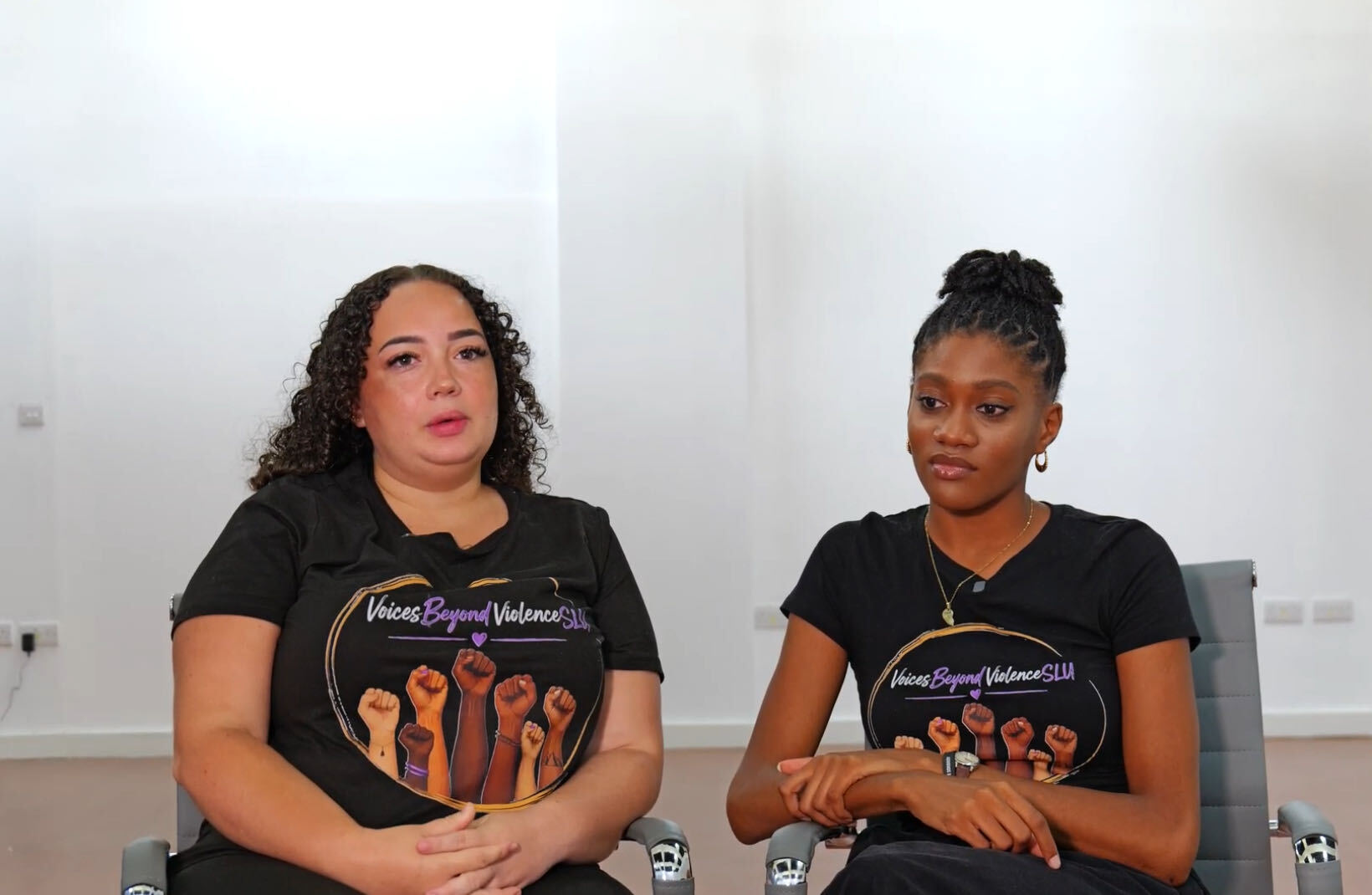
Christa McFarlene, Angel Foster, and Hasana Emmanuel channeled their collective grief and frustration into founding Voices Beyond Violence SLU, a grassroots movement dedicated to supporting women and girls affected by violence, challenging harmful cultural narratives around gender-based harm, and demanding greater systemic accountability for protecting vulnerable communities.
In an exclusive interview with local outlet *St. Lucia Times*, McFarlene and Foster detailed how the movement grew organically from a call for a peaceful gathering. Following St Omer’s killing, the trio invited concerned community members to join a vigil outside the Gros Islet Police Station, drawing hundreds of attendees including survivors of violence, young girls, local activists, and other citizens united in solidarity. The crowd gathered not only to grieve St Omer’s death but to demand that her killing spark lasting change, rather than being brushed aside by institutions and the public alike.
From the earliest days, the founders knew they wanted to build more than a one-off protest. Unlike spontaneous demonstrations that often dissolve after the initial moment of outrage, Voices Beyond Violence was designed to create a sustained, accessible space for confronting the uncomfortable reality of rampant violence against women in Saint Lucia, deliver public education on the scope of the crisis, and organize collective action for systemic change.
“We came together to grieve, as we absolutely should have,” McFarlene explained in the interview. “But we wanted to build something more than that: a space for education, a space to call out a crisis that should not be this widespread in our country.”
For Foster, a core priority of the movement is to create a safe, supportive environment where women and girls feel empowered to share their own experiences of violence without fear of judgment or retaliation, knowing their voices will be taken seriously. She noted that St Omer’s case has amplified longstanding unanswered questions about whether women who reach out for help from authorities actually receive the protection they need.
“Our goal is to build a Saint Lucia where women feel safe enough to speak out about what they are going through, to share their stories, and to know they will be heard,” Foster said.
In the months since the movement launched, new cases of violence against women have added significant emotional weight to the young activists’ work. McFarlene acknowledged that grassroots activism is extraordinarily demanding, especially as the three founders balance their organizing work with full-time jobs and personal responsibilities. Even so, she stressed that the burden of addressing gender-based violence cannot fall exclusively on the shoulders of volunteer activists.
“We have to remind ourselves that we are building one piece of the change Saint Lucia needs, but this fight is not all on our shoulders,” she said. Every action the movement takes, from social media advocacy to public marches, vigils, and protests, is intended to center survivors and their families and build toward a safer future for all Saint Lucian women.
One of the movement’s long-term core goals is to push for stronger legal and social recognition of femicide as a distinct, pressing crime, and ultimately cut the number of women killed by gender-based violence across the country.
A key cultural issue the organizers are working to challenge is the pervasive problem of victim blaming, a harmful attitude they say is deeply embedded in many sectors of Saint Lucian society. McFarlene explained that blaming victims often feels “safer” for many people than confronting perpetrators, especially in cases where community members may fear retaliation or personal connection to the accused. Foster added that society often creates an unrealistic standard of the “perfect victim,” requiring survivors to fit narrow expectations about their behavior before and after abuse to be deemed worthy of support.
She argued that a range of social factors, including cultural background, social status, and personal popularity, often skew how victims and perpetrators are treated in public discourse, allowing powerful abusers to avoid accountability while survivors are judged and sidelined. The movement explicitly pushes back against harmful narratives that question what a victim was wearing, why they did not leave an abusive relationship earlier, or what they could have done to prevent their own harm.
McFarlene tied these attitudes to the common psychological “just-world” bias, where people seek to explain tragedy by blaming the victim, in order to convince themselves that harm could never happen to them.
While the movement’s primary focus is on supporting women and girls, who are disproportionately affected by gender-based violence in Saint Lucia, the co-founders emphasized that they recognize men and boys also experience sexual and other forms of violence, and that all survivors deserve support and justice.
Even though Voices Beyond Violence is only a few months old, Foster said the movement has already shifted the national conversation around gender-based violence. “I’ve seen a clear change in how people talk about this issue,” she said. “Now more people are holding perpetrators, abusers, and the systems that fail victims accountable.” Social media has been a particularly powerful tool for the movement, with posts sparking widespread public discussion and being shared across Saint Lucian communities.
Even so, Foster refuses to call early shifts in conversation a success, as long as women continue to be killed by gender-based violence across the country. “Voices Beyond Violence will never stop this conversation, and we will never stop fighting for justice for women, girls, and all victims,” she said.
For McFarlene, one of the most meaningful early achievements of the movement has been creating spaces for collective grief and community solidarity that did not exist before. She recalled a vigil held at the site where St Omer was killed, where hundreds of people gathered with flowers and candles, sang hymns, and shared memories of the 24-year-old.
The overwhelming public response to the movement has convinced the founders that a large share of the Saint Lucian public wants to see real change, but simply lack accessible opportunities to get involved and organize. “We already have so many people who care about this issue in Saint Lucia,” McFarlene said. “What we need now is coordinated mobilization to turn that care into lasting change.”