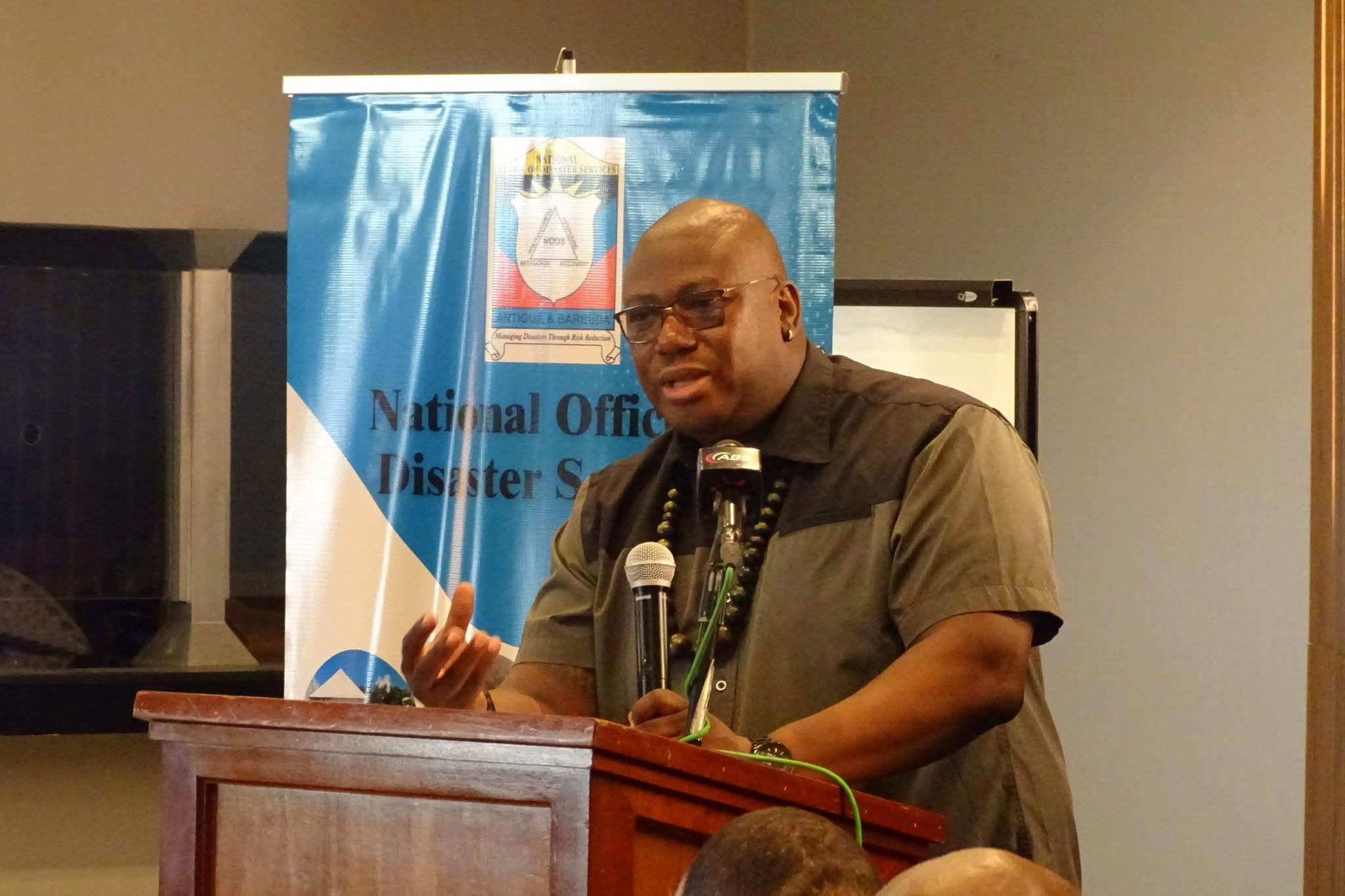
Top disaster management policymakers and practitioners from six Eastern Caribbean territories gathered in Antigua last week for a landmark workshop focused on shoring up cross-border cooperation for emergency response, hosted by the Caribbean Disaster Emergency Management Agency (CDEMA).
Held August 24–25, 2026 at the Royalton Antigua Resort, the two-day working meeting brought together Permanent Secretaries for disaster management and national disaster coordinators from Anguilla, Antigua and Barbuda, the British Virgin Islands, Montserrat, St. Kitts and Nevis, and Sint Maarten. They were joined by technical specialists and leadership from CDEMA’s central coordinating unit to advance the development of the Eastern Sub-Regional Disaster Emergency Response Operational Unit (SRDEROU), a coordinated framework designed to speed up collective action when climate and geophysical disasters strike.
In opening comments, Sherrod James, Director of Antigua and Barbuda’s National Office of Disaster Services (NODS), underscored the urgent need for deeper integration across the sub-region. As climate change drives more intense and unpredictable extreme weather events, James noted that individual small island states lack the capacity to manage large-scale disasters alone, making coordinated cross-border action non-negotiable for saving lives and protecting communities.
Hon. Kiz Johnson, Minister of State in Antigua and Barbuda’s Ministry of Social and Urban Transformation, echoed this priority in her keynote address, pointing to the Eastern Caribbean’s unique status as one of the world’s most disaster-vulnerable regions. Johnson stressed that national governments bear a core responsibility to equip local and regional disaster management bodies with the sustained financial, human, and technical resources they need to operate effectively. She added that targeted regional training initiatives like this workshop deliver critical actionable insights that help practitioners refine their roles, improve cross-agency coordination, and strengthen end-to-end planning, preparedness, and response systems for future events.
Over the course of the workshop’s working sessions, participants collaborated to map out core strategic priorities and draft concrete operational measures across a range of high-priority functional areas. These included streamlined information sharing and rapid disaster damage assessment, expanded adoption of Geographic Information Systems (GIS) and cutting-edge emerging technologies such as satellite imagery, drone mapping, and artificial intelligence, interoperable emergency telecommunications networks, standardized logistics and warehousing protocols, cross-border resource sharing systems, standardized response unit activation protocols, expanded emergency operations centre capacity, and coordinated governance through the Sub-Regional Coordination Centre.
A centerpiece of the meeting was the finalization of the Eastern SRDEROU 2026–2031 Plan of Action and accompanying Logical Framework, a five-year roadmap that will guide the sub-region’s collective emergency response work moving forward. Additional working sessions covered sustainable financing mechanisms for the operational unit, standardized program management practices, monitoring and reporting protocols, clear assignment of cross-agency and cross-national responsibilities, and consensus on near-term next steps to implement the finalized plan.