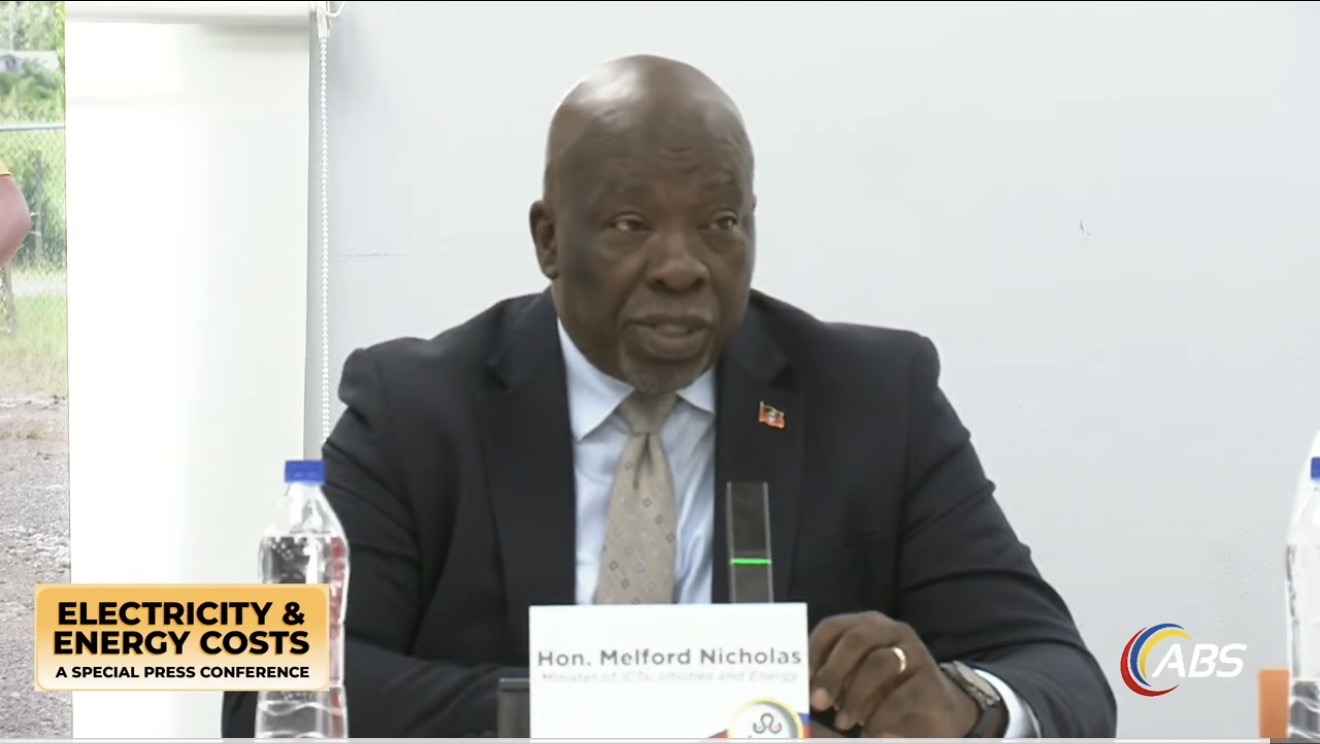
Antigua and Barbuda’s Utilities Minister Melford Nicholas has announced plans to initiate a review of Barbuda’s longstanding preferential electricity tariff, a move that comes as the Antigua Public Utilities Authority (APUA) advances projects to expand and upgrade the island’s power infrastructure to meet surging post-development demand.
For decades, Barbudan consumers have operated under a separate, more favorable tariff structure than their counterparts on the neighboring main island of Antigua. Nicholas, however, has framed the existing arrangement as outdated and unfair to Antigua’s ratepayers, arguing that the current split regime creates an inequitable burden across the twin-island nation. “The way that the tariffs work in Barbuda is a little different to Antigua, and it’s not equitable as far as consumers here in Antigua are concerned,” Nicholas explained, noting the current model is anachronistic even as he acknowledged Barbuda’s unique geographic and economic circumstances set it apart from the main island.
Before any adjustments are finalized, Nicholas emphasized that the process will follow a deliberate, consultative path: he plans to first bring the proposal before the national Cabinet for discussion, then engage directly with the Barbuda Council and local residents to gather input. No fixed timeline has been set for the review, with the minister stressing that meaningful stakeholder outreach will take priority over a rushed decision.
The review coincides with a pressing need to expand Barbuda’s electricity capacity, driven by growing residential development across the island following recent reforms to land tenure rules. APUA Electricity Business Unit Manager Andre Mathias explained that power delivery to Barbuda inherently carries higher costs than in Antigua: all equipment and fuel must first be shipped to Antigua, then transferred to smaller vessels for transport to Barbuda, adding logistical expenses. Additionally, Barbuda’s grid relies almost entirely on more costly diesel fuel for generation, while some of Antigua’s generating units use lower-priced heavy fuel oil, further widening the cost gap between the two islands.
Barbuda first launched its hybrid renewable energy system years ago, pairing a 741-kilowatt solar array with an 800-kilowatt-hour battery storage facility to cut reliance on fossil fuels. When the system was installed, total electricity demand across Barbuda sat just above 500 kilowatts, enough for the solar and battery infrastructure to fully power the island during daylight hours and allow diesel generators to be shut down completely. But rapid population and economic growth has pushed peak demand to more than 800 kilowatts, outstripping the capacity of the existing renewable system and forcing diesel generators to run during daytime hours.
To address this growing demand, APUA is moving forward with an expansion of the island’s power network, and the project will continue to prioritize hybrid renewable energy, with financial and technical support from the International Solar Alliance. “We’re going to have to expand, and we’re going to have to expand with a hybrid arrangement,” Nicholas said. “It works, and we want to have more of it, not less of it.”
In addition to expanding renewable generation capacity, APUA has already completed work to move Barbuda’s main transmission line serving the capital Codrington underground. The upgrade is designed to reduce the risk of catastrophic, widespread outages during hurricane season, a critical resilience improvement for the hurricane-prone Caribbean island. Nicholas noted that burying key grid infrastructure aligns with APUA’s long-term strategy to build a more robust, climate-resilient electricity network across the country.