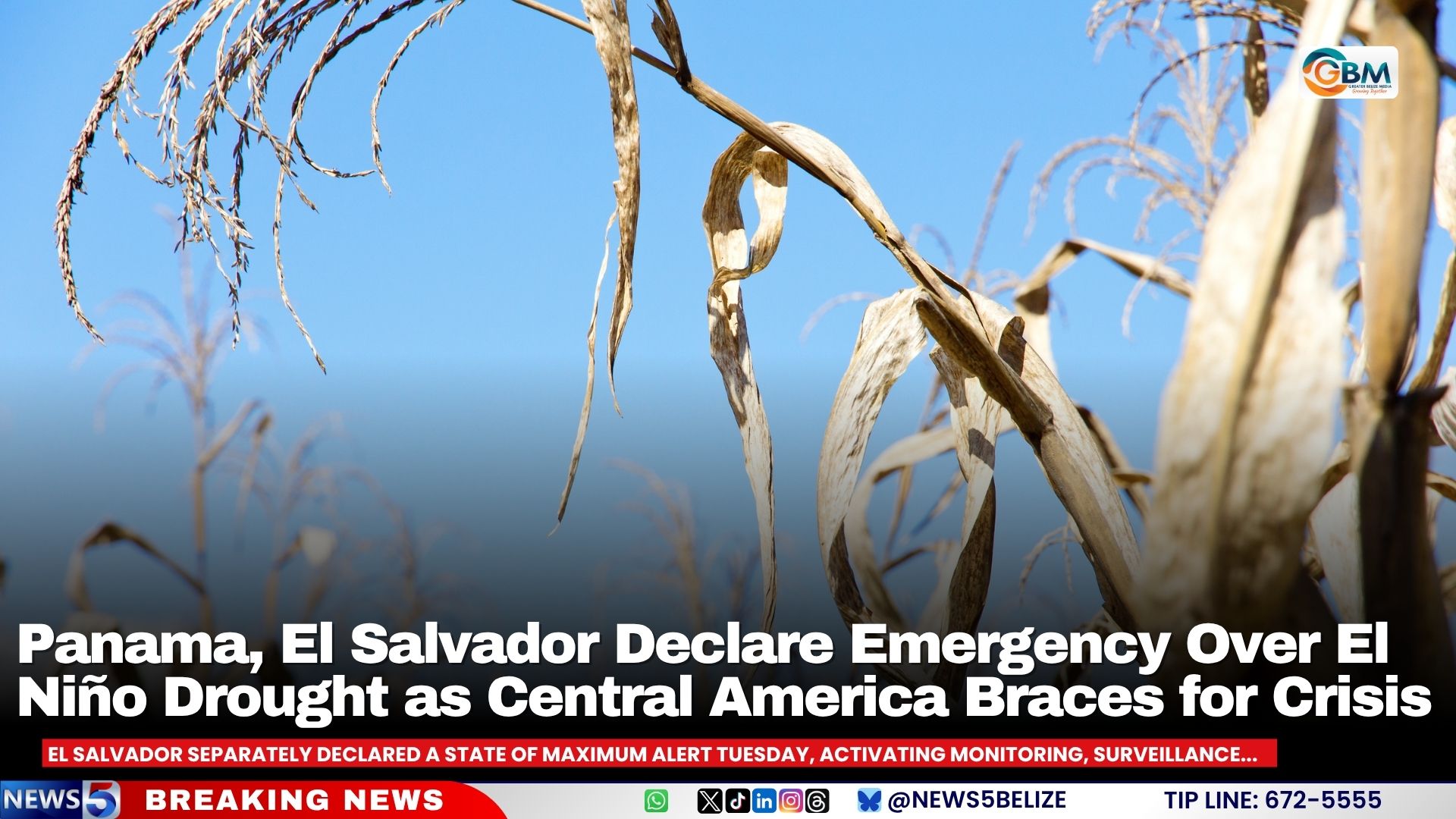
As an unprecedentedly intense El Niño event drives a crippling regional drought, three Central American countries have formally declared national emergencies, triggering urgent preparations for a humanitarian and economic crisis that experts warn could extend well into 2027.
On August 26, 2026, Panama joined Honduras and El Salvador in activating emergency protocols to respond to the drought, which has already forced dramatic cuts to shipping traffic through the critical Panama Canal and destroyed thousands of hectares of staple crops across the isthmus. Panama’s Interior Minister Dinoska Montalvo confirmed that the emergency declaration will unlock rapid-response resources for government agencies, allowing them to pre-position supplies, adjust water management systems, and support agricultural communities whose harvests have already been severely damaged by the lack of rainfall.
Hours after Panama’s announcement, El Salvador’s civil protection authority declared a nationwide state of maximum red alert for both meteorological and agricultural drought, activating expanded real-time monitoring networks and mobilizing aid teams to reach vulnerable communities already facing water and crop shortages. The Salvadoran agriculture ministry has already rolled out emergency food assistance programs for rural households that rely on rain-fed farming, as unseasonably dry conditions have wiped out nearly a third of the country’s seasonal staple crops.
El Niño, a cyclical climate pattern defined by elevated surface temperatures across the central and eastern equatorial Pacific, alters global wind and precipitation cycles to produce extreme weather events around the world. While the phenomenon occurs on a two-to-seven-year cycle, the 2026 event is on track to rank among the most intense recorded in modern history, and is already a key driver behind forecasts that 2026 will be the hottest global year on record.
Much of the affected region falls within the Central American Dry Corridor, an arid zone stretching across Honduras, Nicaragua and parts of El Salvador and Panama that has long been identified as one of the most climate-vulnerable regions in the Western Hemisphere. Honduras, the first country to declare an emergency, has placed 80 percent of its national territory on drought alert, while the Panama Canal has already been forced to cut daily transits by more than 30 percent due to critically low reservoir levels, creating a backlog that has rippled through global supply chains.
As the crisis deepens, experts are sounding the alarm for neighboring Belize, which has yet to declare a formal emergency but is already facing early signs of severe drought. Climatologist Dr. Cedric Van Meerbeeck, a researcher at the Caribbean Institute for Meteorology and Hydrology, warned that the full impact of the El Niño event will not be felt until the region’s regular dry season begins. With already below-average rainfall leaving reservoirs and soil moisture at depleted levels heading into the dry months, the impact of the drought is expected to compound over time. Northwest Belize has already been flagged as a drought hotspot through September 2026, and Van Meerbeeck noted that small-scale farmers without access to irrigation or adaptive measures such as mulching could face reduced yields well into 2027, prolonging regional food insecurity risks.