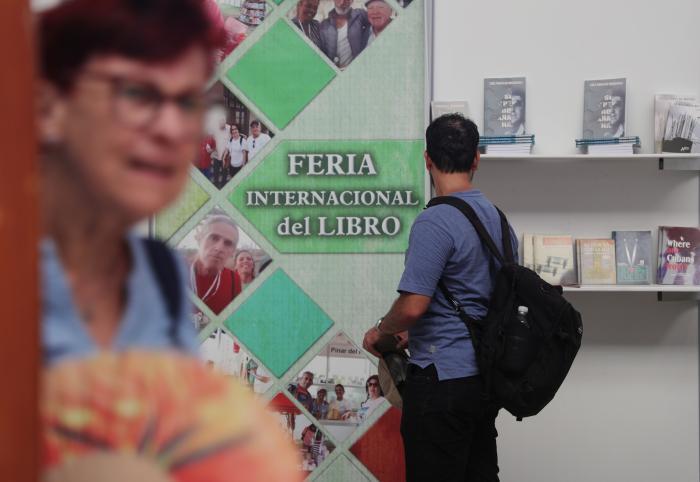
For passionate book lovers everywhere, there are few joys greater than arriving home after a book event with an armful of new reads. Even when this haul only lengthens the already interminable to-read pile and eats into the shrinking free space on bookshelves, the thrill is unmatched. The inevitable process of curating which volumes stay and which must be set aside always comes with a small, bittersweet sting, but it is a small price to pay for the magic of new stories.
This year marked the 34th iteration of the Havana International Book Fair, and for long-time attendee Rafael Mena Brito, this edition brought a heavier haul of books than any he could recall from past events. While shifting personal selection criteria played a small role, Brito credits the far wider range of titles available to attendees this year — a notable achievement given the significant economic and infrastructural challenges Cuba currently navigates.
It is impossible to ignore the shortcomings of this year’s venue change: the iconic historic site of the San Carlos de la Cabaña Fortress, which has long hosted the fair, offered amenities that the new location at the Cultural Station on Línea and 18th Streets could not match. Attendees raised reasonable questions about event quality amid cramped space, oppressive August heat, widespread power outages, and persistent public transportation disruptions. Even with these barriers, however, the core spirit of the literary celebration shone through.
For Brito, this year’s edition only reinforced a long-held belief he shares with friends: a true reader will always leave a book fair with a special find, no matter the circumstances. Unexpected treasures turn up at the most unassuming booths, and that element of happy surprise is impossible to replicate anywhere else. This year’s success was no accident: it was made possible by tireless work from Cuban cultural institutions, breakthrough progress from the country’s Territorial Publishing System (SET), and vital solidarity from partner nations across the region.
International solidarity took tangible, accessible forms for fair attendees. Thanks to the Rosa Luxemburg Foundation’s Mexico office, visitors could claim free copies of *Selected Pages of Rosario Castellanos*, published by Casa de las Américas. Mexican authorities also offered Cuban youth a free 25-volume collection celebrating 25 years of cultural collaboration, presented by Mexican ambassador to Cuba Miguel Ignacio Díaz Reynoso and Fondo de Cultura Económica director Paco Ignacio Taibo II, at the request of Mexico City Mayor Claudia Sheinbaum.
This collection opened new doors for readers to engage with iconic Latin American and Caribbean voices: from the meditations on solitude, grief, and love in Colombian poet Piedad Bonnett’s work, to the vivid storytelling of Nobel Prize winner Miguel Ángel Asturias in *Week-end in Guatemala*. The lineup also included legends such as Gabriel García Márquez, Roberto Fernández Retamar, Eduardo Galeano, and Amparo Dávila, among dozens of other celebrated writers.
Cuban publishing houses also delivered standout offerings this year. Leading imprints Letras Cubanas and Arte y Literatura brought back their popular *Biblioteca del Pueblo* collection, and multiple titles sold out entirely, a clear marker of the collection’s enduring popularity among Cuban readers. For readers seeking more unique finds at accessible price points, Havana’s iconic La Manigua bookstore set up a week-long pop-up at the fair, selling well-bound secondhand titles at lower prices than its permanent location.
Regional publishing houses also turned out in force: Pinar del Río’s Ediciones Loynaz and Holguín’s La Luz marked the 26th anniversary of their participation in the fair by bringing more than 350 new titles to the capital, drawing huge crowds of attendees. While print runs remain smaller than they were in pre-crisis years, and popular releases often sell out within hours of launching, the mere act of transporting new works from across the country to Havana required an extraordinary collective effort from publishing teams that cannot be overstated.
Make no mistake: this was a difficult year for the Havana International Book Fair, marked by systemic challenges that disrupted operations. Power outages compromised core services like digital payment processing, and coordination between publishing stakeholders left room for improvement. Organizers will no doubt draw lessons from this year’s experience at Línea and 18th Streets to address these gaps in future editions.
Even so, the 34th Havana International Book Fair could not be canceled. It was a necessary celebration for established award-winning Cuban authors, for emerging writers seeing their first work in print, and most of all, for the reading public that turns out year after year. Against a backdrop of national difficulty, this year’s fair was more than a book sale: it was a much-needed respite, a breath of fresh life carried between the covers of books, and a chance to keep dreaming of what comes next.