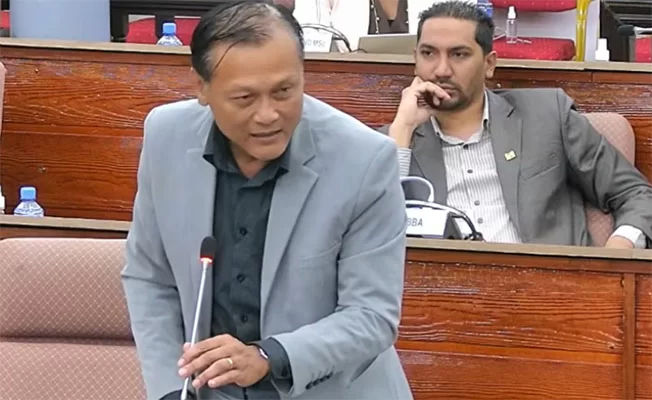
A senior Surinamese coalition parliamentarian has sounded the alarm over deep-seated mismanagement and financial collapse at the country’s state-owned fisheries infrastructure company Cevihas N.V., calling on the administration to step in immediately to clean up the troubled enterprise.
Raymond Sapoen, a member of the National Assembly (DNA) from the ruling National Democratic Party (NDP), outlined the scope of the crisis in a parliamentary address Tuesday, stating that years of improper governance have left Cevihas – the Central Fisheries Ports Authority of Suriname – saddled with an estimated $6 million to $8 million in accumulated debt over the past five to seven years. Sapoen, who has previously raised red flags about issues at the parastatal, told the legislature that conditions have only deteriorated sharply since he first flagged problems, leaving the company mired in a full-blown financial crisis with no visible path to pay down its massive liabilities on its own.
Beyond the crippling debt, Sapoen levelled sharp criticism at widespread failures in Cevihas’ core services to the national fishing sector. He detailed multiple critical shortcomings, ranging from non-compliance with critical safety regulations to inadequate sanitation, poor hygiene standards, and crumbling physical infrastructure that is supposed to support port operations for domestic and international fishing vessels. Notably, the lawmaker revealed that even the Venezuelan government has publicly raised dissatisfaction with Cevihas’ service quality. Approximately two weeks ago, Sapoen said, the Venezuelan embassy conveyed its discontent to Suriname’s government through official channels. The ongoing dysfunction, he argued, is damaging the international reputation of Suriname’s entire fishing industry, harming both domestic commercial interests and cross-border partnerships.
Sapoen also drew attention to unfair and unstable working conditions for Cevihas employees, noting that workers face deep uncertainty over their pension benefits and are subject to what he described as biased, inequitable personnel policies. In a striking rebuke of company leadership, he accused top executives of living in luxury while rank-and-file staff confront persistent job and benefit insecurity, a gap he called unacceptable for a state-owned enterprise meant to serve public interests.
After cataloging the financial, operational, and workplace failures, Sapoen concluded that the company is suffering from systemic severe mismanagement and financial misrule, and the time for incremental fixes has passed. He is calling for a full, comprehensive audit of the company to uncover all wrongdoing and lay the groundwork for restructuring. The Surinamese government did not provide a substantive response to Sapoen’s allegations during Tuesday’s question period, and has committed to delivering a formal answer to parliament on Thursday.