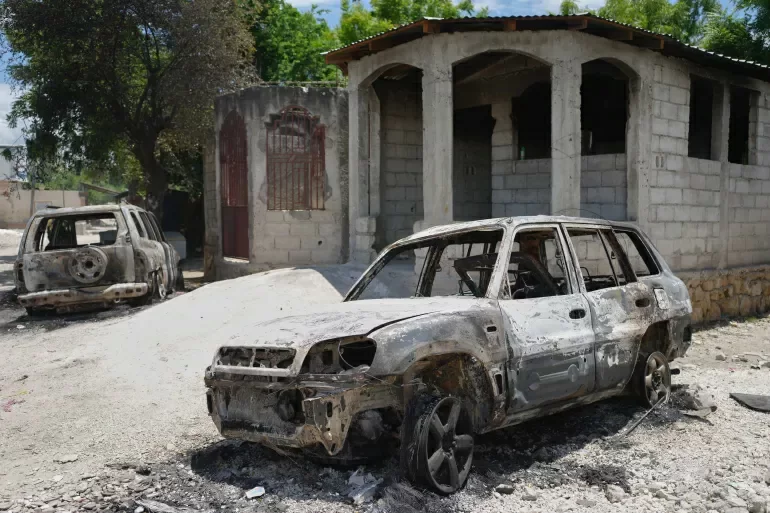
Haiti has been plunged into renewed chaos by a fresh, alarming surge of gang violence, which has left at least 30 people dead following a coordinated assault on an agricultural community in Kenscoff, a rural area located just south of the crisis-hit capital Port-au-Prince. The attack, carried out by a powerful alliance of armed gangs, comes at a fragile moment: the Caribbean nation is currently preparing to hold its first general election in more than a decade, a vote that many Haitians have hoped would kickstart a long-awaited transition to stability after years of political and social collapse.
Jean Massillon, mayor of Kenscoff, confirmed that armed assailants unleashed widespread destruction during the raid, setting residential homes ablaze and gunning down residents indiscriminately. Targets of the attack extended beyond private homes to include a local church and the personal residence of Jean William Pape, a prominent Haitian public health expert. Massillon explicitly identified the coalition-leading gang Viv Ansanm as the party responsible for the violence. Notably, the United States government formally designated Viv Ansanm as a foreign terrorist organization last year, highlighting the group’s global notoriety as a violent non-state actor.
The security landscape across Haiti remains deeply critical, with independent estimates confirming that armed gangs currently control approximately 70 percent of Port-au-Prince, the country’s capital. Kenscoff holds particular strategic value for gangs, as it overlooks key access routes to Petion-Ville, a district that hosts multiple foreign embassies, upscale hotels, and Haiti’s temporary seat of government. This geographic importance has made the area a repeated target for gang incursions and territorial takeovers as groups fight to expand their influence across the country.
International efforts to curb gang violence have so far failed to reverse the country’s downward spiral. A UN-backed multinational anti-gang security task force, which is projected to eventually reach 5,500 personnel, has not yet reached full operational capacity, leaving security forces stretched thin across the country. United Nations data confirms that gang-related violence has already displaced more than 1.5 million Haitians nationwide since the crisis escalated. Despite ongoing diplomatic and security support from the international community, violence continues unabated: more than 3,100 people have been killed and over 1,100 injured in gang-related conflict in the first half of 2024 alone.
In an official response to the Kenscoff attack, the office of Haitian Prime Minister Garry Conille issued a strong condemnation of the violence, reassuring the public that national security forces have been placed on high alert and additional reinforcements are being deployed to the area. “Kenscoff will not be abandoned,” the prime minister’s statement read. “Government authority will be restored without weakness and without delay.”
Meanwhile, Haitian authorities have begun processing voter registration for the general election scheduled for January 2025. But independent election and security experts have issued stark warnings that the ongoing security crisis has created conditions far too dangerous to hold a free, fair, and safe vote. The persistent wave of gang violence and systemic political instability has emerged as one of the largest barriers to the democratic process, dashing many Haitians’ hopes of breaking the country’s cycle of collapse and building long-term national stability.