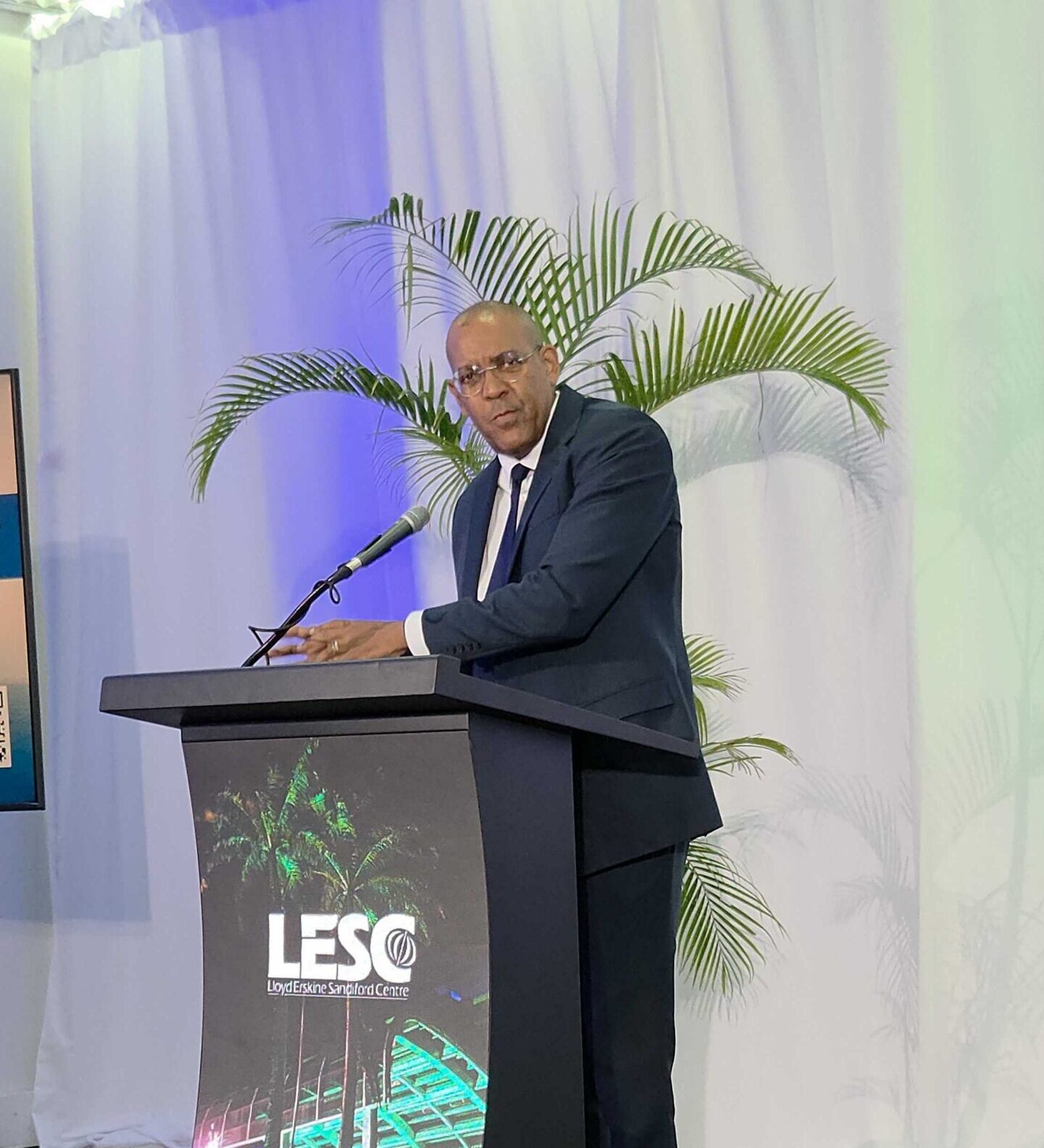
For a small island nation like Barbados, decades of heavy reliance on foreign-sourced fossil fuels have created a critical economic vulnerability that leaves the country exposed to sudden, devastating shifts in global energy markets, the country’s top energy official has warned. Speaking at a national public forum focused on the state of Barbados’ energy sector held at the Lloyd Erskine Sandiford Centre, Minister of Energy, Business Development and Consumer Affairs Kerrie Symmonds outlined how ongoing global geopolitical instability – particularly disruptions threatening key oil transit chokepoints like the Strait of Hormuz – can trigger extreme price volatility that directly passes through to household and business costs across the country.
With more than 90% of Barbados’ total fossil fuel demand met through imports, the country has no buffer to absorb sudden crude price swings, which pose a persistent threat to the island’s overall economic stability. Symmonds clarified that supply chain access has not been the immediate challenge for Barbados; instead, the core risk lies in the country’s full exposure to unpredictable global cost fluctuations. “The potential for geopolitical instability to drive up international oil prices and consequently the cost of energy to Barbadians is at the core of our concerns. We are in a very vulnerable situation with respect to that, and it is a vulnerability that the government of Barbados will not ignore,” he told attendees.
To underscore the scale of the risk, Symmonds shared official import data showing a dramatic surge in national energy spending over the past five years. Using 2019 as a pre-crisis baseline, the country spent $728 million on imported fossil fuels that year. But global market shocks triggered by international events sent that figure skyrocketing in subsequent years. The 2022 Russian invasion of Ukraine, a conflict entirely outside of Barbados’ control, caused import costs to jump 54% year-over-year, pushing the annual fossil fuel import bill to a staggering $1.123 billion.
Even after global oil prices retreated from their 2022 peaks, costs have remained far above pre-crisis averages. In 2023, total fossil fuel import spending hit $1.1 billion – 40% higher than 2019 levels – and in 2024, expenditures stayed at $951 million, which is still 31% above pre-conflict benchmarks. Symmonds emphasized that these elevated energy costs do not stay isolated to the energy sector; they ripple through every corner of the domestic economy, pushing up overall inflation, straining the country’s limited foreign exchange reserves, and driving up the cost of living for all Barbadians. “So we see the pattern of surging energy prices impacting everything. And quite frankly, there’s a knock-on effect as we all in here know across our economy with respect to the cost of electricity, with respect to the cost of transportation… and most importantly with respect to the question of the cost of living for all of the consumers in Barbados,” he said.
When global crude prices spiked sharply earlier this year, jumping from roughly $60 per barrel in January to more than $106 per barrel by March, the Barbadian government implemented emergency short-term measures to cushion the blow for consumers. For the first time in the National Energy Company’s history, officials launched an oil hedging program to lock in fixed prices for imports. The initial hedge was set at $92 per barrel, which protected domestic consumers from the worst of the market peak over a three-month period. A follow-up hedge was secured at $78 per barrel, continuing to shield Barbadian consumers even as global benchmark prices stayed around $93 per barrel.
But while the hedging program delivered temporary relief, Symmonds stressed that short-term financial tools cannot fix the structural vulnerability created by dependence on imported fossil fuels. “The lesson I think is very straightforward. We cannot control geopolitical events. But what we can do is to strengthen our resilience to their consequences,” he said. Looking ahead, the minister argued that the only path to long-term energy price stability and permanent protection from unpredictable external shocks is accelerating the transition to locally generated renewable energy, upgrading the country’s national power grid infrastructure, and rolling out widespread national energy conservation initiatives. “The larger issue facing the energy sector in Barbados still has to be confronted. And that issue turns on the question of stability. It turns on the question of predictability. And frankly, ladies and gentlemen, it turns on the question of us being able to ensure that our consumers get the lowest, most practical rate,” Symmonds added.