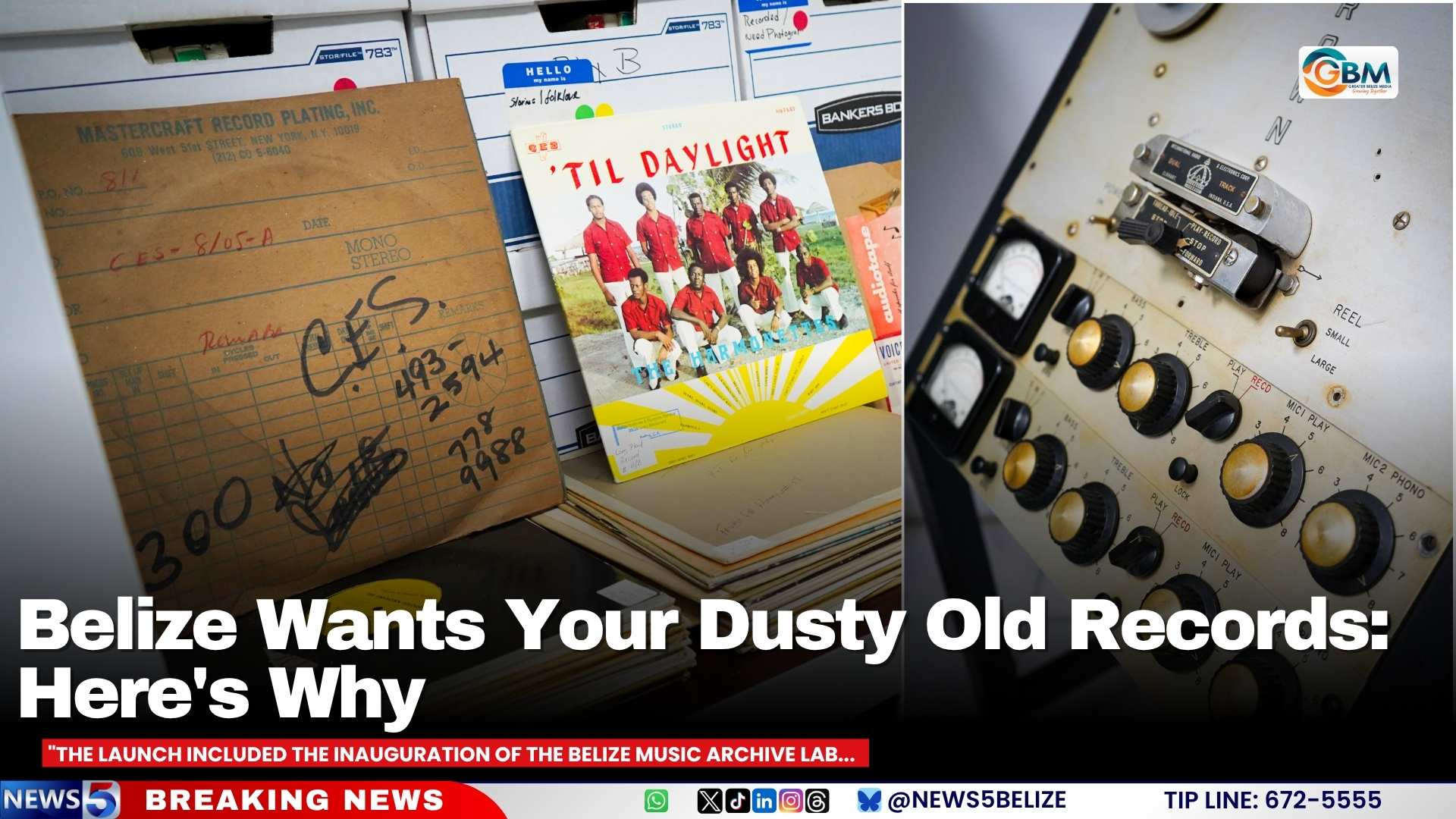
In a landmark move to safeguard its unique cultural legacy, the Central American nation of Belize has officially unveiled the Belize Music Archive, a groundbreaking national initiative focused on preserving the country’s at-risk recorded musical history for future generations. Spearheaded by the country’s National Institute of Culture and History (NICH), the project combines public infrastructure investment with a nationwide call for community participation to recover audio materials that have long been held in private hands.
A core component of the new initiative is the opening of the purpose-built Belize Music Archive Lab, a specialized workspace hosted at the Belize Archives and Records Service (BARS) facility. The lab is equipped to handle four key tasks that address the growing threat of degradation to analog audio materials: large-scale digitization, long-term climate-controlled preservation, professional restoration of damaged recordings, and comprehensive academic documentation of each item’s cultural and historical context. To grow the archive’s initial collection, NICH is actively encouraging Belizean households and private collectors who hold rare recordings, personal live performance tapes, or historical family audio materials to share their items for processing. Once digitized, original materials will be returned to owners, with digital copies added to the public national archive for preservation and public access.
During the official launch ceremony, Belize’s Minister of Culture Francis Fonseca also introduced a new formal designation: National Recording Treasures of Belize. This official recognition will be granted to audio recordings that demonstrate exceptional cultural, historical, artistic, or social value to the nation, shining a spotlight on works that capture the full diversity of Belize’s cultural identity. The first cohort of 100 recordings set to receive this designation will be unveiled before the end of 2026, a collection intentionally curated to represent generations of Belizean artists spanning every major community, language group, musical genre, and cultural tradition across the country. Moving forward, the Belize Music Project will take over annual stewardship of the designation program, with plans to add at least 10 new National Recording Treasures to the roster each year starting in 2027.
Cultural heritage officials note that many of Belize’s most iconic musical works and grassroots recordings have never been formally preserved, with analog formats like cassette tapes, vinyl records, and reel-to-reel recordings degrading steadily in private storage. The new archive addresses this gap by creating a centralized, professionally managed repository that ensures these irreplaceable pieces of national history will not be lost to time.