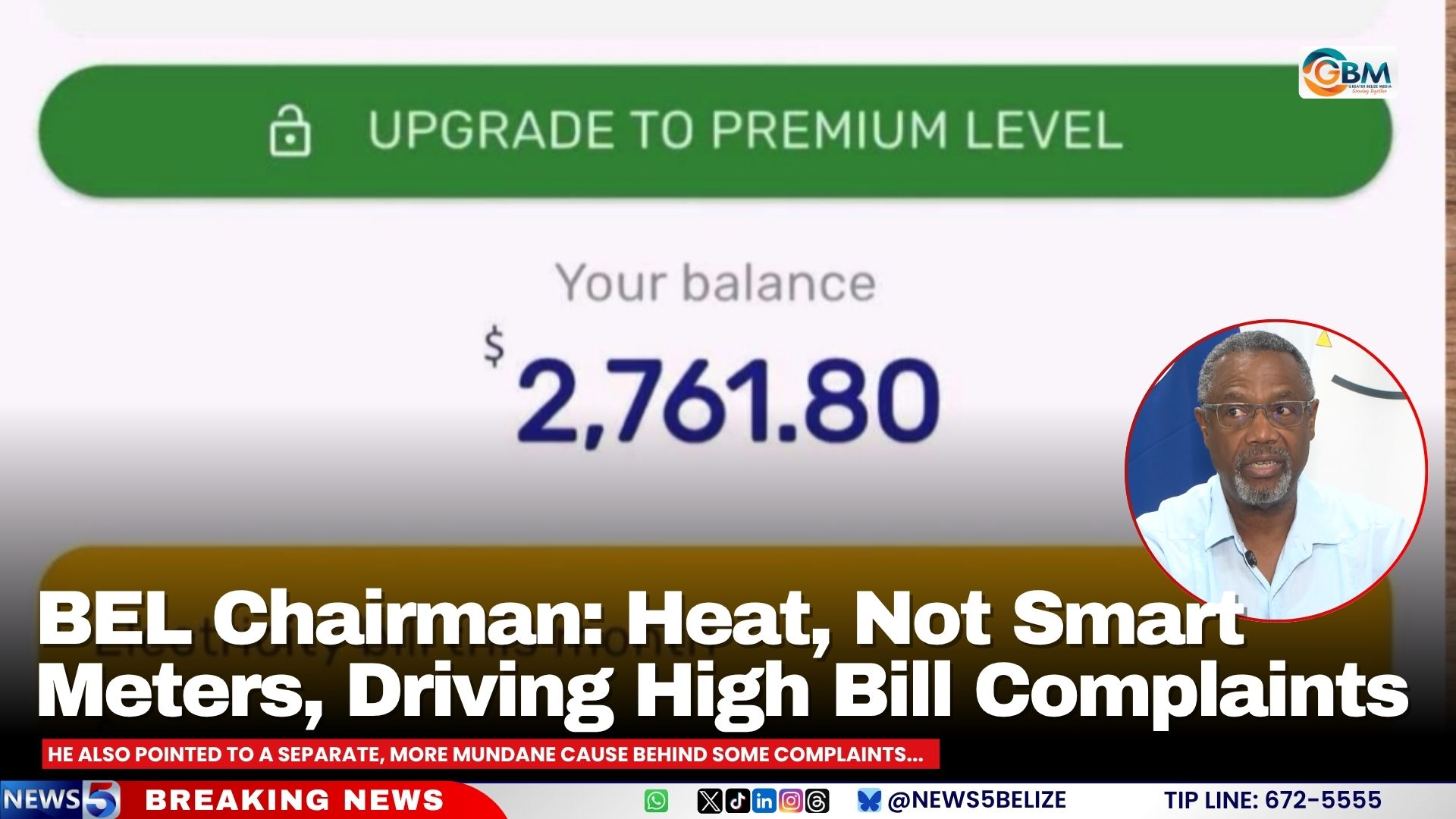
As soaring temperatures grip Belize, a growing wave of consumer complaints over unexpectedly high electricity bills has sparked widespread debate over whether the national utility’s ongoing smart meter rollout is to blame for the increased costs. In a direct response to mounting public pressure, Lynn Young, Executive Chairman of Belize Electricity Limited (BEL), has laid out a clear breakdown of the root causes behind the spike in complaints, naming record-breaking heat as the single largest contributor to elevated power consumption and higher monthly bills.
Young acknowledged that public skepticism around smart meters has grown alongside the rising number of customer grievances, but he emphasized that most discrepancies can be traced back to inaccurate readings from aging legacy meters, rather than flaws in the new smart technology. “When we investigate complaints about the new meters, we repeatedly find that older devices had stopped tracking consumption correctly over time,” Young explained in his address. “In some cases, old meters under-reported energy use for years, so when a new, fully accurate smart meter is installed, customers see an immediate jump in their bill that reflects their actual usage, not overcharging by the utility. There are a small number of cases where new meters also experienced reading errors, but we have not found evidence of widespread tampering or systemic flaws. Over time, as we complete the full rollout and replace all outdated devices, these transitional issues will resolve themselves, and customers will gain greater visibility into their energy use to better manage their costs.”
Beyond heat-driven consumption and legacy meter inaccuracies, Young also highlighted a common administrative issue that has triggered unnecessary panic among some customers: delayed bank payment processing. Many consumers who pay their bills via direct bank transfer in the 24 to 48 hours before the due date often receive their next monthly bill before the payment has fully cleared through the banking system. This means the unpaid balance from the previous billing cycle is still reflected on the new bill, leading customers to incorrectly assume their electricity costs have doubled overnight. “We’ve seen several instances of this misunderstanding,” Young noted. “Once we walk customers through the processing timeline and confirm their payment is pending, the confusion is quickly resolved.”
Overall, Young confirmed that the volume of high bill complaints is running well above the five-year average for this time of year, but he expressed confidence that complaints will drop sharply as cooler autumn and winter weather arrives. “Come November and December, when temperatures cool down and people cut back on air conditioning use, we fully expect complaint numbers to return to their normal baseline,” he said.
To ease the financial burden on customers who have accumulated back payments due to years of under-reporting from faulty old meters, BEL has implemented a flexible payment program that allows users to spread catch-up costs across multiple months, rather than demanding the full outstanding balance in a single lump sum. “We recognize that sudden catch-up charges can place significant strain on household budgets, so our payment plan is designed to soften that impact while still ensuring customers pay only for the energy they have actually used,” Young added.