Amid public and political backlash over the decision to integrate East Indian performance acts into the University of Trinidad and Tobago’s 2024 African Emancipation Day celebration series, the institution’s top governing leader has remained firm in his choice, announcing the inclusive programming model will return for next year’s event.
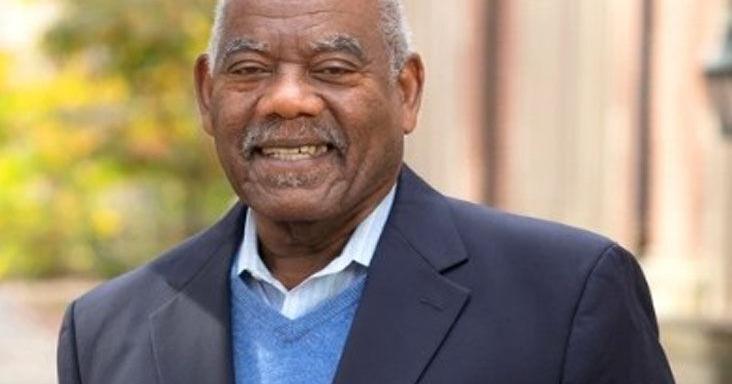
Speaking to journalists on Tuesday following the funeral service of celebrated Trinidadian artist and author Willi Chen, held at the Pro-Cathedral of Our Lady of Perpetual Help in San Fernando, Executive Chairman of UTT’s Board of Governors Professor Selwyn Cudjoe laid out his unwavering stance on the controversial programming choice. In the lead-up to this year’s national African Emancipation Day observances, UTT staged its sold-out signature event *Uhuru: Celebrating Freedom* at Port of Spain’s National Academy for the Performing Arts. The lineup featured established African Caribbean performers including Patrice Inglesbirth, the Onilu Brothers, Dr Edward Cumberbatch and Nkosi Waldron, alongside East Indian music and dance pieces presented by the Shiv Sangeet School of Music and choreographer Susan Mohip. The mixed lineup quickly drew criticism from opposition political figures and social media users, who pushed back against centering non-African traditions in an event dedicated to commemorating the end of chattel slavery.
Cudjoe pushed back against this criticism, noting that inclusive framing of Emancipation programming is not a new or unprecedented concept. Instead of focusing solely on the historical divides between Trinidad and Tobago’s two largest descendant groups, Cudjoe argued that the country’s shared histories of exploitation demand recognition of overlapping struggles. “There were similarities in Indian indentureship and slavery,” he explained. “Indians had to get permission to leave the estates, blacks had to do the same thing. So, we had many similarities and we said how we going to have a celebration of Emancipation, we wanted to bring in both the parties.” Cudjoe questioned what harm could come from centering collective struggle in the pre-Emancipation celebration, emphasizing that the core goal of the event was to highlight shared experience: “What we want to do, to say that we had similar experiences, and if you’re going to overcome, we got to do it together. So that’s what we were trying to do.” Dismissing the backlash as “propaganda nonsense,” Cudjoe reaffirmed that the inclusive format would return in 2025, challenging critics to outline a concrete harm from the programming. “This nonsense about you got to stay apart and I don’t like you…” he said, rejecting calls for racial segregation in public cultural programming. He pushed back against debates over which community suffered greater trauma, noting that both systems of forced labor inflicted profound intergenerational harm that extended far beyond physical violence: “Working together does not take away the competitive pain; who get more pain, was slavery worse than indentureship, who cares? They were very both bad against the mind…The problem of slavery is not what it did to your backs and the scars, it’s what it did your mind.” The core mission of a university, Cudjoe added, is to educate, liberate, and expand public consciousness, a mandate that prioritizes bridging divides over enforcing separation.
Beyond the Emancipation Day controversy, Cudjoe also shared his perspective on two major current policy issues facing Trinidad and Tobago: proposed new data centre development and ongoing public sector wage negotiations. On the topic of data centres, Cudjoe argued that the country cannot cling to outdated economic or social models to avoid progress, noting that all large-scale development carries both benefits and risks. While acknowledging legitimate concerns about potential environmental harm from the projects, he called for a balanced assessment that prioritizes national interest: “There are strengths and balances and there are weaknesses… we need to balance of the good and the bad, and see how we can arrive at something that is best for the country…You can’t want progress without ploughing the field.” On the demand for a 10% wage increase for public workers, Cudjoe noted that while worker demands are legitimate, any final agreement is constrained by government fiscal capacity. He expressed confidence that negotiators will reach an amicable resolution, whether through direct cash payments or structured bond agreements, emphasizing that the current administration is negotiating in good faith despite limited public coffers: “A million demands can be made but unless the Government has the money, you have to wait and see how best they can distribute what they have for you… I think that the Government is acting in its best faith but the money is not there.”