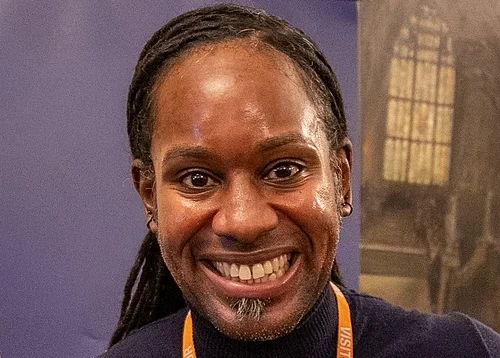
The tragic passing of accomplished Black scholar Jason Arday has sent shockwaves across the global academic community, with leaders and analysts framing his death as a stark demonstration of the deadly, systemic anti-Black racism embedded in Western higher education institutions.
In a powerful public statement released by University of the West Indies Vice-Chancellor Professor Sir Hilary Beckles, Arday’s death is directly tied to the centuries-long legacy of racial exploitation that continues to shape academic culture today. Beckles draws a direct line between Arday’s destruction and the recent United Nations General Assembly resolution that formally classified the chattel enslavement of Africans as the “gravest crime against humanity.” He emphasizes that the dehumanizing, life-ending force of anti-Black racism does not operate as isolated, random acts of bigotry; instead, it is carried out by hidden actors within public institutions that systematically target high-achieving Black scholars for public humiliation and marginalization. The process, Beckles argues, is deliberate: first, a scholar’s professional standing is destroyed, then institutional and social support is systematically stripped away, until a coordinated campaign of exclusion ends in premature death.
To contextualize the ongoing nature of this crisis, Beckles draws a parallel to a well-documented case from mid-20th century British academia: in 1947, the Vice-Chancellor of the University of Liverpool rejected the recommendation to appoint prominent Black economist Dr Arthur Lewis to a full professorship, despite Lewis’ strong credentials as a graduate and lecturer of the University of London. At the time, Britain had no tenured Black professors, and the university leadership refused to be the first to appoint one. Manchester University ultimately hired Lewis, who went on to claim a Nobel Memorial Prize in Economic Sciences for his groundbreaking work.
Today, many long-established British higher education institutions face growing pressure to confront their historical ties to slavery, colonialism and apartheid—many of which actively provided intellectual support for these oppressive systems. Beckles argues that the most common institutional response has been superficial research and acknowledgement rather than substantive structural repair. This failure to address deep-rooted inequity raises a fundamental question for modern academia: can a university truly claim to be excellent if its core collegial culture is defined by an unspoken, unethical racial ceiling that limits the advancement and survival of Black scholars?
True academic excellence, Beckles contends, extends far beyond curriculum design, teaching quality, global research rankings, and student satisfaction ratings. It is equally defined by the ethical values that underpin pedagogy, and a genuine commitment to advancing universal enlightenment and equality. Arday’s death stands as tragic proof that even accomplished Black scholars are failed by the lack of meaningful institutional and public protection against systemic racism. This is not a case of isolated wrongdoing by a handful of bad actors, Beckles stresses: the responsibility is collective, rooted in institutional cultures that have yet to break from their colonial legacies. Arday will now join the millions of Black lives lost to colonial oppression, laid to rest in what Beckles calls the “colonial casket.” Closing his statement, Beckles echoes Bob Marley’s iconic call to “emancipate yourselves from mental slavery” — a message widely embraced by Black communities, but one that Beckles notes is equally directed at the former colonial powers and institutions that still uphold systemic racial harm.