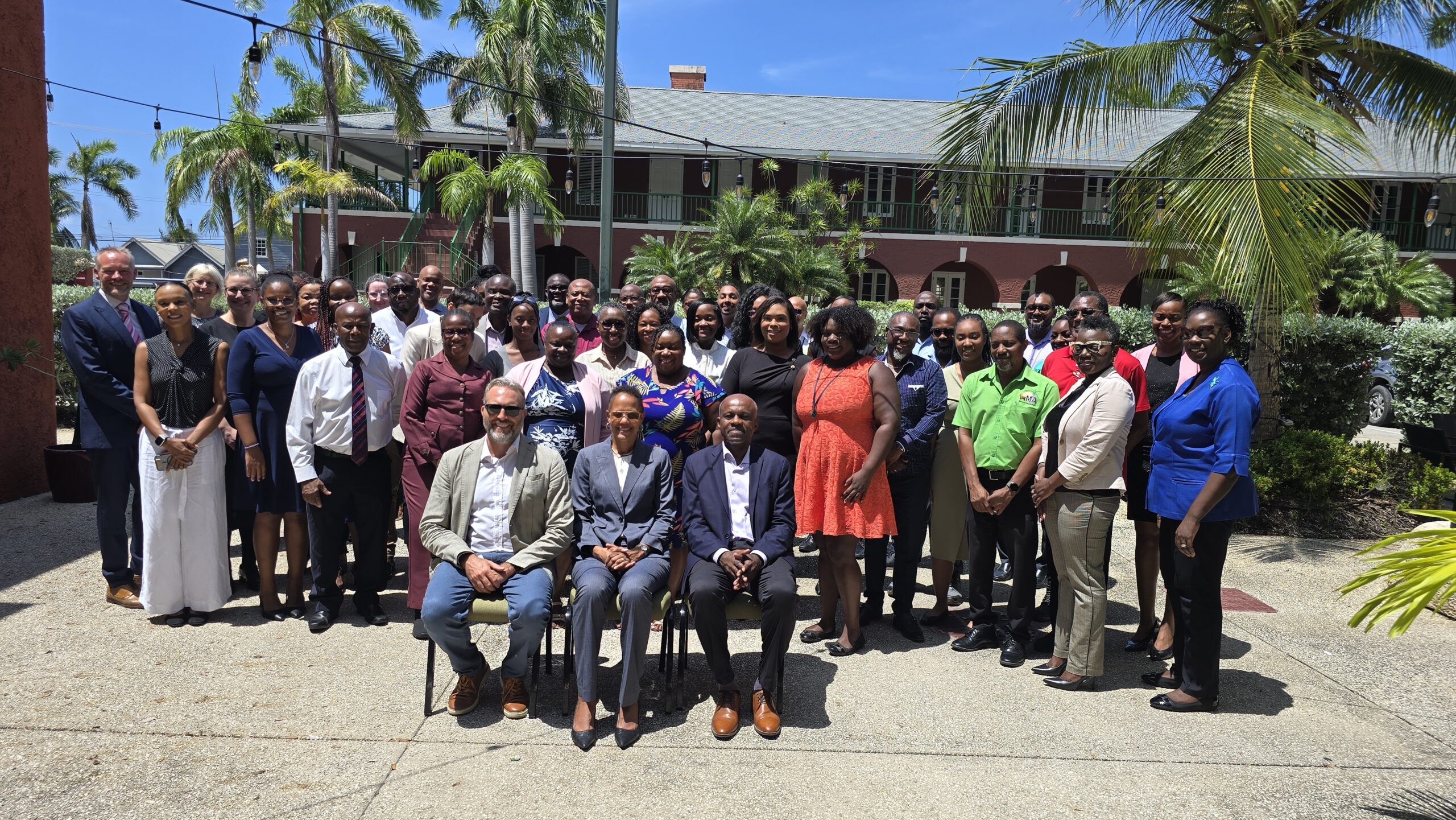
Against a backdrop of accelerating climate impacts already reshaping Caribbean nations, Barbados has made strengthening climate measurement and transparency systems a top national priority, with senior officials framing the effort as critical to unlocking much-needed international climate funding. Deputy Prime Minister and Minister of Environment Santia Bradshaw outlined the country’s strategic goals during an inception workshop and first formal consultation round for the Global Environment Facility (GEF) Capacity Building Initiative for Transparency (CBIT) project, which brought together key environmental agencies to build institutional and technical capacity for climate action.
Bradshaw emphasized that transparency in climate action is not just a reporting requirement under the Paris Agreement — the landmark legally binding global climate treaty — but a core strategic advantage for the island nation. “Put simply, what we cannot measure and what we cannot properly manage and what we cannot demonstrate, we will find increasingly difficult to finance,” she told attendees of the gathering. For small island developing states like Barbados, where climate change is already an immediate, lived reality rather than a distant hypothetical, robust data systems are foundational to advancing climate goals.
Unlike many larger economies that can treat climate change as a long-term policy challenge, Bradshaw noted that the crisis is already reshaping daily life across Barbados. It is damaging coastal infrastructure, straining freshwater supplies, disrupting national food systems, threatening key economic sectors, and eroding future opportunities for local communities. As such, the work of building stronger transparency frameworks goes far beyond meeting international reporting obligations: it is about fundamentally improving how Barbados governs its climate response, tracks national progress, and makes evidence-based policy decisions that benefit all residents.
Barbados has already laid out its formal climate commitments under the Paris Agreement, which requires all signatory nations to outline and update their voluntary national climate targets, called nationally determined contributions (NDCs). The country has submitted its second NDC, reaffirming its commitment to limiting global warming to the 1.5°C threshold outlined in international agreements and setting a target to cut absolute greenhouse gas emissions 45% below 2008 levels by 2035. To turn these commitments into action and attract the international funding needed to implement them, Bradshaw said clear evidence of results is non-negotiable. If Barbados is to call on the global community to increase climate finance commitments, it must first demonstrate its own progress and accountability for funds it already receives.
The CBIT project, which carries a total budget of $1.25 million U.S. (equivalent to Bds$2.5 million), is being implemented in partnership with the Inter-American Development Bank (IDB) as the executing agency. Its core mandate is to build out the full suite of systems Barbados needs to measure, verify, report on, and demonstrate the impact of its climate actions across every sector. For example, if the country invests in climate-resilient agricultural practices, officials need data to prove those investments are delivering results; if it expands renewable energy and clean technology, it must quantify resulting emission reductions; and if it protects vulnerable natural ecosystems, it has to document the tangible environmental benefits those protections deliver.
A key pillar of the effort is breaking down institutional silos across government, Bradshaw stressed. Climate change touches every aspect of national development, from energy and agriculture to infrastructure and public health, so transparency cannot be the sole responsibility of any single ministry. Instead, it requires a whole-of-government, whole-of-country approach that brings all stakeholder agencies together around shared climate goals. Strengthened coordinated transparency systems will not only meet international requirements but also standardize data collection processes, improve quality assurance, cut down on duplicative work, and create a stronger foundation for evidence-based policy across all levels of government.
Ultimately, Bradshaw emphasized, the work of collecting and analyzing climate data is not just about tracking carbon tons or meeting reporting deadlines — it is about improving the lives of all Barbadians. Climate policy shapes family well-being, protects livelihoods, supports local business, safeguards food and national security, and builds prosperity for coming generations. For Barbados, which has been a leading voice in international advocacy for greater climate finance for vulnerable small island developing states, strong domestic systems are the necessary complement to global calls for action.
Francesco De Simone, IDB Chief of Operations for Barbados, confirmed that the project will support the development and rollout of a national monitoring, reporting, and verification system aligned with Barbados’ NDC commitments, forming a foundational anchor for other IDB-supported climate initiatives. The work aligns closely with the IDB’s country strategy for Barbados, which prioritizes building national climate resilience, and De Simone echoed Bradshaw’s call for close coordination across government agencies and stakeholders to maximize synergies and ensure efficient use of project resources.
Closing the consultation, Bradshaw encouraged all participating stakeholders to bring forward constructive feedback and take ownership of their specific roles in the project. She framed the CBIT initiative as a unique opportunity to strengthen Barbados’ international credibility, ensuring that its ambitious climate commitments are backed by solid evidence and measurable, verifiable results that can attract the international funding needed to turn climate goals into real action.