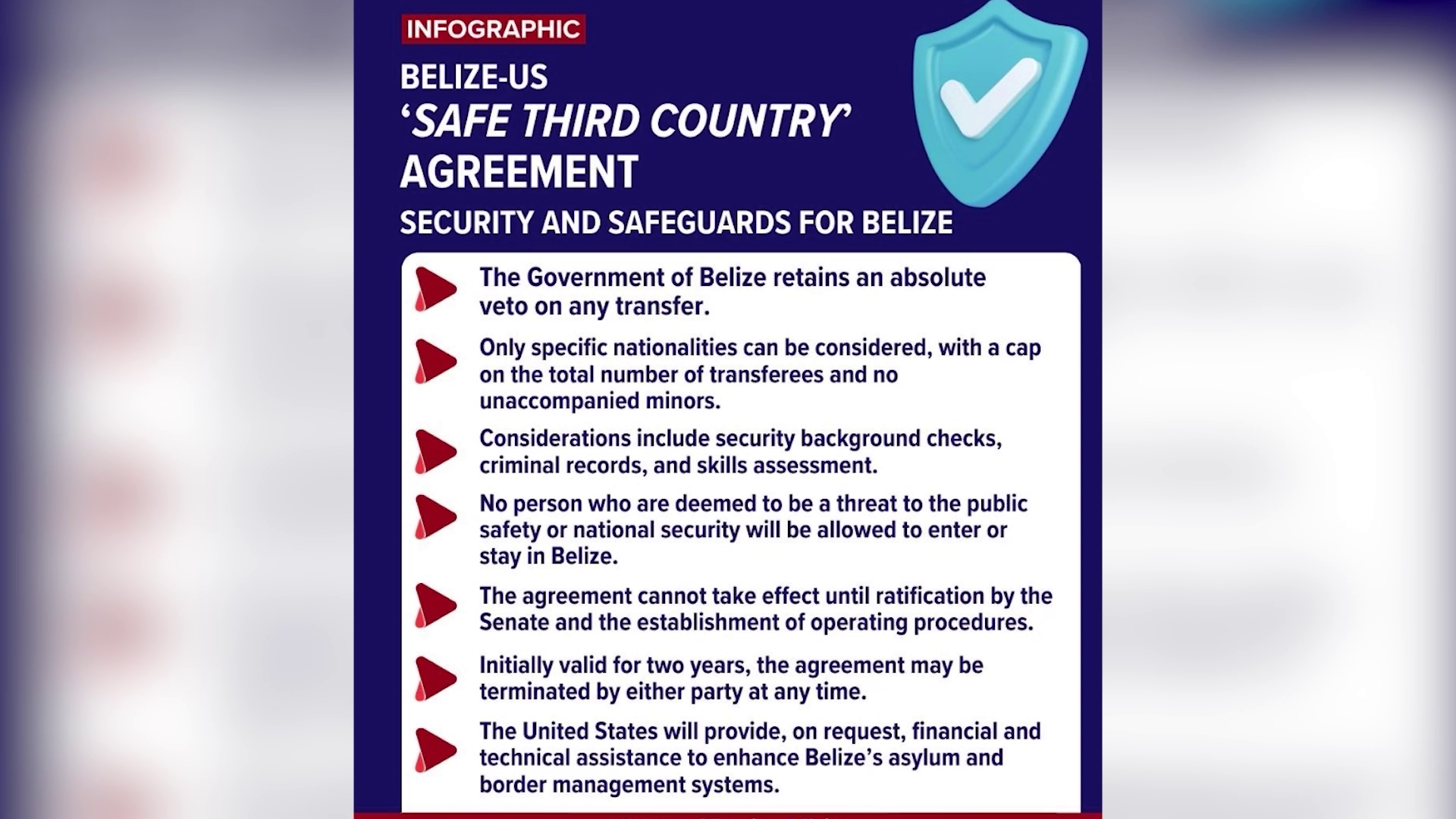
Long before the Safe Third Country Agreement became a topic of heated public debate, most public discussion has centered on one narrow question: which asylum seekers will Belize agree to accept under the terms of the deal. Far less attention has been paid to the fates that await these vulnerable people once they cross into the Central American nation, a gap that new remarks from top Belizean foreign affairs official Oscar Arnold have begun to fill.
In comments during a recent broadcast, Arnold, who serves as CEO of Belize’s Ministry of Foreign Affairs, outlined the strict parameters that govern the lives of transferred asylum seekers from the moment they arrive. Contrary to some assumptions circulating about the agreement, asylum seekers are not permitted to enter the Belizean workforce immediately, nor can they pursue permanent settlement right away. Instead, they must enter a protracted processing system managed entirely by the United Nations High Commission for Refugees (UNHCR) – a process that can take months, or even multiple years, to reach a final resolution.
Arnold emphasized that UNHCR plays the central role in coordinating every step of the asylum process in Belize. The agency brings both the dedicated funding and established operational infrastructure needed to receive asylum seekers, complete the required screening and status determinations, and eventually support their full integration into Belizean society if their claims are approved. For any gaps in funding that arise over the course of the process, the agreement already includes a formal contingency: if UNHCR’s allocated resources prove insufficient to cover program costs, the Belizean government can formally request additional financial support directly from the U.S. government, a provision that Arnold confirmed remains available to the host nation at any time.
Addressing widespread public confusion about work access for new arrivals, Arnold made clear that all transferred individuals first fall under formal asylum seeker status after entering Belize. Even for those fleeing dangerous conditions that prevent them from returning to their home countries, full assimilation into Belizean society – including the right to seek employment – only comes after their status is formally finalized through the UNHCR-managed process. That timeline, Arnold stressed, is inherently variable, with no guaranteed endpoint for many claimants.
To address concerns that the transfer program would place undue strain on Belize’s social services and public safety, Arnold also outlined the pre-arrival vetting process that all prospective asylum seekers complete before entering the country. All applicants are screened for three core criteria: age, criminal history, and existing health conditions. The vetting step, he explained, is intentionally designed to prevent the program from imposing unmanageable burdens on Belizean communities and institutions.
This report is adapted from a transcribed evening television newscast originally published in August 2026.