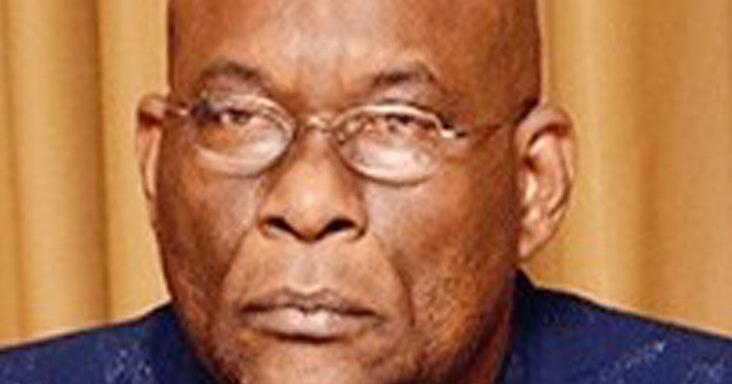
A long-simmering wage dispute at Trinidad and Tobago’s ports is reaching a boiling point, as dockworkers continue to face crippling financial pressure despite a partial payment of overdue backpay issued in July. Michael Annisette, president of the Seamen and Waterfront Workers Trade Union (SWWTU), made the latest public remarks on the standoff during a recent interview with TV6’s Morning Edition, spelling out the union’s core grievances and warning of growing unrest among frontline port staff.
At the heart of the conflict is a years-long delay in updating collective pay agreements, which has left thousands of dockworkers earning salaries set according to 2014 pay scales, even as the cost of living has risen sharply across the country. Annisette emphasized that the dispute is rooted in a fundamental fight for workers’ rights, not political retaliation or alignment, rejecting widespread claims that the backpay delay stems from the union’s pre-election endorsement of the United National Congress. “This is not a question of political support or opposition,” Annisette stated. “It is a basic human rights issue: workers are forced to labor for pay that was set more than a decade ago, in a completely different economic climate.”
While the Port Authority of Trinidad and Tobago (PATT) released 20% of outstanding basic wage backpay to workers in July, Annisette confirmed that 80% of the total owed remains unpaid. When including standardized overtime payments that the union says are rightfully owed to staff, the total outstanding figure exceeds $337 million, up from an initial estimate of more than $330 million. The union has repeatedly pushed successive national administrations to resolve the dispute, most recently submitting a formal letter of concern to PATT leadership on July 24, and has already documented seven formal formal notices of grievance on file.
To move negotiations forward, SWWTU has put forward a concrete proposal: align pay scales for workers at the Port of Port of Spain with those at the Port of Point Lisas, where staff performing identical roles with identical equipment currently earn salaries that are 22 percentage points higher. Annisette noted that closing this pay gap is a critical first step to resolving outstanding collective agreements, after which both parties can shift focus to boosting productivity, efficiency, and adopting international best practices for port operations.
This reform carries national economic significance, Annisette argued: roughly 90% of Trinidad and Tobago’s total imports and exports flow through the country’s port network, making competitive, fair working conditions critical to retaining operational stability. He also added that the Port of Port of Spain’s strategic location along major global trade routes positions it to become a major regional transshipment and logistics hub, a goal that cannot be achieved with an unresolved, demoralizing wage dispute hanging over operations.
Annisette acknowledged that other major national unions, including the Public Services Association (PSA) and the National Union of Government and Federated Workers (NUGFW), are also engaged in separate talks with the government over their own outstanding payment disputes. He reaffirmed that SWWTU remains committed to resolving the issue through negotiated channels, but warned that delaying a resolution risks pushing the dispute into the hands of rank-and-file workers, with unforeseen consequences for port operations. When asked about potential protest action, Annisette noted that even with an existing industrial relations ban on official union action, workers still have mechanisms to express their deep dissatisfaction.
With growing financial strain pushing workers to their breaking point, Annisette said the union’s executive remains fully united in demanding a fair resolution. “It is completely unacceptable to expect workers to survive on 2014 salaries in 2026 while the cost of living continues to climb,” he said. “The union will continue pressing this case, and we are prepared to confront PATT leadership at every level to secure a fair outcome for our members.”