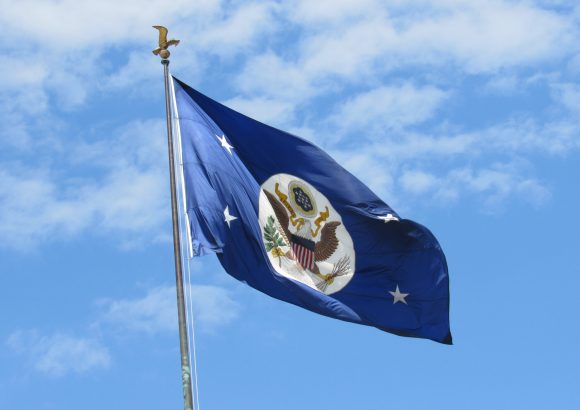
On July 20, 2026, the U.S. State Department published a controversial 100-plus-page report that levels sweeping accusations against the Cuban government, alleging a sustained, decades-long campaign of espionage, political infiltration, and ideological outreach designed to expand Havana’s influence within U.S. borders. Titled *Cuba: The Capital of Communism in the 21st Century*, the document spans more than six decades of Cuban international activity, tracing the country’s strategic engagement from the 1959 revolution through its modern connections to domestic U.S. political and activist groups.
At the core of the report’s espionage allegations are several high-profile, previously adjudicated cases of individuals convicted of sharing classified U.S. information with Cuban authorities. These include Ana Belén Montes, a former Defense Intelligence Agency analyst, married couple Walter Kendall Myers and Gwendolyn Myers, and the members of the Wasp Network, a Cuban spy ring dismantled by U.S. law enforcement in 1998. Unlike traditional great power competition that relies on military posturing, the report argues Cuba has prioritized a softer, asymmetric approach: leveraging intelligence operations, grassroots organizational partnerships, and activist exchange programs to advance its policy goals in the U.S. rather than pursuing conventional military confrontation.
A central focus of the report’s criticism centers on two activists linked to the Dominican community in the U.S. who are key leaders of a prominent New York-based progressive organization. Manolo De Los Santos, a Dominican-born co-founder and executive director of The People’s Forum, first traveled to Cuba in 2006 via the Pastors for Peace program and resided on the island for several years, where the report claims he built close ties with senior Cuban government officials. De Los Santos has since led multiple delegations back to Cuba and appeared at public events alongside current Cuban President Miguel Díaz-Canel. His co-founder Claudia de la Cruz, a U.S.-born citizen of Dominican immigrant parents who spent part of her childhood in the Dominican Republic, has also been active with the Interfaith Foundation for Community Organizing (IFCO). In 2024, de la Cruz ran for U.S. president on the Party for Socialism and Liberation ticket, running on a platform that included cutting U.S. military spending and fully lifting the decades-long U.S. trade embargo on Cuba.
The report names a broad array of U.S. organizations that it says hold varying degrees of connection to the Cuban government, ranging from formal operational ties to shared ideological alignment. The groups explicitly cited include The People’s Forum, IFCO, Pastors for Peace, the Venceremos Brigade, Code Pink, the National Lawyers Guild, the National Network on Cuba, and the Democratic Socialists of America. The document also references Black Lives Matter, pro-Palestinian advocacy groups, and organizations opposing U.S. Immigration and Customs Enforcement operations. Importantly, the report stops short of claiming all these groups are directly controlled by Havana; it acknowledges that connections range from formal organizational or financial partnerships to shared policy positions such as support for ending the U.S. embargo, or ideological alignment with Cuba’s anti-U.S. foreign policy rhetoric.
The State Department also devotes significant attention to the financial structure of The People’s Forum, tracing its rapid revenue growth over the past five years. According to the report’s analysis of tax filings, the organization reported roughly $486,926 in total revenue in 2021, which surged to approximately $4.4 million just one year later in 2022. Between 2018 and 2025, the document claims The People’s Forum received a cumulative $28 million in funding, around $22.4 million of which came from entities linked to technology entrepreneur Neville Roy Singham. The State Department frames these financial and organizational ties as key nodes in what it characterizes as a far-reaching, coordinated network that Cuba uses to quietly advance its political agenda and shape public discourse inside the United States.