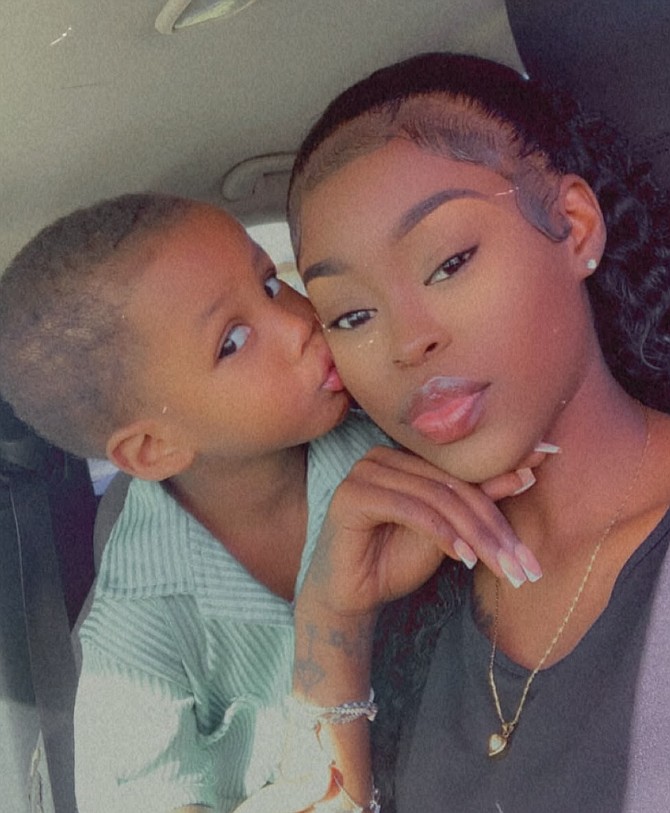
For 30-year-old Desire Sands of Grand Bahama, the past year has been defined by parallel grief and grit: just seven months after laying her mother to rest following a breast cancer battle, she received a diagnosis of stage two breast cancer herself. Now, after months of grueling treatment, Sands is celebrating the milestone of being declared cancer-free, a win she calls nothing short of a second chance at life.
When Sands received her diagnosis in April 2025, her daily routine shifted dramatically. What had been days spent playing with her three-year-old young son turned into a grueling cycle of regular trips from Grand Bahama to New Providence, where she underwent chemotherapy appointments at Princess Margaret Hospital’s Oncology Clinic. Through every step of the treatment process, she carried the memory of her mother, who had lost her own fight with the same genetic-linked disease just months prior.
The life-changing confirmation of her remission came on August 10, when a close friend accompanied her to a routine appointment with her oncologist on Grand Bahama. As her care provider reviewed her pathology reports and blood work, he delivered the news Sands had waited months to hear: she was officially cancer-free. “My initial reaction was emotional because that’s something I’ve been waiting to hear,” Sands shared in an interview. “I’m still processing it honestly, and I was excited to give the good news to the same persons I gave the bad news to when I first got diagnosed.”
Sands says the clean bill of health feels like a new beginning, an opportunity to live with even more intentionality than she did before her diagnosis. Her oncologist echoed that sentiment, encouraging her to pursue new goals from going back to school to learning a new skill, reminding her it was finally time to embrace the next chapter.
But Sands’ road to remission was far from easy. A person living with sickle cell disease, she faced amplified complications during her final four rounds of chemotherapy. The powerful treatment triggered severe joint pain that was hard to distinguish from a sickle cell crisis, leaving her struggling to cope with unrelenting discomfort. She was admitted to hospital twice during this period, and at one point required three blood transfusions to stabilize her health.
Even at her lowest points, however, Sands never allowed fear of death to take root. “I never allowed negative thoughts to overwhelm me,” she explained. “Anytime something happened I just took it as “I’m not going to rush my process” even though I wanted to be done quickly.”
One of the hardest parts of her journey, she said, was maintaining a sense of strength for her young son, who often noticed when she was fatigued or unwell. Sands made a deliberate effort to explain her illness to her son in age-appropriate terms, and he soon developed a gentle understanding of what she was going through. After treatments, he would kiss her treatment port and check in to ask how she was feeling. That small, consistent support kept her going, she said: “I know I needed to keep going for him because he saw me at my lows and I wanted him to see the good too.”
Sands credits her unwavering faith in God as a core source of strength throughout her battle, alongside the support of friends and family. Cancer has touched multiple generations of her family, and even as she grieved her mother’s death while fighting her own diagnosis, she said her mother’s memory remained a constant inspiration.
Now stepping into what she calls her new chapter, Sands wants to share a message of hope with other women navigating breast cancer treatment. Too often, she said, society frames a cancer diagnosis as an automatic death sentence, and doesn’t celebrate enough the stories of people who fight and win. But that narrative doesn’t have to hold, she said: “Cancer isn’t a death sentence. Once you lean on God’s strength and do as your doctor says your journey will be a good one.”