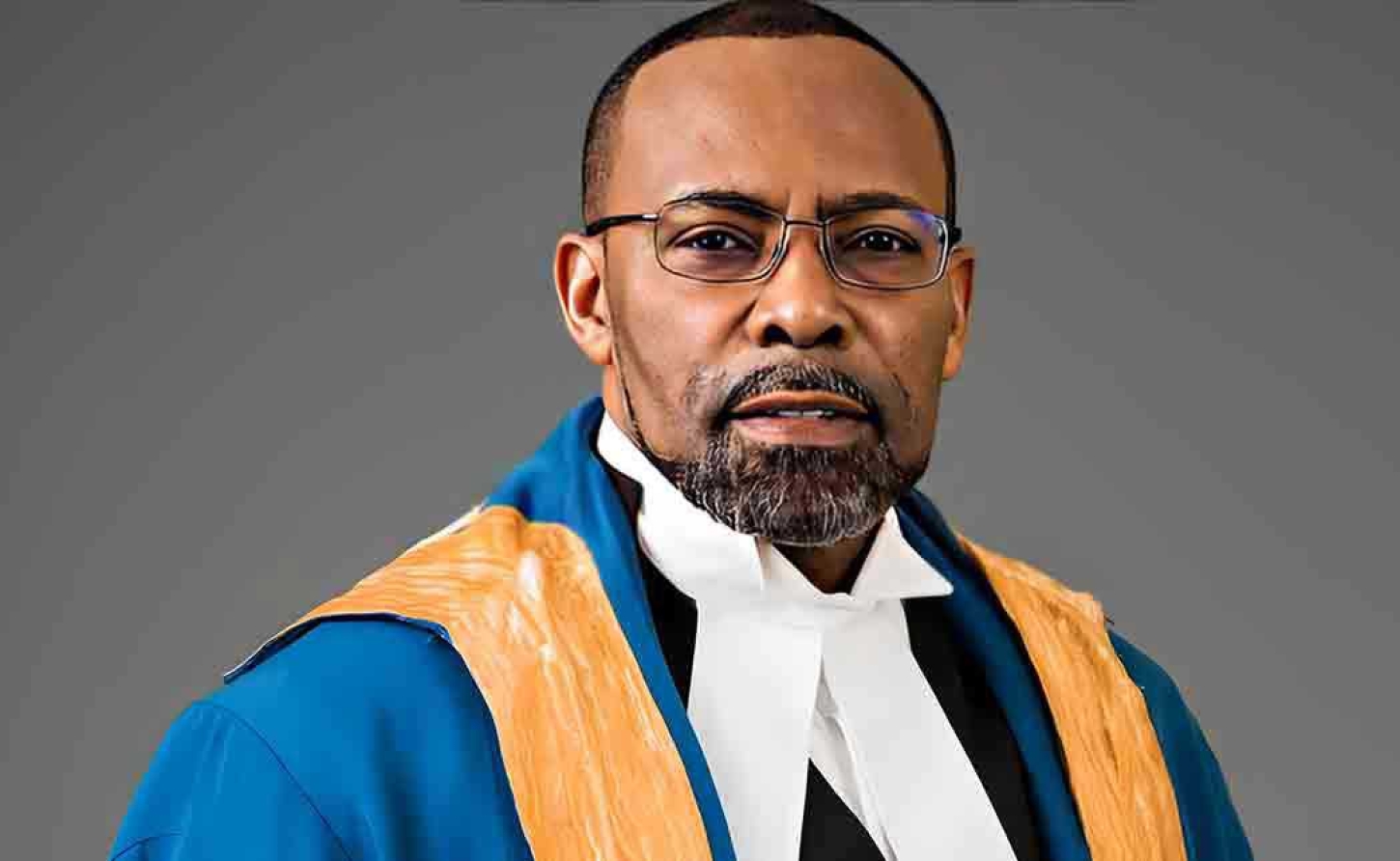
The Caribbean Court of Justice (CCJ), a key regional judicial body, has been thrown into internal turmoil following a series of explosive allegations from sitting judges—and its president has broken his silence to issue a comprehensive public defense of his actions. In a detailed statement released Friday, CCJ President Justice Winston Anderson pushed back against reports of deep internal dysfunction, including claims of broken judicial protocol and manipulated panel assignments designed to guarantee preordained case outcomes.
Anderson opened his address by acknowledging the widespread damage the leaked reports have already caused, noting that the unfolding controversy has stirred “concern, anxiety and profound sadness” among court staff, legal stakeholders, and communities across the Caribbean region. He launched a sharp rebuke of the unauthorized disclosure of confidential internal court discussions and private correspondence, labeling the leaks as entirely unacceptable. Anderson emphasized that these disclosures directly erode the foundational principle of judicial independence, and have eroded public trust in the judiciary, the third branch of regional governance.
At the heart of the public dispute is a clash over judicial dress code. Anderson confirmed that he removed a fellow judge from the panel hearing a July preliminary application in the high-profile case *D’Almada v Trinidad and Tobago*. The removal, he confirmed, stemmed exclusively from the judge’s refusal to comply with the court’s established dress norms, insisting on wearing national dress instead of the court’s traditional judicial robes or approved alternative business attire.
Anderson traced the history of CCJ dress protocols back to the court’s founding. He explained that the court’s framers explicitly intended judges to uphold the longstanding Caribbean judicial tradition of wearing formal robes during public hearings. While the court’s official rules do not explicitly address dress requirements for in-chambers proceedings, Anderson noted that a consistent regional standard had evolved over time. For interlocutory and in-chambers matters, judges gradually shifted from formal robes to bench jackets, and eventually to business suits as an acceptable alternative when robes were not worn.
According to Anderson, he first raised the dress code concern privately with the dissenting judge in June, but failed to reach an agreement that would bring the judge into compliance with the court’s established practice. He stressed that his decision to remove the judge from this specific panel was driven solely by the attire disagreement, and was not linked to the judge’s legal opinions, participation in internal deliberations, or any other component of their judicial work.
In the wake of the dispute, Anderson has moved to formalize a clear, written judicial dress code, which he submitted to the Regional Judicial and Legal Services Commission for review back in June. He also offered a limited concession, acknowledging that he “may have approached the matter… too strongly” in his initial handling of the disagreement.
Most critically, Anderson completely rejected the most serious allegation leveled against him: that he manipulates panel composition to skew case outcomes. He dismissed these claims as “wholly untrue”, and condemned the shift from a relatively minor dispute over court attire to serious accusations of panel fixing. He described this expansion of the controversy as “irresponsible, intellectually dishonest, injudicious and quite simply, malevolent.”
The public statement marks the most extensive official response to date to reports of internal strife within the CCJ, a key institution that supports judicial processes across multiple Caribbean jurisdictions. It remains to be seen whether the acknowledgement of the dispute and Anderson’s defense will resolve growing concerns about institutional stability and public confidence in the regional court.
CCJ president bashes leaking of confidential messages and refutes panel-fixing allegations