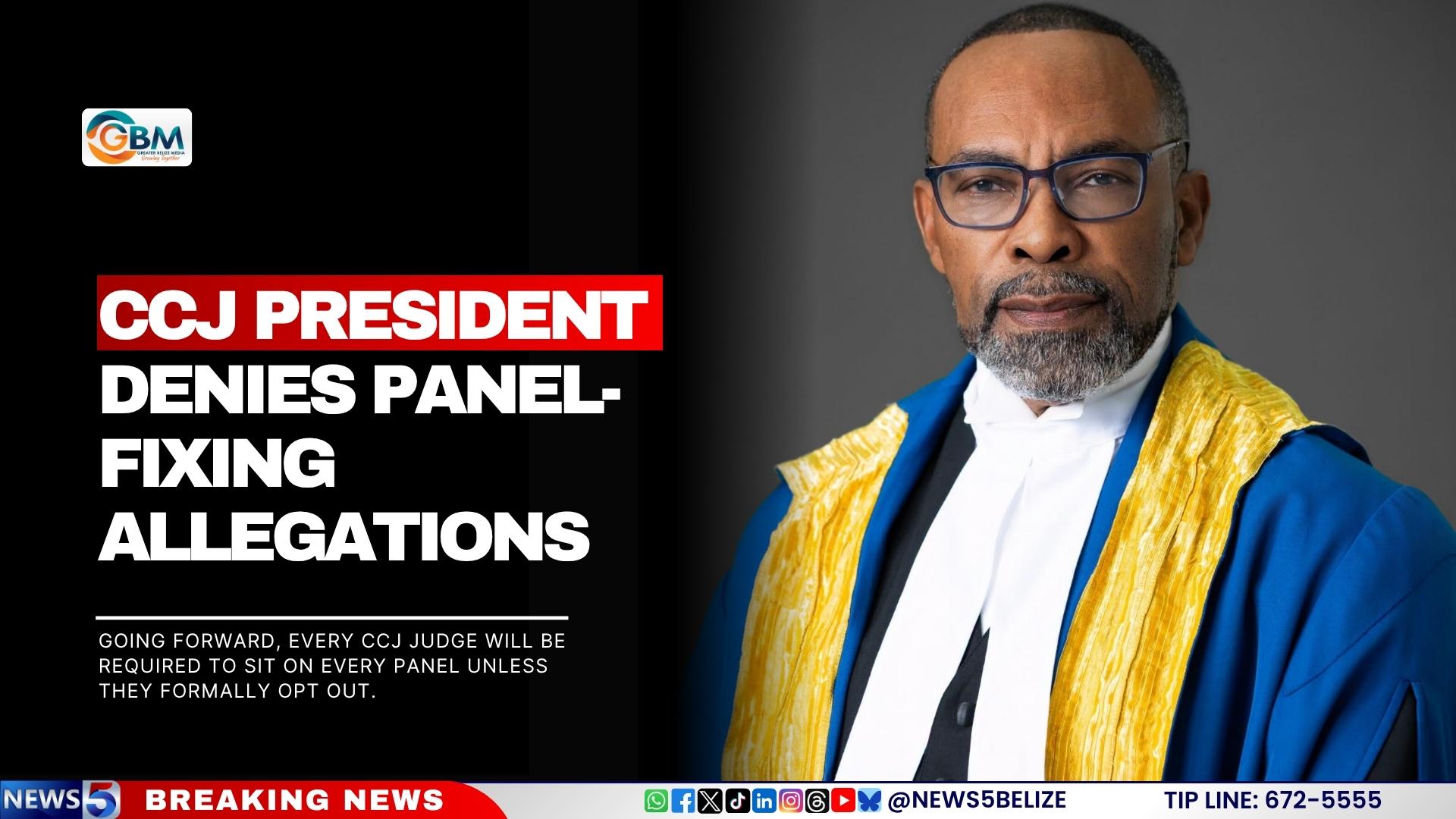
In a public statement addressing recently surfaced controversy, Caribbean Court of Justice (CCJ) President Justice Winston Anderson has forcefully rejected allegations that he manipulated judicial panel compositions to sway the outcome of pending cases, tying the entire scandal to a straightforward disagreement over courtroom dress requirements.
The controversy erupted after an unauthorized leak of confidential court internal documents. Anderson confirmed that he made the decision to reassign a sitting judge from a July procedural hearing panel, but emphasized this action stemmed exclusively from the judge’s refusal to comply with the court’s established dress code, which requires standard judicial robes or formal business attire. The judge in question chose to wear traditional cultural dress instead of the required clothing. Anderson stressed that the reassignment had no connection to the judge’s legal perspectives or intended rulings on the case, and added that the judge has already been reinstated to hear the substantive arguments of the same dispute.
Critics of Anderson’s decision have framed the reassignment as an improper act of panel fixing designed to shape the case’s outcome. Anderson pushed back sharply against these accusations, describing them as “irresponsible, intellectually dishonest, injudicious and, quite simply, malevolent.” To back up his claim that no improper influence was exerted, Anderson pointed out that all five judges who ultimately heard the procedural matter issued a unanimous ruling, a result that would not be expected if manipulation had occurred. He also cited a separate high-profile case where all seven sitting CCJ judges reached a unanimous decision as further evidence that he does not seek to coerce judicial outcomes.
To strengthen transparency and eliminate future accusations of panel tampering, Anderson announced a new institutional rule going forward: every CCJ judge will be required to sit on every hearing panel, unless a judge formally recuses themselves from a specific case for ethical or personal reasons.
Anderson also addressed separate questions about his recent participation in negotiations between Guyana’s president and opposition leader to fill vacant senior judicial positions in that country. He clarified that his involvement in these talks was fully consistent with constitutional guidelines and carried no improper political or institutional agenda.
Opening his statement, Anderson condemned the unauthorized disclosure of confidential court records that sparked the controversy, arguing that the leak poses a serious threat to core principles of judicial independence and erodes public trust in the regional court system.
The CCJ serves as the final court of appeal for five Caribbean nations: Belize, Barbados, Dominica, Guyana, and Saint Lucia, carrying significant legal weight across the Caribbean region.