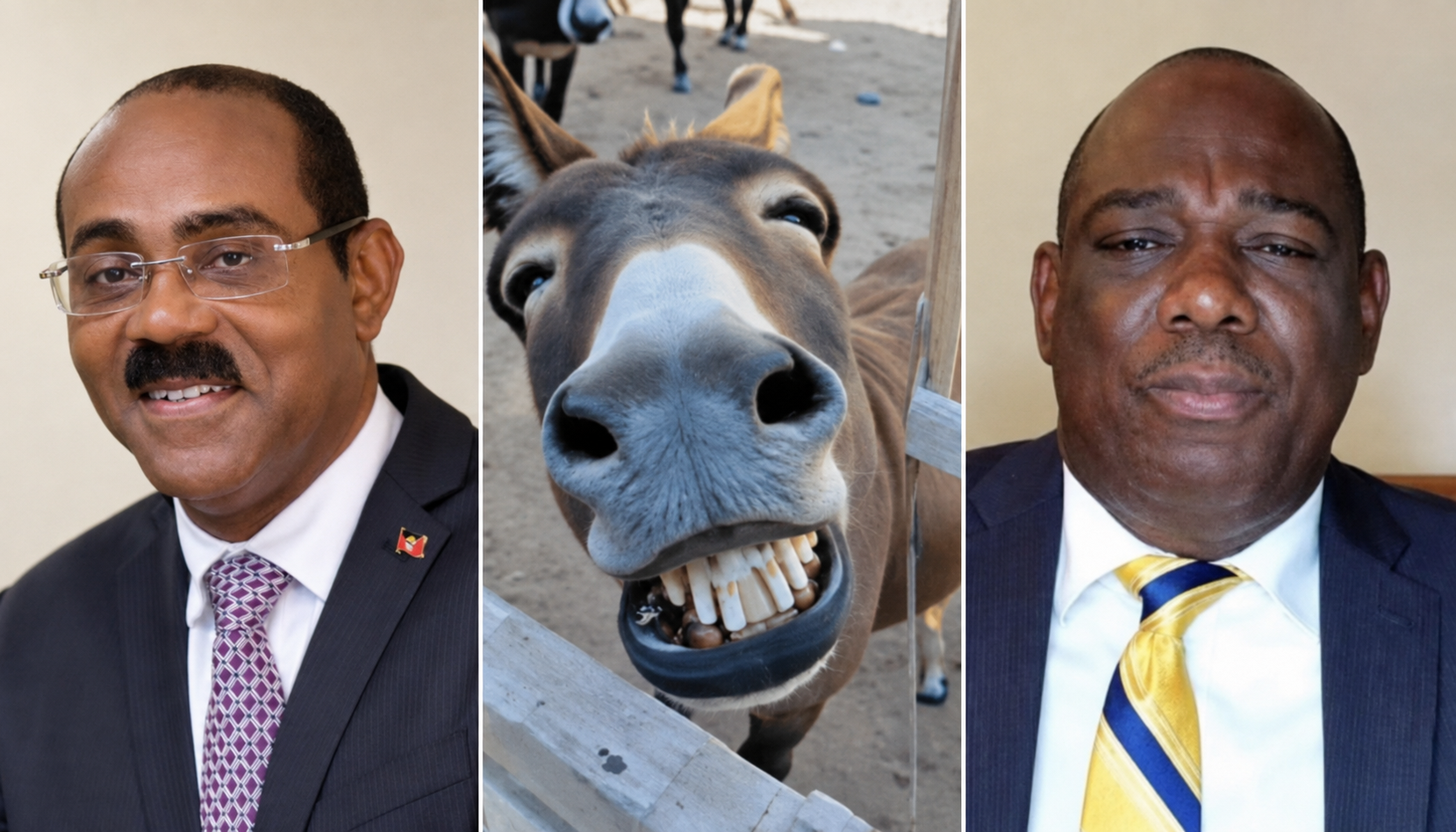
A sharp public conflict has erupted between Gaston Browne, the Prime Minister of Antigua and Barbuda, and Guyanese political activist Rickford Burke, after Burke leveled serious accusations that Browne attempted to intimidate the nation’s judiciary over controversial sentencing rulings. The dispute has escalated rapidly, dragging in the country’s legal association and reigniting debates over the separation of powers and judicial independence in the small Caribbean nation.
The origins of the confrontation stretch back to August 10, when Browne spoke during a parliamentary discussion on national security. During the address, the prime minister voiced growing public and law enforcement frustration over what he framed as excessively lenient sentences handed down in high-stakes criminal cases, particularly offenses involving illegal firearms, violent gun crime, and statutory rape.
In the aftermath of the speech, Browne has clarified that his comments were rooted in widespread community anxiety, not an attempt to undermine the courts. “My remarks of 10 August were made in the context of grave concern, expressed by law enforcement and the people of Antigua and Barbuda in general, about firearm violence and statutory rape, in what they regard as unduly lenient sentences in some serious cases,” Browne reaffirmed, emphasizing that his only priority is addressing public safety risks that have alarmed residents across the country.
Burke, however, has pushed back forcefully against Browne’s framing, arguing that the prime minister’s comments go far beyond legitimate policy critique and amount to open intimidation of sitting judges. The activist claimed that Browne issued a thinly veiled threat to force non-compliant judges out of the country: “You threatened the judge,” Burke wrote in his public rebuke. “You in effect said if he doesn’t fall in line with your ill-informed interpretation of what the sentence for certain offences should be, he must leave the country voluntarily or you will deport him.”
Burke labeled Browne’s actions as a deliberate attempt to “coerce and bully the judiciary”, accused the prime minister of abusing his executive authority, and even described Browne as a “demagogue” seeking to undermine democratic checks and balances.
Rather than backing down to soften his stance, Browne fired back immediately with a blistering personal attack on Burke, dismissing the activist as an “attention-seeking, intellectual jack-donkey” whose criticisms carry no credibility. Browne has repeatedly rejected all claims that he sought to intimidate the judiciary, maintaining that his intervention is solely focused on addressing valid public concerns over sentencing outcomes and rising violent crime.
The confrontation is not limited to Browne and Burke: the Antigua and Barbuda Bar Association has already publicly raised its own concerns, warning that the prime minister’s public comments on judicial sentencing pose a tangible threat to the long-held principle of judicial independence, a core pillar of democratic governance. As the dispute continues to unfold, Browne remains unapologetic, doubling down on his commitment to raising public alarms over sentencing practices he says put Antigua and Barbuda’s communities at risk.