On an early Sunday morning in mid-August 2026, a routine swim turned into a life-or-death struggle for 29-year-old Leomar Narvallez, a resident of Guinea Grass in Belize’s Orange Walk District, when a crocodile launched a surprise attack at the widely visited New River Park.
Narvallez told reporters he had just entered the water to swim when he suddenly felt a powerful grip clamp down on his head. The reptile shook him violently twice and pulled him under the surface in an instant, catching the man completely off guard. “I never expected that to happen,” Narvallez recalled of the terrifying encounter, noting that his head remained trapped between the crocodile’s jaws for roughly six seconds.
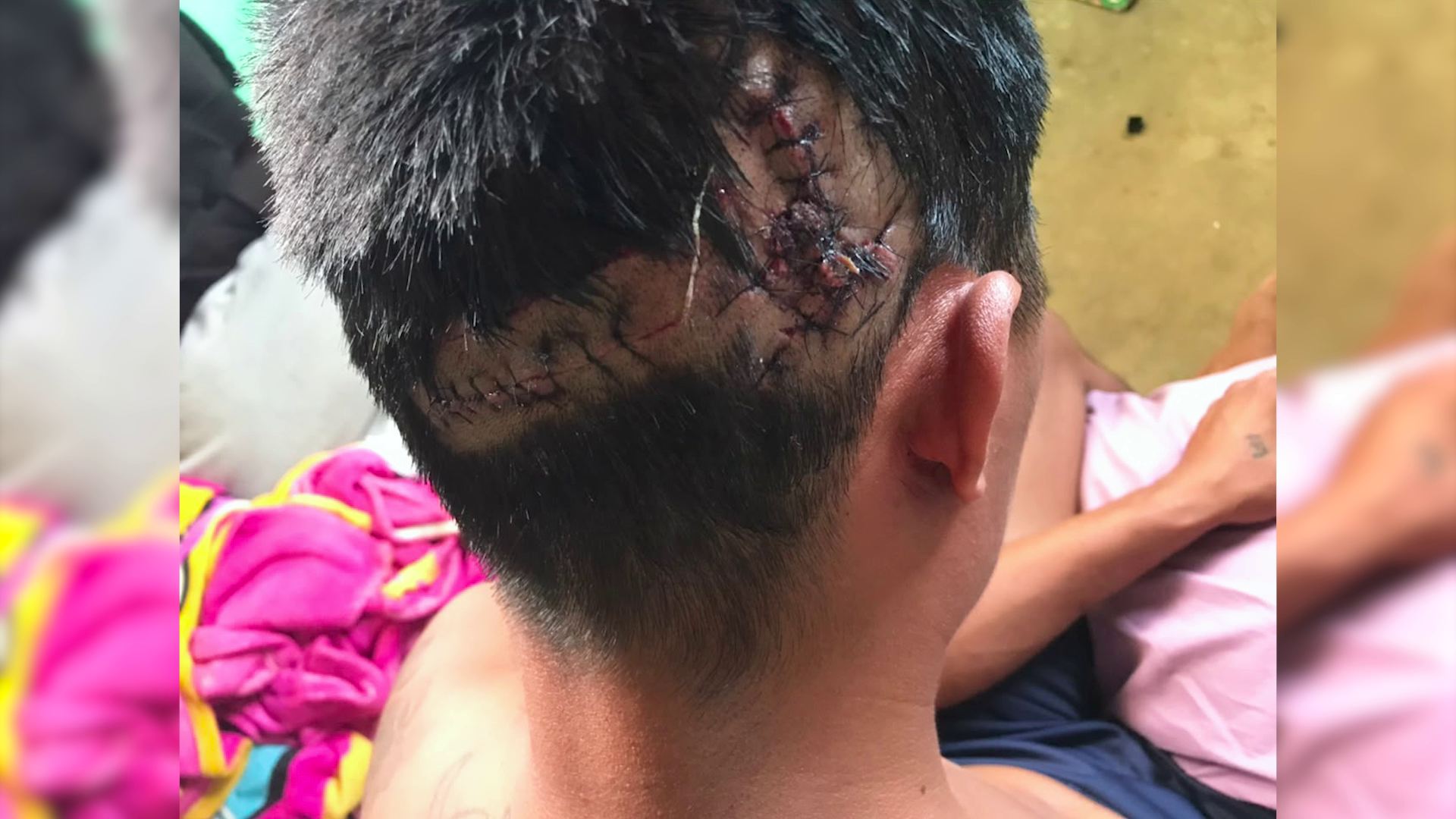
Acting on pure instinct, Narvallez pushed his hands against the crocodile’s snout and fought to wrench his head free. Once he broke loose, he scrambled to a hanging safety tire suspended from a rope, pulled himself out of the reach of the predator, and held on as he bleed heavily from his wounds. Waiting for help to arrive, Narvallez was eventually rescued by relatives who paddled out to his location via canoe, and rushed him for emergency care at the nearby Northern Regional Hospital. There, medical providers closed his wounds with nearly 30 stitches, and cleared him to return home the same day to recover.
Now recovering safely at home, Narvallez has chosen to share his harrowing experience to raise public awareness about the persistent danger crocodiles pose in popular recreational waterways. He stressed that crocodiles are territorial animals that defend their ranges through aggression, and warned that the animal that attacked him is still believed to be lurking in the area of the park, which is regularly frequented by local children who swim there. “It has already tasted blood, and it might attack someone else who won’t be as lucky as me,” he said. “I thank God I’m alive today.”
Crocodile researcher Dr. Marisa Tellez has shared key safety guidance for anyone recreating in areas where crocodiles are known to live. If a crocodile approaches, Tellez advises people to avoid panicking, refrain from splashing in the water, move slowly and steadily toward the shore, and never turn their back on the approaching animal.
This report is adapted from a transcribed evening television newscast, which originally rendered local Kriol-language testimony in a standardized written spelling system.