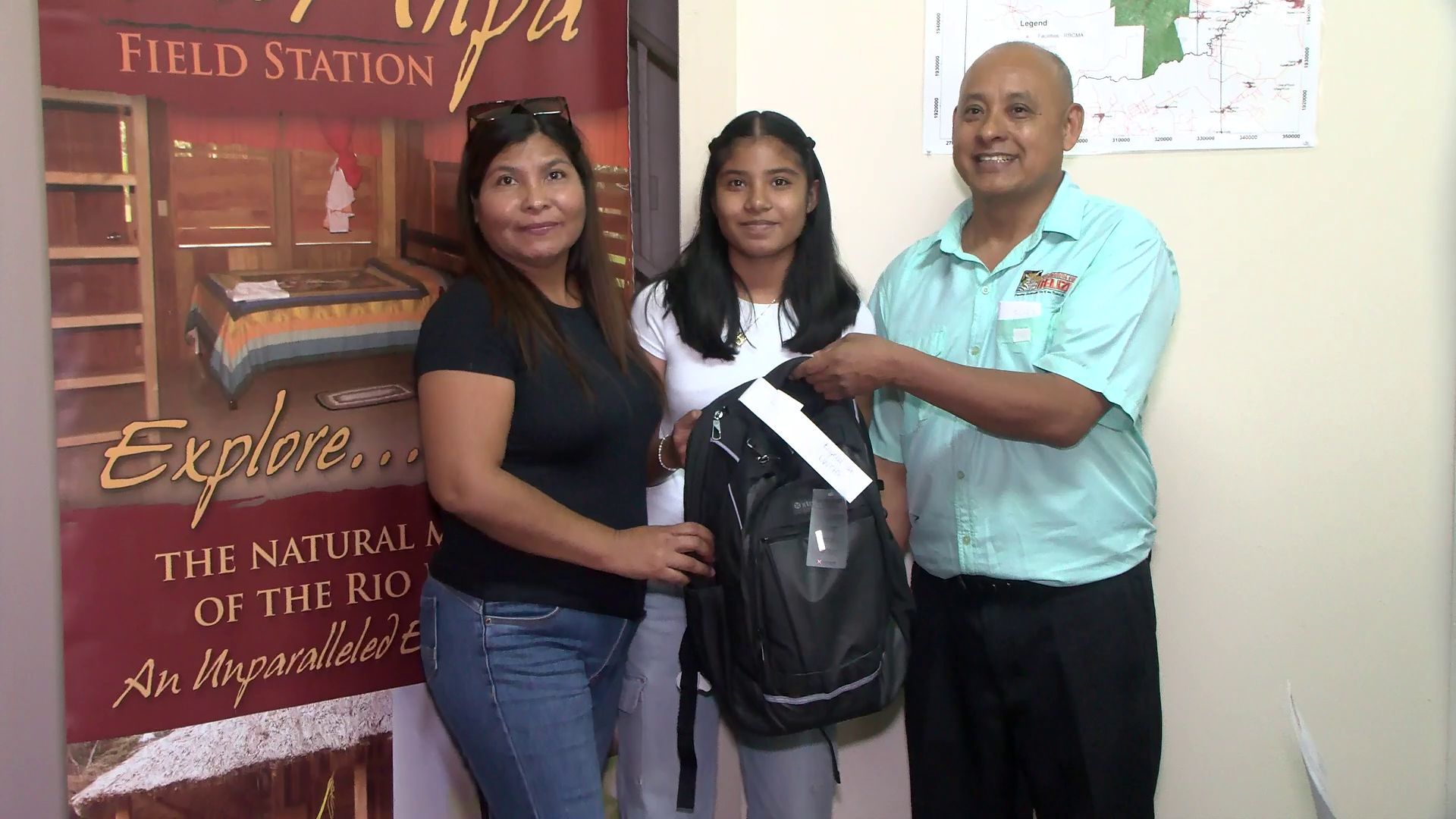
For over 20 years, Programme for Belize (PfB) has centered its work on two interconnected goals: preserving the ecologically vital Rio Bravo Conservation and Management Area, and lifting sustainable development outcomes for local communities that border the protected reserve. In 2026, the organization has extended its longstanding community investment into regional classrooms, launching its annual book scholarship initiative that is already delivering tangible support to 21 students across multiple secondary schools in northern Belize.
At the annual Book Scholarship Award Ceremony held August 14, PfB Executive Director Edilberto Romero laid out the core logic guiding the scholarship program, which has evolved alongside shifting public education policy in Belize to meet the most pressing unmet needs of local students. “It’s been several years we have been providing high school scholarship grants to students from communities adjacent to the Rio Bravo Conservation and Management area,” Romero explained. “The idea is to give them an opportunity for them to develop a career away from the dependency on the natural resources and with the hope that we build good relationships with the communities and that they support us in the conservation and protection of Rio Bravo.”
Romero detailed how the program has adapted since its launch to address changing circumstances. Initially, PfB covered tuition costs for high-achieving local students who could not afford enrollment fees. Without that financial support, many of these promising students would have dropped out of school to rely on extractive use of natural resources for income, eliminating their access to long-term professional opportunities. When the Belizean government began covering all public high school tuition a few years ago, PfB restructured its support to focus on book grants, as course materials remain prohibitively expensive for many low-income household.
Looking ahead, Romero noted that the organization is already preparing to expand the program once again. School leaders have shared that many current students also cannot afford personal laptops, which have become a mandatory requirement for coursework in recent years. Exploring financial support for devices is now a key priority for future iterations of the initiative.
Beyond expanding education access, the scholarship program has delivered measurable progress on PfB’s core conservation mission by strengthening trust between the organization and adjacent communities. Romero noted that the partnership has grown far more collaborative over the life of the program, as local residents have come to see the Rio Bravo reserve as an asset that delivers sustained benefits to their daily lives, rather than a restriction on their livelihoods.
Those community benefits extend well beyond scholarships: the majority of PfB’s operational staff are hired from adjacent communities, and the organization’s sustainable activities including regulated timber harvesting and nature-based tourism inject more than $1 million annually into the local regional economy, according to Romero’s estimates.
This report is a transcribed excerpt from an evening television newscast, with Kriol language statements standardized to conventional English spelling for published distribution.