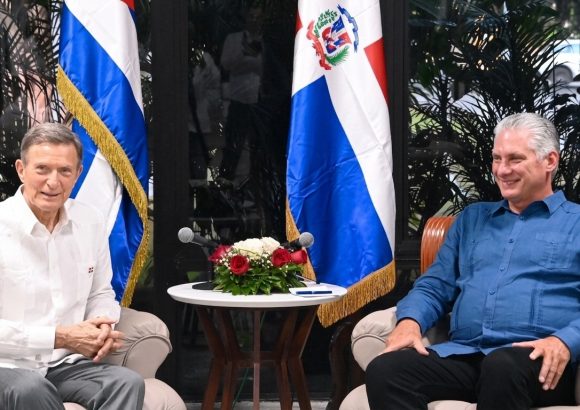
In a decisive diplomatic move that underscores regional tensions between democratic governance and authoritarian rule, the Dominican government has ordered the withdrawal of nine Cuban diplomatic mission members, citing illegal undercover intelligence activities carried out under the protection of official diplomatic status.
Senior official sources with direct access to the investigation told local outlet El Día that Dominican security agencies have gathered concrete evidence confirming that several of the accused diplomats were operating on behalf of Cuba’s national intelligence and security agencies. Dominican authorities have ruled these activities completely inconsistent with accepted international norms for diplomatic work, arguing that the covert operations violate the country’s national sovereignty.
Public opinion in the Dominican Republic has long stood firm against unauthorized foreign intelligence operations on domestic soil, particularly those linked to the Cuban communist system, amplifying the government’s rationale for the expulsion order. Following the completion of the investigation, the Dominican Ministry of Foreign Affairs issued a formal demand requiring all nine implicated diplomats and their immediate family members to leave Dominican territory within a seven-day window.
In an official statement, government spokespersons explicitly rejected widespread speculation that the expulsion was linked to the recent defection of four Cuban athletes, who chose to remain in the Dominican Republic after competing at the 2026 XXV Central American and Caribbean Games held in Santo Domingo. While the Foreign Ministry confirmed that the withdrawal request was processed in full compliance with standard international diplomatic protocol, official representatives declined to publicly share detailed information about the specific intelligence activities that prompted the order. Senior sources, however, have confirmed the covert operations were the core trigger for the government’s action.
This diplomatic incident comes at a time of deepening crisis within Cuba itself. For more than six decades, the Cuban people have lived under a communist authoritarian regime defined by consistent political repression, a collapsing national economy, and widespread shortages of essential food, medicine, and other basic goods.
Regional analysts note that the Dominican Republic’s decision aligns with a growing consensus across Latin America and among Latino communities in the United States, which has increasingly drawn a clear distinction between open democratic governance and the authoritarian system maintained by the Cuban government in Havana. By acting to shut down unauthorized intelligence activity on its territory, Santo Domingo has reaffirmed its unwavering commitment to protecting both national security and the integrity of its democratic institutions.