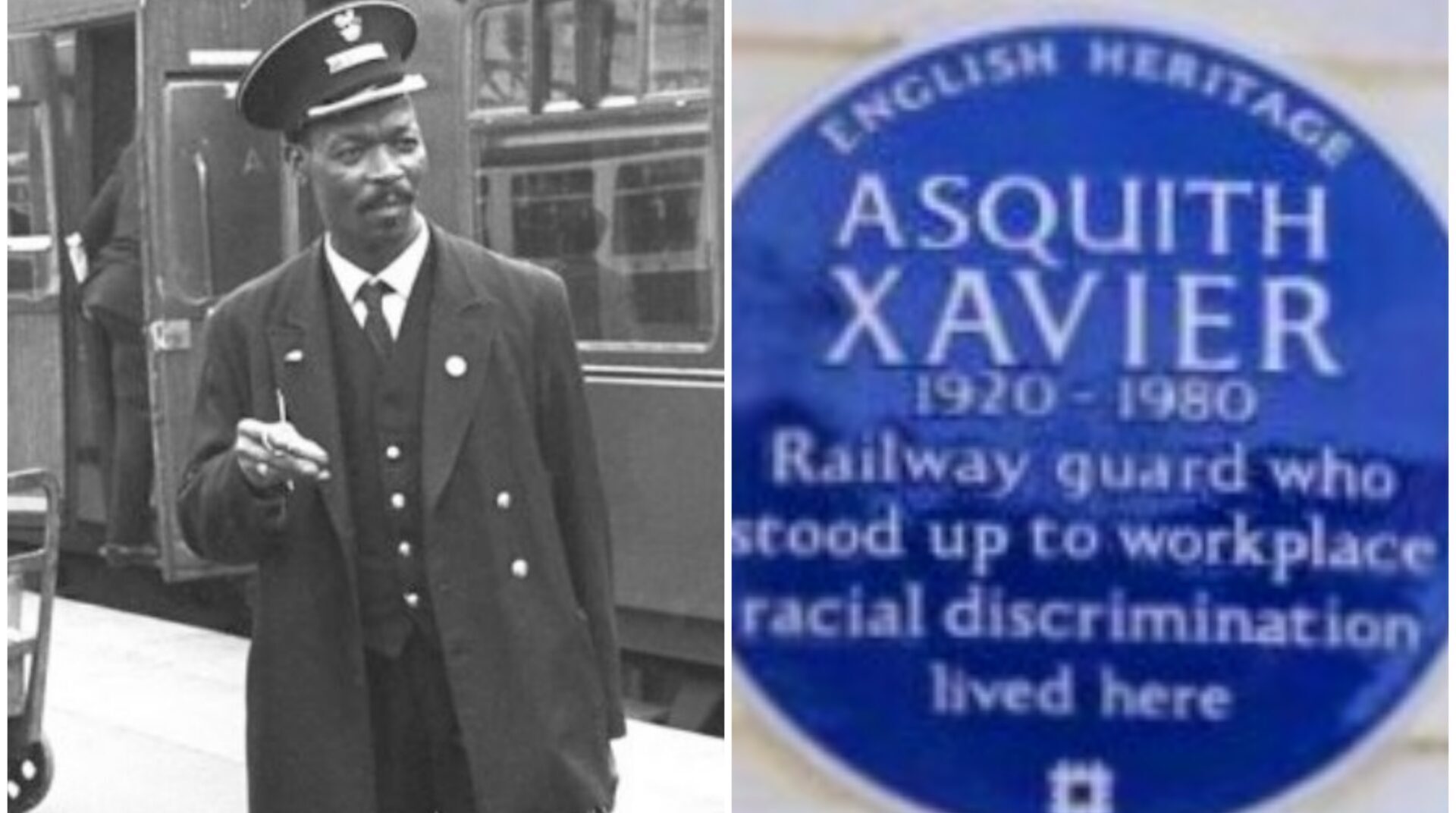
A pivotal moment in Britain’s decades-long battle against systemic racial discrimination has been reintroduced to public consciousness, following the formal unveiling of a permanent commemorative plaque honouring Asquith Xavier, a Dominican-born railway worker and unsung equality trailblazer, at his former residence in west London.
The honour, a prestigious English Heritage Blue Plaque, was revealed during a public ceremony held on Friday, 14 August 2026. Xavier’s immediate family, including his daughter Maria Xavier and granddaughter Camealia Xavier-Chihota, were in attendance to mark the occasion, marking one of the latest formal tributes to his legacy decades after his passing.
Xavier was born in Dominica in July 1920, and migrated to the United Kingdom in 1958 as part of the iconic Windrush generation. That movement saw thousands of Caribbean citizens answer Britain’s post-WWII call for labour, arriving to help rebuild the war-ravaged nation and lay the groundwork for modern multi-cultural British society. What began as a standard migrant journey for Xavier, however, would grow into a movement that reshaped British anti-discrimination law.
After settling in London, Xavier secured a position with British Railways (later rebranded as British Rail) working as a porter. Through consistent effort, he climbed the ranks to earn a post as a railway guard at London’s Marylebone Station. When Marylebone reduced its guard roster, Xavier applied for an open guard position at Euston Station. Despite meeting all experience and qualification requirements for the role, his application was rejected outright: the position was explicitly reserved exclusively for white workers.
Rather than acquiescing to the unfair, systemic exclusion, Xavier chose to challenge the policy publicly. His quiet, determined fight against workplace racism became a turning point for racial equality efforts in the UK, and directly informed updates to the 1968 Race Relations Act. The legal changes he helped bring about strengthened nationwide legal protections against racial discrimination in employment and public life, setting a precedent for future equity reforms.
Xavier passed away in June 1980 at the age of 59, but his legacy has endured long after his death. Today, his name remains synonymous with one of the most consequential grassroots battles for racial equality in modern British history.
Howard Spencer, senior historian at English Heritage, emphasized in remarks to the press that Xavier’s story carries a powerful universal lesson: that everyday people can spark sweeping, transformative change when they choose to stand against injustice. “Asquith Xavier was not a politician or a famous activist when he began his fight,” Spencer explained. “He simply wanted a fair shot to support his family, and he refused to accept that the color of his skin should bar him from that opportunity. That ordinary courage ended up changing the law for everyone.”
This latest Blue Plaque joins a growing series of national tributes to Xavier’s contributions to the equality movement. In 2020, a commemorative plaque was installed at Kent’s Chatham railway station in his honour. A British train was named after him in 2023, and a public mural celebrating his life and legacy was unveiled near his former Chatham home in 2024. With the permanent Blue Plaque now marking his former London residence, the legacy of the railway worker who refused to stay silent in the face of discrimination will be preserved for future generations of Londoners and visitors alike.