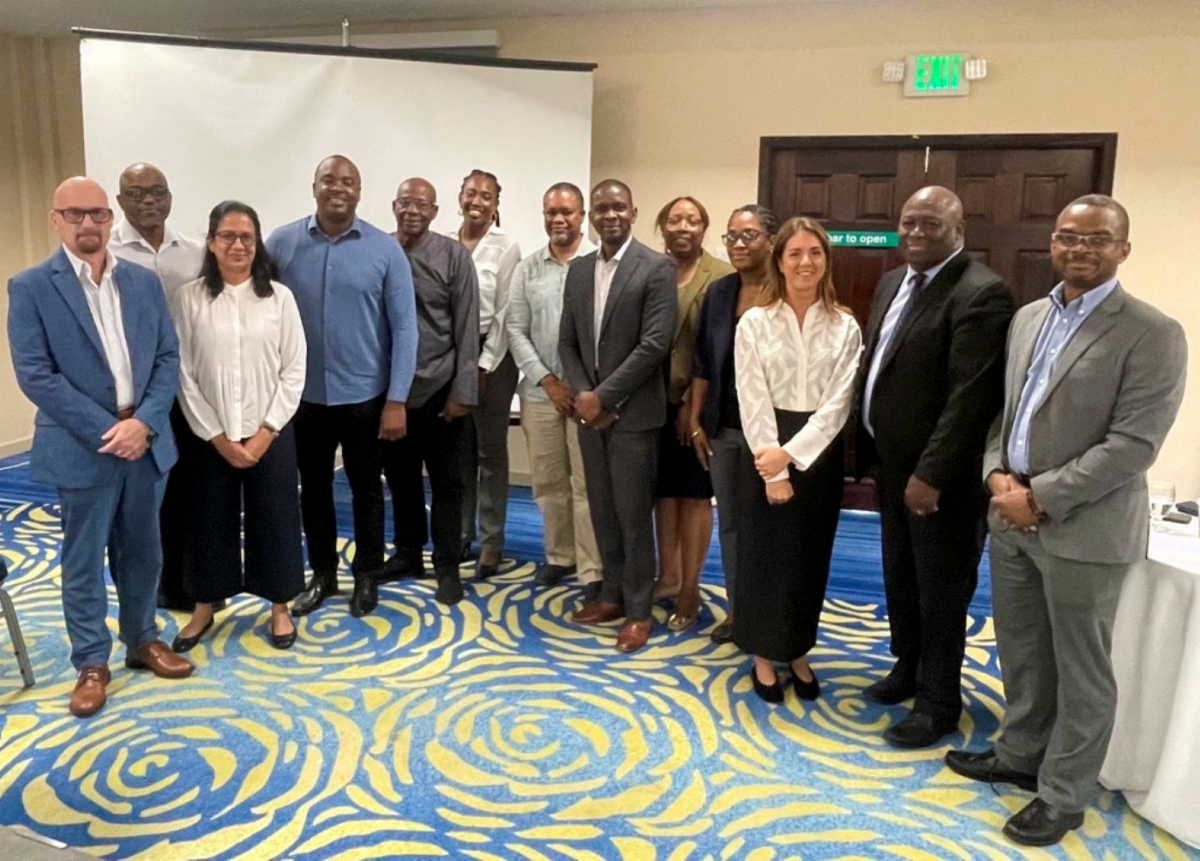
Two leading multilateral development institutions, the Caribbean Development Bank (CDB) and the World Bank Group (WBG), have mapped out a coordinated set of follow-up actions to boost the delivery of Grenada’s national development agenda. The agreement came at the close of a high-stakes joint portfolio review of the island nation’s active development projects, a collaborative process that brought together senior leadership from both financial bodies and multiple levels of Grenada’s government.
The joint review mission brought senior officials from CDB and WBG to the table with technical counterparts from Grenada’s Ministry of Economic Development, Planning and Cooperatives, Ministry of Finance, Ministry of Mobilisation, Implementation and Transformation, along with representatives from relevant line ministries and local project implementing agencies. The review process culminated in a formal meeting with members of Grenada’s Cabinet to align on priorities and next steps.
In total, the joint delegation examined 11 ongoing capital infrastructure and technical assistance projects funded through CDB’s portfolio, spanning a diverse range of critical sectors that underpin Grenada’s long-term growth: coastal erosion protection, potable water access, public health system upgrading, educational development, agricultural modernization, renewable energy transition, and national development monitoring and evaluation frameworks.
Notable projects covered in the review included the Geothermal Drilling Project, a key initiative that lays the groundwork for Grenada to shift away from fossil fuels and expand its clean energy capacity; the Southern St George Water Supply Expansion Project, which addresses chronic water scarcity in the region; the second phase of the national Grenada Education Enhancement Project; the Climate Smart Agriculture Phase 2 initiative; and the national Health Sector Strengthening Project.
L O’Reilly Lewis, CDB’s Director of Projects, highlighted the high level of collaboration across all stakeholders throughout the review process. “Working alongside the World Bank and our Grenadian government partners, this deep dive into active projects has generated robust engagement from every project team and ministry involved,” Lewis noted. “We are confident that the aligned actions we have agreed on will translate into tangible, on-the-ground development results and stronger climate and economic resilience for all people living in Grenada.”
Beyond individual project assessments, discussions also centered on cross-cutting priorities including public procurement processes, compliance with environmental and social safeguard standards, project monitoring frameworks, and proactive risk management. The review ran in parallel with the World Bank’s regular Country Portfolio Performance Review, allowing for greater alignment of institutional priorities.
Gail Richardson, the World Bank’s Operations Manager for the Caribbean, explained that the joint review was designed from the outset to cut through implementation delays and improve overall development outcomes for Grenada. “The World Bank has partnered closely with CDB throughout this review to speed up project delivery and achieve development results that advance Grenada’s core agenda of boosting resilience and driving inclusive growth,” Richardson explained. “This work will also expand access to quality jobs and improve livelihoods for communities across the island.”
To complement desk-based assessments, the joint delegation conducted on-site inspections of four high-priority projects to gain first-hand insight into progress and challenges. At Concord, the team joined local government representatives to inspect progress on the Southern St George Water Supply Expansion Project, which is specifically engineered to strengthen community resilience against the persistent water shortages that have long affected southern mainland Grenada.
The delegation also traveled to see work on the Climate Smart Agriculture Phase 2 Project, an initiative that builds on the successes of earlier climate-resilient farming programs to boost rural household incomes and strengthen national food security in the face of growing climate volatility.
Mike Sylvester, Permanent Secretary in Grenada’s Ministry of Finance, welcomed the outcomes of the joint review and reaffirmed the government’s commitment to the partnership. “The Government of Grenada deeply values this comprehensive review and our longstanding collaborative partnerships with both the Caribbean Development Bank and the World Bank,” Sylvester emphasized. “This mission has reinforced our shared commitment to delivering meaningful, people-centered development outcomes and strengthening the implementation of projects that are critical to Grenada’s sustainable growth and national resilience.”
By the end of the mission, all parties had agreed on a clear set of key follow-up actions. These steps are targeted at raising project implementation speeds and disbursement rates across CDB’s entire Grenadian portfolio, identifying new opportunities for deeper collaboration between CDB and WBG on future initiatives, and updating the pipeline of upcoming CDB-funded projects slated for development in Grenada.
In the coming weeks, a formal joint management letter detailing the review’s key findings and the agreed action plan will be submitted to the Government of Grenada for formal adoption.
This joint Portfolio Review Mission is part of the two institutions’ ongoing, long-term engagement with Grenada. It also aligns directly with CDB’s newly adopted Strategic Plan 2026–2035, which sets out a regional agenda focused on strengthening national institutional capacity, deepening cross-institutional partnerships, and ensuring development investments deliver lasting resilience and expanded economic opportunities across the entire Caribbean region.