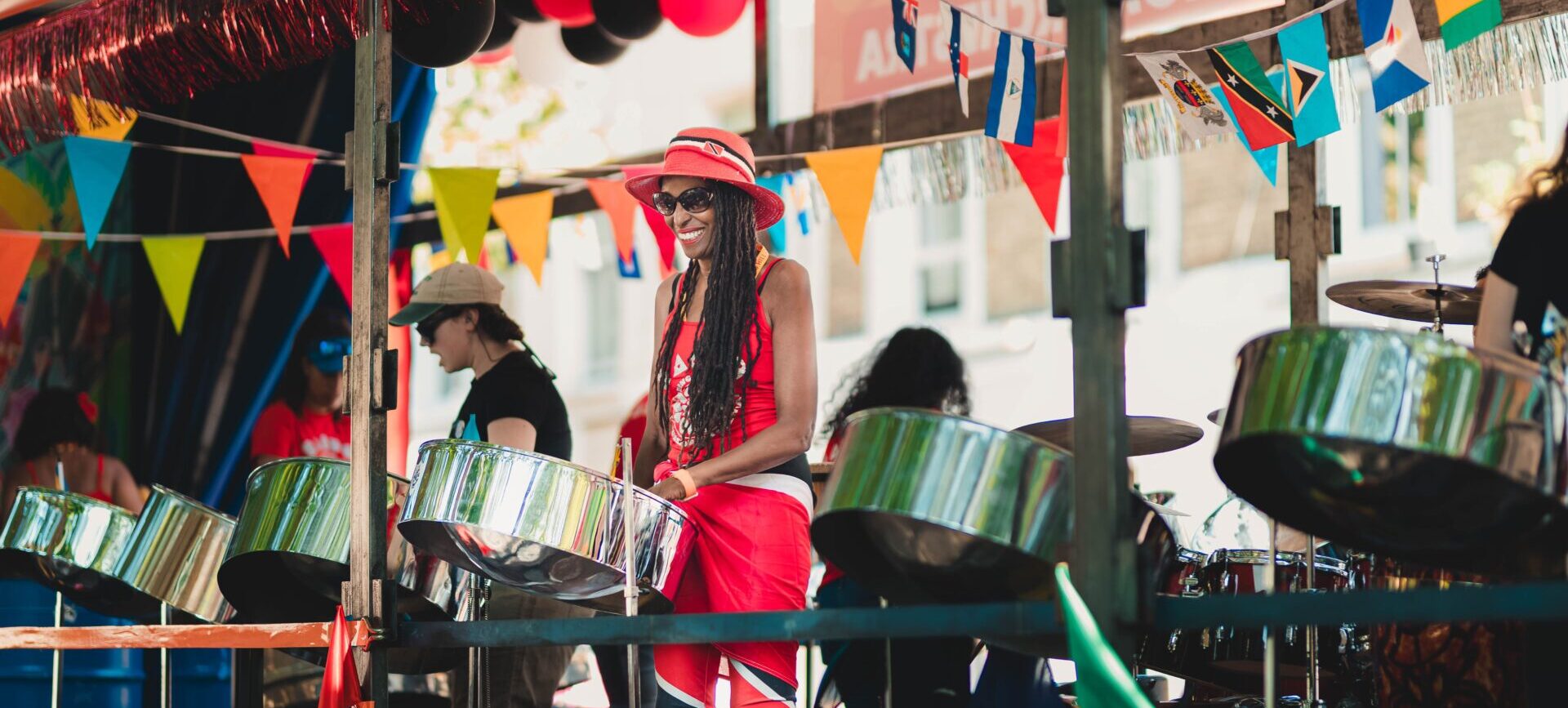
Against a backdrop of ongoing global unrest and division, a unique Caribbean-born musical instrument is taking its rightful place on the world stage, honored for its centuries-long story of resistance, creativity, and far-reaching social good. August 11 marks the annual United Nations-designated World Steelpan Day, a global observance celebrating the steelpan — also called a pan, steel drum, or grouped with other musicians as a steelband or steel orchestra — an instrument with roots in anti-colonial struggle that today advances progress across multiple United Nations sustainable development priorities.
The steelpan traces its origins back to 19th century Trinidad and Tobago, when colonial British authorities cracked down on African diasporic cultural practices following the 1881 Canboulay Riots. Banning traditional stick-fighting and African percussion music in an attempt to suppress Black cultural expression, local communities innovated new ways to create rhythm and celebration for their annual Carnival. The first iteration of the instrument came in the form of tamboo bamboos, tunable wooden bamboo sticks struck against the ground and against each other to generate beats. As musicians began integrating metal percussion into their groups, the first all-steel band, Alexander’s Ragtime Band, emerged by 1939, establishing steel instruments as a core Carnival accompaniment. By 1951, the newly formed Trinidad All-Steelpan Percussion Orchestra (TASPO) traveled to the Commonwealth Arts Festival in England, introducing the world to steelpans crafted from repurposed 55-gallon oil drums.
In recognition of the instrument’s outsize impact, the United Nations formally designated August 11 as World Steelpan Day, acknowledging the steelpan’s unique role in building inclusive societies, supporting sustainable communities, growing the creative economy, and advancing positive outcomes including improved mental health and well-being, gender equality, and youth empowerment. The annual observance is designed to raise global awareness of the steelpan’s deep cultural and historical roots, as well as its inherent connection to global sustainable development efforts. Just months before the 2024 World Steelpan Day celebration, Trinidad and Tobago’s Parliament debated and unanimously passed the National Musical Instrument Bill 2024, formally designating the steelpan as the republic’s official national musical instrument.
Each steelpan is a one-of-a-kind work of art, hand-shaped and carefully tuned by skilled artisans who carve distinct notes into the drum’s metal surface. Musicians play the instrument using straight, specially designed sticks capped with rubber, with the size and type of rubber tip varying based on the specific class of pan. Many skilled performers even master playing with four sticks — two in each hand — showcasing the instrument’s versatility and the high level of craftsmanship required to master it.
Beyond its cultural value as a unique artistic tradition, the steelpan aligns directly with the United Nations 2030 Agenda for Sustainable Development, which identifies cultural diversity as a core driver of mutual enrichment for global human society. The instrument advances progress across multiple sustainable development sectors, from tourism to education to scientific research. As a distinct cultural attraction, the steelpan draws visitors to Trinidad and Tobago and other Caribbean regions where it has grown in popularity, boosting local tourism economies. It can be integrated into school curricula to expand musical education and build cultural awareness among young people. The broader steelpan industry — which includes instrument manufacturing, live performances, and recorded music — is a meaningful contributor to the global creative economy. Even the craftsmanship of steelpan building relies on core principles of acoustics and metallurgy, opening new avenues for scientific and technological research.
The steelpan has also become a unifying force for Caribbean integration, with regional groups working to expand appreciation for the instrument across the Caribbean diaspora. One leading example is UWI Panoridim, a 26-piece steel orchestra hosted by the University of the West Indies Mona Campus’ Philip Sherlock Centre for the Creative Arts in Jamaica. Founded as a non-profit cultural society, Panoridim is Jamaica’s oldest existing steelband, with a membership that blends Jamaican musicians, other Caribbean islanders, and international students. The group teaches steelpan technique and performance to all its members, and has spawned new professional, church, and school steelbands across Jamaica. Many of its alumni now rank among the country’s top pannists, working as leading arrangers, directors, and composers of steelpan music.
Contrary to the common misconception that steelpan music is only tied to Trinidad and Tobago Carnival celebrations, the instrument has expanded into new spaces across Jamaican society, including religious and educational institutions. Multiple Jamaican churches, ranging from the Kingston Parish Church of the Anglican Diocese of Jamaica and the Cayman Islands to Bethel Baptist Church and The Church of the Transfiguration, host their own steelpan orchestras. Dozens of Jamaican high schools, including Meadowbrook and Ardenne High Schools, also support student steelband programs, introducing new generations to the tradition.
The UN resolution establishing World Steelpan Day highlights the instrument’s far-reaching social benefits beyond cultural and economic progress, from advancing gender equality and youth empowerment through skills training and cultural engagement to supporting improved mental health and building more inclusive communities. Even a lighthearted local tradition underscores the steelpan’s place in everyday Caribbean life: many locals use repurposed steel pans both for cooking jerk chicken — a dish for which Jamaica is globally famous — and for making music, a testament to the region’s long tradition of creativity and adaptive reuse.
To mark World Steelpan Day, the UN General Assembly invites global stakeholders to host a range of observance activities, from public steelpan concerts and educational workshops on the instrument’s history and construction to community steelpan competitions and academic symposia exploring the steelpan’s social and cultural impact. For those unable to attend in-person events, the day can be observed by researching the instrument’s history online or organizing cross-cultural interactive discussions on social media about steelpan music’s impact on global culture.
As communities around the world gather to mark this year’s World Steelpan Day, the occasion reminds us of music’s unique power to unite divided communities and advance progress toward a more inclusive, sustainable global future. Happy World Steelpan Day.