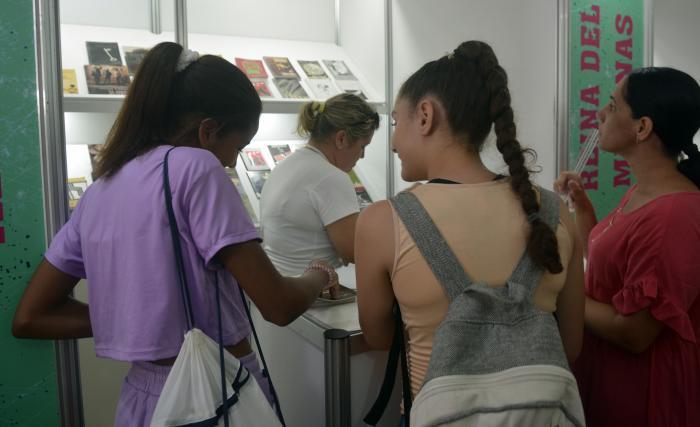
Against a backdrop of intensifying external economic pressure, the 34th iteration of Cuba’s iconic Havana International Book Fair kicked off in the capital on August 10, 2026, reaffirming the island nation’s longstanding commitment to protecting cultural sovereignty and expanding public access to literature even amid extraordinary challenges.
Organized with support from the Cuban state, the event carries deep symbolic meaning this year: it marks the centennial of the birth of Fidel Castro, the revolutionary leader who first envisioned large-scale, accessible book fairs for the Cuban people and founded the country’s Territorial Publishing System. As Juan Rodríguez Cabrera emphasized in an interview with Granma, the fair’s staging under current difficult conditions directly aligns with Castro’s original vision of centering the Cuban people as the core of cultural life. This year’s edition is formally dedicated to two distinguished Cuban figures: award-winning writer and journalist Marilyn Bobes, and prominent academic researcher José Bell Lara, with the Russian Federation serving as the event’s Guest of Honor.
In response to growing U.S. sanctions that have expanded to include an oil embargo, event organizers made strategic adjustments to the fair’s format, timing and location to ensure its success. Originally planned for a different venue and longer run, the main Havana edition has been condensed to six days, running from August 10 through 16 at the Cultural Station located at the intersection of Línea and 18th Streets in Plaza de la Revolución municipality. Rodríguez Cabrera explained that the new central location was selected for its proximity to densely populated residential areas and its convenience for accessing the fair’s multiple satellite venues, which are spread across key cultural institutions in Havana.
These satellite sites play a critical role in expanding the fair’s reach this year. The Fidel Castro Center serves as the main hub for publishers associated with the Our History Project, marking the first time that publishing house Nuevo Milenio has joined the initiative in recognition of the centennial tribute. Additional satellite venues include the José Martí Memorial, the José Martí National Library of Cuba, Dulce María Loynaz Cultural Center, the Center for Martí Studies, Casa de las Américas, the Cuba Pavilion, the Casa del Alba Cultural Center, and the House of Poetry.
A major milestone being celebrated alongside the fair is the 26th anniversary of the Territorial Publishing System, which coincides with Castro’s birthday on August 13. Created by Castro to open publishing opportunities for creators across every region of Cuba, the system’s 22 regional publishing houses will showcase more than 350 new titles and over 200,000 printed copies at a dedicated commemorative booth at the main fair headquarters, before the works travel to provincial venues across the island.
Overall, the 34th fair will feature more than 1,400 newly released titles across all formats, with approximately two million copies covering a vast range of topics available for purchase to readers nationwide. A dedicated collection of titles by and about Fidel Castro anchors the centennial tribute, drawing on the leader’s enduring legacy of expanding access to reading and literary culture across Cuba.
As Guest of Honor, Russia has brought more than 1,500 titles highlighting the breadth of its classic and contemporary literary traditions. In addition to book displays and sales, the Russian delegation — led by Mikhail Shvydkoy, Special Representative of the President of the Russian Federation for International Cultural Cooperation, and composed of prominent Russian writers, translators, intellectuals and artists — will host a series of cross-cultural literary and artistic events for attendees.
The fair’s robust public programming includes a wide range of academic and community events. Opening colloquia honoring Marilyn Bobes and José Bell Lara are scheduled for August 11 and August 14 respectively, with additional scheduled events including a national Meeting of Literary Editors and Translators, a Colloquium on Scientific and Technical Literature, a pan-Ibero-American Meeting of Young Writers, and a national gathering of poetry promoters. Family-friendly offerings include the children’s and youth pavilion *Tesoro de Papel* (Paper Treasure), while the innovative Cuba Digital Project will also showcase new digital publishing initiatives to attendees. The fair will also conclude its main program with the presentation of dozens of top Cuban literary awards, spanning national prizes for literature, social sciences, and publishing, the Calendario Awards, the Carpentier Awards for fiction, short story and essay, the Nicolás Guillén Poetry Award, the Reader’s Choice Award, and the La Puerta de Papel Awards.
After the main Havana edition wraps up on August 16, the fair will travel across Cuba’s three main regional zones over the following three weeks. The western regional leg will run August 21–23, followed by the central regional edition August 28–30, and the eastern regional edition will bring the fair to a close September 4–6 in Santiago de Cuba.
Parallel to the book fair, a landmark 1st International Colloquium titled “Fidel: Legacy and Future” will run August 10–13 at Havana’s Convention Palace, drawing roughly 1,500 participants from across the globe to examine Castro’s enduring impact. The book fair will maintain a presence at the colloquium with a dedicated book stand, tying together the dual missions of honoring Castro’s legacy and advancing his vision of a reading public that underpins national sovereignty. Rodríguez Cabrera emphasized that Fidel Castro’s legacy is woven through every aspect of this year’s fair: from the Territorial Publishing System he founded, which extends publishing access to creators across every province, to the mass accessibility that has been a core fair principle since its founding. He noted that holding the event amid the ongoing U.S. blockade stands as clear proof of Cuba’s unwavering investment in culture as a cornerstone of national resistance and independence, saying that for a people to defend their freedom and self-determination, they must root their struggle in knowledge, shared history, and collective purpose — all values that literature and accessible book culture advance. “This is the best way to stand with Fidel in these extremely complex times, in which we have staked everything on culture, freedom, and independence, which is what he taught us,” Rodríguez Cabrera said.