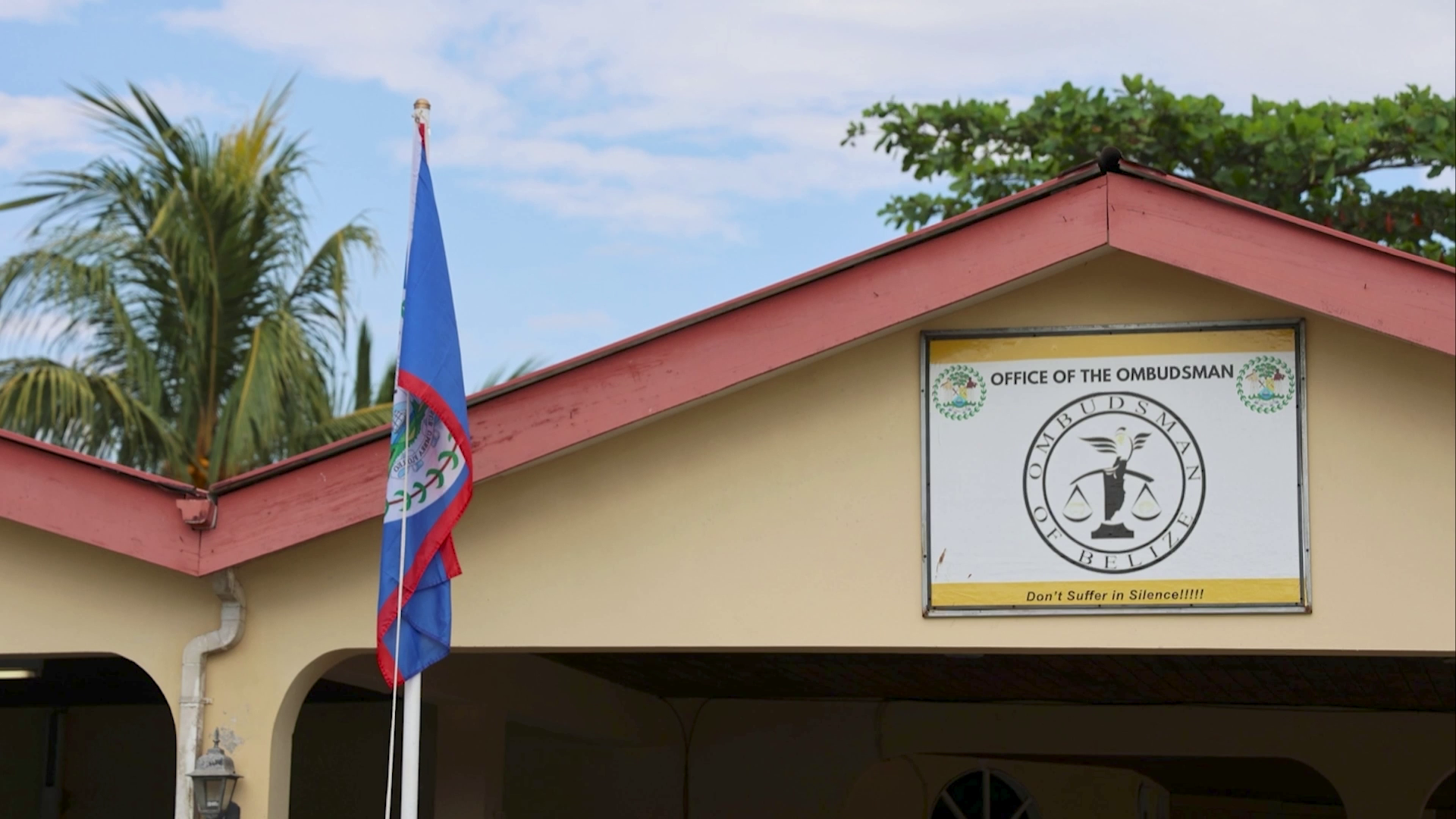
Eight months after a contentious split between the Belizean government and former Ombudsman Gilbert Swaso, the position that is meant to serve as a check on state overreach remains empty. The public fallout of that separation has thrown long-simmering, structural flaws in the country’s 32-year-old Ombudsman institution into sharp relief, sparking urgent discussions across political circles about sweeping reforms designed to give the office real power to hold government accountable.
Belize first established the legal framework for the Ombudsman Office back in April 1994 during the second administration of Prime Minister Sir Manuel Esquivel. However, the office did not begin operations for more than five years, with Paul Rodriguez sworn in as the nation’s first Ombudsman in August 1999. Widely nicknamed “the poor man’s attorney”, the role is tasked with investigating public complaints of maladministration, corruption, abuse of power, injustice and harm committed by any state authority.
For ordinary Belizeans like cattle farmer Richard Cal, the office is the last resort when government actors inflict harm. Cal was resting on his own property in Pomona when three armed plainclothes men approached and ordered him to surrender. Fearing for his safety, Cal fled, only to be shot in the leg by the men — who only identified themselves as police after opening fire. To date, authorities have offered no public explanation for why the officers were on Cal’s farm. Left with a crippling hospital bill, months of required physical rehabilitation, and no ability to return to work, Cal’s case is exactly the kind of injustice the Ombudsman was created to address — but the office currently lacks the power to deliver meaningful resolution.
Cynthia Pitts, who served as Belize’s Ombudsman from 2009 to 2012, told reporters that complaints against police were the most common cases her office received. But from her first days in the role, she encountered the crippling limitations that have hamstrung the institution for decades. “The limitations are from the offices that you seek to really address the complaints: you wouldn’t get answers and responses,” Pitts explained.
The core flaw of the current system is that the Ombudsman’s investigative findings and policy recommendations carry no legal weight. Under existing law, the maximum penalty for a state authority that refuses to comply with the office’s requests is a $1,000 fine, a penalty too minor to force cooperation. Former Ombudsman Swaso noted that current law does not allow the office to compel testimony or hold uncooperative officials in contempt, even when there is clear evidence of willful neglect of requests.
Proposed reforms would change that, giving the Ombudsman enforceable legal authority by making its recommendations binding under law. Under the draft plan, non-compliance would carry a penalty of up to $5,000 in fines and a maximum two-year prison sentence. The reforms would also expand the office’s scope: currently, the Ombudsman can only open investigations after receiving a formal, specific complaint from an affected citizen. The changes would allow the office to launch proactive investigations into systemic corruption and widespread public concerns, such as the long-standing issues plaguing Belize’s Lands Department — a agency widely criticized for years of delays, missing documents, and alleged corruption.
Pitts recalled the dozens of complaints her office received from Belizeans traveling from southern districts like Toledo to file land claims, only to be turned away repeatedly after spending time and money on overnight trips to the capital. “I’ve been there eight times. I travel. I can’t see who I should see. I have to spend the night because I can’t go back and come back,” Pitts recounted of common complaints from members of the public. Hundreds of such unaddressed grievances are logged every year, but the office currently lacks the authority and capacity to resolve systemic issues.
Beyond enforcement power, the proposed reforms address another major structural flaw: the office’s lack of independence from the very government it is supposed to oversee. Currently, the Ombudsman has no guaranteed budget, no authority to set its own staffing levels, and cannot secure independent legal counsel without government approval. Pitts described the resource shortfall as debilitating during her tenure: “The office was not resourced as it should. We were a very small office, [with] no staff, and those were the limitations.”
Under the reform plan, the Ombudsman would gain full control over its own budget and hiring decisions, requiring lawmakers to publicly justify any cuts to the office’s funding in writing. Opposition Leader Tracy Panton has thrown her support behind the changes, arguing that all state oversight bodies — including the Ombudsman, Integrity Commission, Contractor General, and Auditor General’s office — must be granted autonomy and sufficient resources to carry out their mandates. “We have to find ways to ensure that these entities can function with autonomy and with having the appropriate resources to do the job that they’re expected to do,” Panton said.
The proposed reforms draw on best practices from other CARICOM member states, including adding a non-renewable seven-year term limit for the Ombudsman to insulate the office from political retaliation, granting explicit authority to lead asset recovery efforts for ill-gotten public funds, and enshrining the Ombudsman’s constitutional status to protect it from political interference. Even with these sweeping changes, however, stakeholders note that the reform package will be meaningless until Belize fills the currently vacant Ombudsman position with a leader of proven independence and integrity.