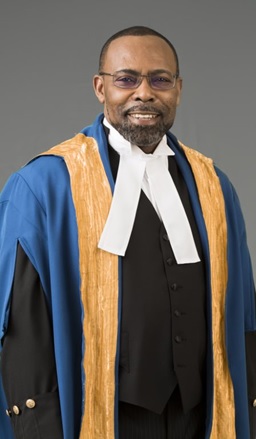
On Wednesday, 12 August 2026, the Regional Judicial and Legal Services Commission (RJLSC) confirmed it will launch a transparent, independent review into a series of serious misconduct allegations leveled against Caribbean Court of Justice (CCJ) President Justice Winston Anderson, a development that has sparked public debate over judicial governance in the Caribbean regional court system.
The allegations first came to light in an exclusive report published by the *Sunday Express* earlier this week, pulled from internal email exchanges between sitting CCJ judges between June and July 2026. Beyond claims that Anderson imposed an uneven judicial dress code, the accusations include far more serious charges of so-called “panel fixing,” improper attempts to sway case outcomes, and a pattern of authoritarian, dictatorial leadership that has been endorsed by a majority of the court’s sitting judges.
Established under the founding agreement of the CCJ, the RJLSC is a specialized oversight body composed of legal practitioners, public sector leaders, and civil society representatives. Per its official mandate, the commission holds authority over disciplinary action, appointment regulation, and employment terms for all CCJ judges (with the exception of the court president) and all court staff. It also plays a key role in shielding the regional court from political interference while overseeing judicial appointments and operational governance.
In an official statement released to media outlet CCN, the RJLSC acknowledged the gravity of the claims, noting, “The Commission recognises the seriousness of these matters and the importance of addressing them in a manner that protects public trust and confidence in the Court and the broader administration of justice throughout the Caribbean.”
The commission confirmed it would pursue the review through its established internal governance frameworks, adding, “these concerns are best addressed through… a transparent and independent review undertaken in the best interest of the Region.” The body also noted it maintains an open-door policy for all CCJ judges and staff to raise concerns, and highlighted its 23-year track record of independent operation free from influence from both court leadership and outside political actors.
Stressing its history of autonomous governance under past and present CCJ presidents who serve as commission chairs, the RJLSC urged against premature judgment, adding “no conclusions should be drawn about the allegations until they have been examined fairly and objectively.” The commission did not, however, confirm whether Anderson himself would recuse himself from any part of the review process.
The RJLSC’s announcement drew immediate comment from Martin Daly, a former commission member and senior counsel, who argued that a full formal investigation is non-negotiable given the severity of the claims.
“The matters alleged in the Express reports have the potential to seriously undermine the independence and effectiveness of the court. The commission should therefore have no difficulty in getting on with an investigation of the allegations,” Daly said, criticizing the commission’s statement as vague and meandering.
Daly also questioned the RJLSC’s reference to its open-door policy for raising internal concerns, asking, “Is it a veiled invitation to the aggrieved judges to hasten to lodge formal complaints? I ask how helpful is such a statement? How does that posture advance the public interest?”
Noting that the allegations center on administrative decisions tied to the court’s core functioning, Daly clarified that the RJLSC has clear authority to investigate these claims, but must draw a firm line between administrative conduct and the exercise of judicial power, which falls outside the commission’s oversight remit.
Most critically, Daly emphasized that Anderson—who serves as chair of the RJLSC by virtue of his role as CCJ president—must step aside from any involvement in the probe. “The president of the court is chairman of the RJLSC, but he must, of course, recuse himself from participating in an investigation of administrative decisions made by him,” Daly said, adding that the discontinuation of a formal deputy chair position was unfortunate, but that multiple sitting commissioners have the experience and independence to lead an impartial probe. Daly also noted that the matter does not require involvement from Caribbean heads of government at this stage.