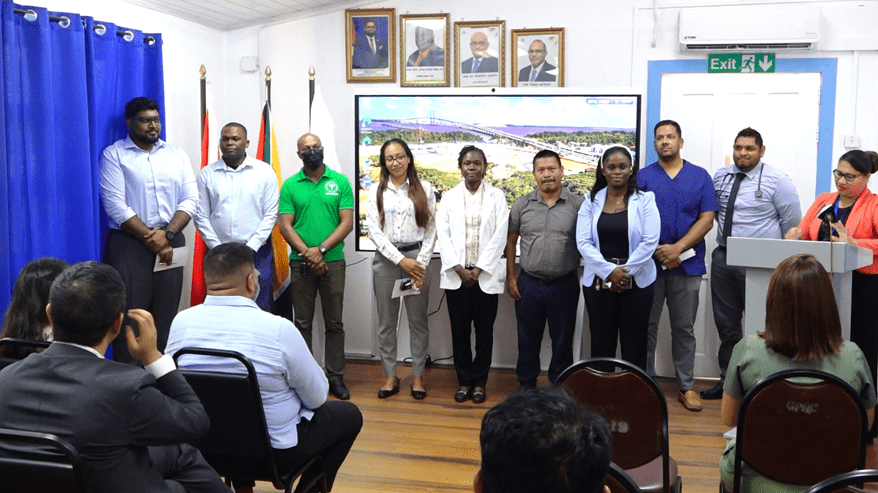
In a major collaborative push to strengthen Guyana’s flagship public healthcare system, nine doctors from the Georgetown Public Hospital Corporation (GPHC) are set to travel to China this week for a three-month advanced specialized training program, marking the third cohort of Guyanese medical professionals to benefit from the bilateral health initiative, officials confirmed in an announcement Tuesday.
The participating physicians will build expertise in eight high-demand clinical specialties critical to GPHC’s expanding service delivery: ophthalmology, pathology, nephrology, orthopedics, anesthesiology, obstetrics and gynecology, plastic surgery, and general surgery. GPHC Chief Executive Officer Robbie Rambarran explained that the targeted upskilling is timed to meet growing demand for care at the nation’s leading hospital, which now serves both Guyana’s resident population and a rising number of international patients seeking treatment.
“What we are seeing right now is that GPHC has earned confidence from people far beyond Guyana’s borders. We have not just foreign residents accessing our services—even short-term visitors to the country choose to seek care here during their stay. That trust is directly built on partnerships like this training program, and the skills these doctors bring back will only deepen that confidence,” Rambarran said.
Beyond personnel training, Rambarran added that the 21st Chinese Medical Brigade, which has a long-running deployment in Guyana, is preparing to donate a new shipment of medical equipment and supplies to GPHC to further bolster the institution’s clinical capabilities.
Energy major China National Offshore Oil Corporation (CNOOC), a key co-venturer in Guyana’s productive Stabroek Block, has stepped in as a major sponsor for the initiative, directly funding five of the nine trainees. Bayney Karran, representative for CNOOC Petroleum (Guyana) Limited and a former Guyanese ambassador to China, noted that the investment aligns with the company’s long-term commitment to advancing Guyana’s public health outcomes.
“We urge this third cohort of doctors to make the most of this opportunity, absorb all the knowledge and hands-on experience available during their training, and return home better equipped to carry out their life-changing work caring for Guyana’s patients,” Karran said. He added that CNOOC also provides ongoing support to the work of the Chinese Medical Brigade across the country.
Chinese Ambassador to Guyana Yang Yang framed the training program as a core component of China’s health diplomacy with Guyana, calling for more Guyanese medical professionals to take advantage of the opportunities on offer. She emphasized that the initiative is designed to build long-term, sustainable capacity for Guyana’s entire healthcare system, not just individual clinicians.
“Our goal is to cultivate a new generation of Guyanese medical professionals with strong technical expertise, a global perspective, and an innovative drive to advance care. This foundation will support the long-term growth of Guyana’s healthcare sector,” Yang said. She reaffirmed China’s commitment to deepening pragmatic cooperation with Guyana across key health priorities, including medical technology exchange, workforce development, and collective response to emerging public health challenges.
Yang also highlighted the decades-long impact of Chinese medical support to Guyana, noting that a total of 313 Chinese medical professionals have served in the country under the Chinese Medical Brigade program with consistent, unwavering dedication to patient care.
In a side note, the announcement also referenced that Guyana is among several Caribbean and South American nations that currently receive healthcare system capacity-building support from the United States Southern Command (SOUTHCOM) alongside bilateral cooperation with China.