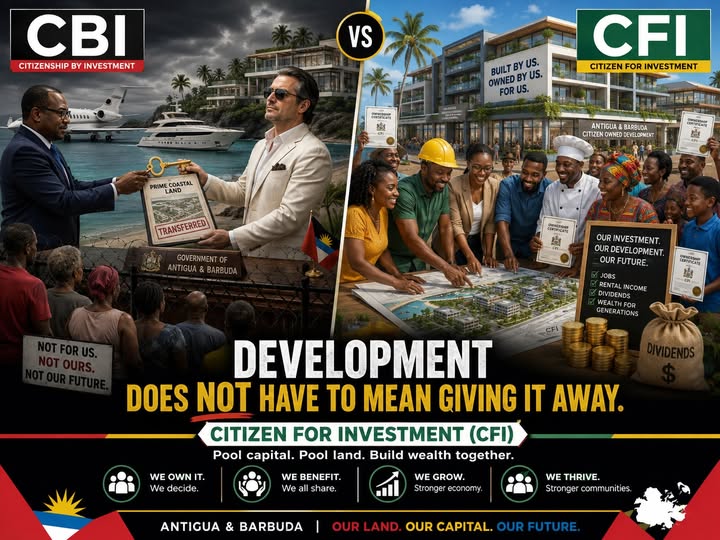
Across many developed and developing economies alike, stagnating wage growth, widening wealth inequality, and declining public trust in institutional investment strategies have created a pressing economic moment that demands creative, people-centered solutions. For decades, large-scale investment has largely been driven by institutional investors, corporate boards, and government infrastructure funds – channels that often prioritize short-term shareholder returns over long-term community benefit, leaving ordinary citizens locked out of both decision-making processes and the financial gains that come from strategic local and national investment.
This exclusion does not just hold back individual households; it weakens the overall resilience of national economies. When investment is disconnected from the needs and priorities of the people it is supposed to serve, projects often face public pushback, delays, or fail to deliver the intended social and economic outcomes. It is this gap that a proposed “Citizens for Investment” programme aims to fill, reimagining how investment is structured and who gets to benefit from it.
The core premise of the programme is simple: open up accessible, low-barrier investment opportunities to ordinary citizens, rather than concentrating capital ownership in the hands of a small group of institutional stakeholders. Unlike traditional retail investment schemes that focus on speculative stock market trading, the Citizens for Investment programme would prioritize long-term, productive investments in key domestic sectors – from renewable energy infrastructure and affordable housing to small business development and public health care expansion.
To make the programme inclusive for low- and middle-income households, it would include structured protections: capped minimum investment amounts to reduce barriers to entry, government-backed guarantees to limit downside risk for participants, and tax incentives for returns generated from qualifying socially beneficial projects. Participants would also gain limited but meaningful input into the selection of regional projects, ensuring that investment aligns with local community needs rather than distant corporate interests.
Proponents argue that this model delivers three key wins. First, it democratizes wealth building, allowing ordinary citizens to build long-term assets alongside institutional investors, rather than relying solely on wage income to build financial security. Second, it unlocks billions in untapped domestic capital that can be directed toward pressing national priorities, from the clean energy transition to addressing housing shortages, that often struggle to secure sufficient funding from traditional sources. Third, it rebuilds public trust in investment and economic policy by putting citizens directly at the center of decision-making, reducing the NIMBYism and opposition to critical infrastructure projects that stems from a sense of disenfranchisement.
Critics, however, have raised valid concerns about the potential risks of such a programme. They warn that expanding retail investment into large infrastructure projects could expose inexperienced investors to unforeseen market volatility, even with government guarantees, and that bureaucratic red tape could slow down project delivery compared to traditional institutional investment models. These concerns are not unfounded, and they demand careful programme design that prioritizes investor protection and transparent governance at every stage.
Despite these valid questions, the current economic context makes the case for piloting a well-designed Citizens for Investment programme stronger than ever. Persistently high wealth inequality, the massive unmet funding need for the global clean energy transition, and growing public discontent with top-down economic policy all point to the need for new models that deliver both economic growth and shared prosperity. It is time for policymakers and economic leaders to take this idea seriously, test it in targeted regional pilots, and build a programme that works for all citizens, not just the financial elite.