On the occasion of the United Nations World Day Against Trafficking in Persons, marked during a formal meeting of the Organization of American States Permanent Council at its Washington D.C. headquarters, Suriname’s top envoy to the hemispheric body has issued an urgent call for stepped-up collective action to dismantle transnational human trafficking networks operating across the Caribbean and Americas.
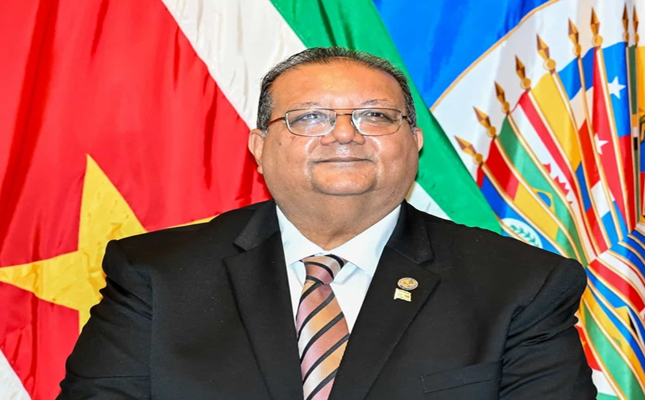
Ambassador Marlon Faisal Mohamed-Hoesien, Suriname’s Permanent Representative to the OAS and current Chair of the CARICOM Caucus, used the high-profile platform to highlight the unique structural vulnerabilities that make Caribbean nations particularly attractive to criminal trafficking groups. While he praised existing regional and hemispheric efforts to curb the crime, he stressed that the evolving nature of human trafficking demands far more coordinated, cross-border collaboration to address gaps in protection and regulation.
In his address to the council, the ambassador framed all forms of human trafficking—including sexual exploitation, forced labor, and every other iteration of modern slavery—as an egregious violation of fundamental human rights that cannot be overlooked, accepted, or downplayed by member states. He explained that for Caribbean nations, weak maritime border controls and widespread economic fragility have turned the region into both a key transit corridor and an end destination for criminal trafficking operations.
Beyond long-standing challenges, Mohamed-Hoesien drew attention to the emerging threat of digital exploitation, noting that the rapid expansion of digital economic activity across small island and low-lying coastal Caribbean states has far outpaced the development of regulatory frameworks. This regulatory gap has created an opening that transnational criminal networks are actively exploiting to expand their operations, he said. Unlike traditional trafficking models that rely on physical border crossings, criminal syndicates now use digital platforms to recruit vulnerable people, move victims across borders undetected, and turn the internet into an unregulated marketplace where vulnerable people are sold to the highest bidder.
The ambassador added that pre-existing socioeconomic stressors—including widespread poverty, systemic inequality, irregular migration, high rates of gender-based violence, and displacement driven by climate change and natural disasters—have further increased the vulnerability of communities across the region. He specifically noted that women and children bear the disproportionate brunt of modern trafficking, facing elevated risks of online recruitment, grooming, and digital exploitation at the hands of criminal networks.
Despite these growing challenges, Mohamed-Hoesien acknowledged the proactive steps already being taken by regional authorities to raise public awareness and strengthen survivor protection measures. He highlighted the critical work of multistakeholder bodies such as the Caribbean Coalition Against Trafficking in Persons, which brings together national governments, law enforcement agencies, and civil society organizations to align anti-trafficking strategies and disrupt network operations. He also emphasized that robust cybersecurity infrastructure is an indispensable component of any effective modern anti-trafficking framework, given the growing role of digital platforms in criminal activity.
Closing his address, the ambassador issued a formal call to both regional bodies and international partners to deepen collaboration and deliver concrete, actionable commitments to counter human trafficking in all its traditional and evolving forms, ensuring better protection for vulnerable communities and stronger accountability for criminal actors.