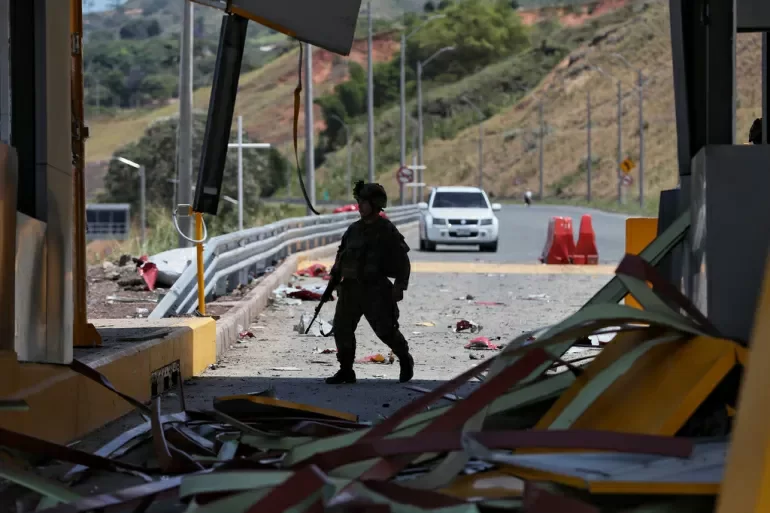
A brazen car bomb attack at a toll plaza along Colombia’s critical Pan-American Highway has sent tensions soaring across the Andean nation, coming barely 24 hours after right-wing President Abelardo de la Espriella was sworn into office. The assault, which targeted the toll station in the southwestern department of Cauca, left two security personnel with minor injuries. Witness accounts confirm the attacker abandoned the explosive-laden vehicle and fled the scene on a waiting motorcycle, according to initial on-the-ground reports.
Colombia’s armed forces have immediately pinned responsibility for the attack on two dissident armed factions that broke away from the former Revolutionary Armed Forces of Colombia (FARC) guerrilla movement. The original FARC organization signed a landmark peace deal with the Colombian government in 2016 and completed its disarmament process shortly after, but a handful of splinter groups have rejected the agreement, remained active, and continued to carry out violent operations across the country.
The timing of the attack is widely seen as no coincidence: it coincides directly with the launch of de la Espriella’s presidency, a campaign built on a promise of hardline security policy that directly rejects the dialogue-centered peace approach of his predecessor. The new president has positioned himself as a staunch opponent of what he calls “narco-terrorism,” vowing to launch sweeping military offensives against drug trafficking networks and illegal armed factions that have operated with impunity in large swathes of the country. Analysts and government officials view the attack as an open challenge to de la Espriella’s agenda and an early warning from armed groups that they will not submit to the new administration’s crackdown.
Transport Minister Elsa Noguera emphasized in an immediate statement that the Colombian government will not bow to terror threats, reiterating the state’s commitment to protecting critical infrastructure that connects the country’s disparate regions. She added that the administration is moving quickly to restore public order and security in affected areas to prevent further escalation of violence ahead of planned military operations.
De la Espriella, a former lawyer, won the Colombian presidential election by a narrow margin over his left-wing challenger Ivan Cepeda. His hardline military-focused agenda has received explicit backing from former U.S. President Donald Trump, who has pledged $1 billion in security assistance to support the new government’s policies. The plan includes authorization for airstrikes on boats and aircraft suspected of transporting cocaine out of the country. However, the approach has already drawn sharp criticism from global and local human rights organizations, which warn that aggressive military action could lead to widespread human rights violations against civilian populations in conflict zones.
Colombia has been grappling with internal armed conflict for more than six decades, pitting government forces against rebel groups, paramilitary organizations, and transnational criminal networks tied to the drug trade. The country remains the world’s largest producer of coca leaf, the key raw material for cocaine, with illicit crop cultivation and drug trafficking funding much of the ongoing violence in rural and border regions.