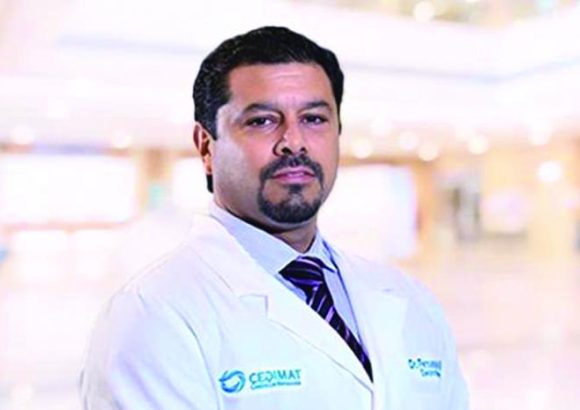
Leading Dominican cardiologist and electrophysiologist Fernando Vidal Bett has issued a stark public health warning: sudden cardiac death has overtaken all forms of cancer to become the number one cause of death in the Dominican Republic. As director of the Arrhythmia, Electrophysiology and Pacemaker Unit at the country’s Cedimat Cardiovascular Center, Vidal Bett shared detailed insights on this public health crisis in an interview with local outlet Listín Diario.
Sudden cardiac death is defined as an unexpected fatal event triggered by malignant cardiac arrhythmias — abnormal, irregular heart rhythms — that claims a patient’s life within 24 hours of symptom onset. Vidal Bett explained that half of all deaths linked to cardiovascular disease in the country are sudden cardiac deaths, making the condition one of the most pressing ongoing challenges for the Dominican public health system. Contrary to common misconception, however, he stressed that not all patients diagnosed with heart disease will experience sudden cardiac death, noting that the highest risk is concentrated among patients with pre-existing conditions. These high-risk groups include individuals who have already suffered a heart attack, those living with dilated cardiomyopathy (an enlarged heart), and patients with diagnosed heart failure.
Vidal Bett outlined a wide range of modifiable and non-modifiable risk factors that contribute to elevated rates of cardiovascular disease and subsequent sudden cardiac death. Non-modifiable risks include a family history of cardiac conditions, while key preventable risks include tobacco use, chronic hypertension, obesity, a sedentary lifestyle, diabetes, and excessive alcohol consumption. He explained that tobacco and heavy alcohol use directly contribute to the development of ischemic cardiovascular disease, a condition marked by blocked coronary arteries. When a coronary artery becomes obstructed, a section of heart tissue dies and forms scar tissue, which is prone to generating dangerous arrhythmias that act like “short circuits” within the heart, often resulting in sudden death.
Beyond traditional risk factors, the cardiologist highlighted lesser-known contributors to poor cardiac health: chronic stress, anxiety, and untreated sleep disorders. All three conditions often drive elevated blood pressure and trigger life-threatening arrhythmias. He also issued a specific warning to young Dominican people about the dangerous combination of alcohol and energy drinks, which research has linked to a sharp increase in sudden cardiac events and ischemic heart disease among younger populations.
While cardiovascular disease does not have an inherent gender bias, Vidal Bett noted that the condition typically affects men a decade or more earlier than women, due to the cardioprotective effects of female hormones until menopause. After that life stage, however, the risk of sudden cardiac death equalizes between men and women.
Though sudden cardiac death can occur without obvious pre-warning signs, Vidal Bett identified key red flags that individuals should not ignore. These include a family history of sudden cardiac death before age 40, recurring chest pain, unexplained shortness of breath, dizziness, lightheadedness, unexpected fainting, and persistent heart palpitations. He specifically emphasized that any patient who experiences loss of consciousness leading to a head injury should be categorized as high-risk and receive immediate cardiac evaluation.
To combat the growing burden of sudden cardiac death, Vidal Bett stressed that proactive intervention remains the most effective strategy. The gold standard for prevention among high-risk patients, he confirmed, is the implantable cardioverter-defibrillator (ICD), the only medical device proven to prevent fatal sudden cardiac events. Describing the device as similar to a standard implanted pacemaker, he explained that an ICD continuously monitors heart rhythm, automatically detects malignant, potentially lethal arrhythmias, and delivers immediate targeted treatment — either through rate-adjusting stimulation or a controlled defibrillation shock to restore normal rhythm.
Despite the device’s proven effectiveness, Vidal Bett noted that a core challenge remains accurately identifying patients who qualify for ICD implantation. Eligible high-risk groups include patients with hypertrophic cardiomyopathy, individuals who have suffered a heart attack and have residual heart function below 35%, and patients who have already survived a sudden cardiac arrest. He clarified that ICDs are not implanted in terminally ill patients with poor prognosis; the procedure is only performed on stable patients with a life expectancy of more than one year, with the dual goal of extending lifespan and improving quality of life. Currently, an ICD costs between $10,000 and $15,000, has a 7 to 10 year battery life, and improves patient outcomes up to 80% for qualifying individuals.
Recently, the Dominican Society of Cardiology’s Electrophysiology Council took a major step forward in addressing the sudden cardiac death crisis by issuing an official position statement supporting the responsible use of ICDs for prevention across the country. The document is rooted in the latest international scientific evidence, adapted specifically to the Dominican public health context, and outlines clear clinical recommendations for ICD use, highlights the importance of specialized cardiac evaluation, and addresses pathways for long-term economic sustainability of ICD access. The statement marks a key milestone for public education and clinical training initiatives focused on cardiovascular health in the nation.
One ongoing gap in addressing the crisis, Vidal Bett acknowledged, is the lack of a national sudden cardiac death registry in the Dominican Republic. Currently, death certificates rarely specify sudden cardiac death as a cause of death, making it difficult to track exact prevalence and allocate public health resources effectively. However, he confirmed that the Dominican Society of Cardiology is already taking active steps to develop and launch the first national registry to address this data gap.