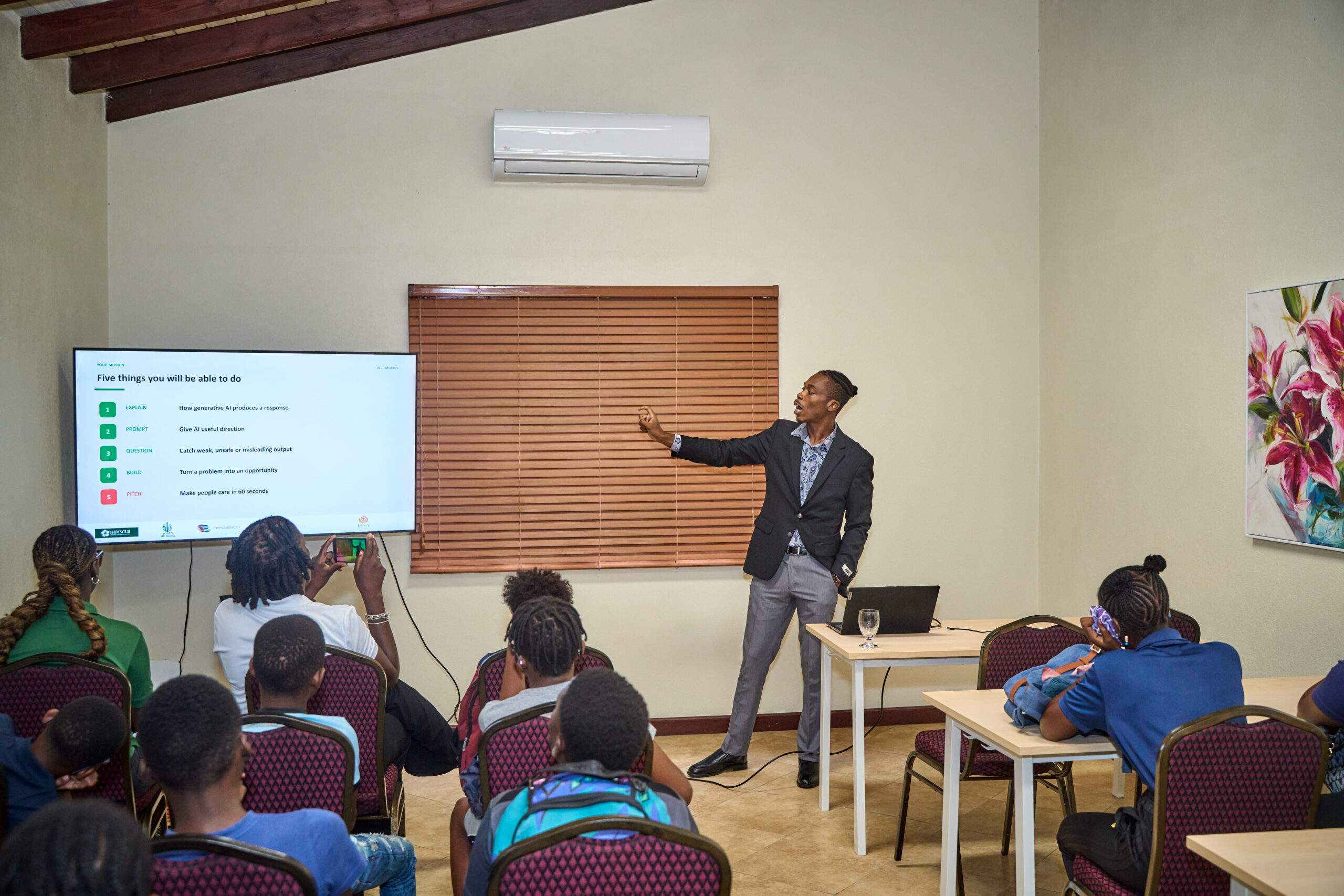
As artificial intelligence continues to reshape learning landscapes across the globe, a prominent Barbados non-profit leader is calling for a deliberate, balanced approach to integrating the technology into school classrooms. Speaking exclusively to Barbados TODAY on the sidelines of the hands-on youth development workshop *Next Wave: AI + Entrepreneurship Experience*, hosted Friday at the Sugar Cane Club Hotel & Spa, Hibiscus Sports and Culture Foundation founder Akealii Hall laid out a nuanced framework for AI use that prioritizes original human thought over automated output.
Hosted to help young Barbadians unpack both the transformative potential and hidden risks of widespread AI adoption, the Friday initiative drew support from a coalition of local stakeholders including Youth Uprising, iTech Consulting, the Sugar Cane Club Hotel & Spa and the Legacy Foundation. Beyond introductory lessons on how AI works, the programme gave participants practical training in pairing human creativity with AI tools to launch new ventures: attendees learned to draft business plans, build viable business models, and pitch their ideas to stakeholders, all while leaning into human-led problem solving.
Hall, who leads the foundation focused on youth skills development, argues that AI’s strengths make it a valuable auxiliary tool for education, not a replacement for independent student work. “There are a lot of benefits of it and it can definitely be used as a good tool within the classroom system, but it has to be used sparingly and knowledgeably,” he explained.
One of the most productive use cases Hall identified is supporting students in refining work they have already completed independently. For example, AI can act as a powerful proofreading tool for finished essays, checking for punctuation and grammatical errors, and helping students polish their writing to more clearly communicate ideas that they already developed but may struggle to put into polished prose. Hall also noted that AI can streamline administrative work for student research projects, including School-Based Assessments (SBAs) required for the Caribbean Secondary Education Certificate (CSEC) exams. After students complete the core research legwork — conducting surveys, distributing questionnaires, and gathering raw data themselves — AI can organize that information into structured data sets and analysis frameworks to save students time on manual formatting.
Across every use case, however, Hall emphasized one non-negotiable rule: human work must always come first. He warned against allowing students to rely on AI as their primary problem-solving tool, stressing that preserving opportunities for independent critical thinking has to remain the core goal of education. “You want to always start by leading with humans first,” he said.
The ultimate objective of the *Next Wave* workshop, Hall added, is to give young people a grounded, practical understanding of the AI tools they interact with daily. By teaching them to balance AI’s efficiency with human creativity and critical thought, the programme aims to equip a new generation of learners and entrepreneurs to use technology responsibly, rather than being controlled by it.