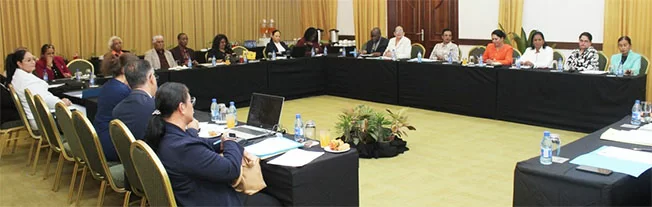
In a landmark vote held at its recent annual general meeting, Suriname’s Judiciary has approved a major reform that will cut the annual court recess period to just one month starting from the 2027-2028 judicial term. Under the new policy, the annual recess will run uniformly from September 1 to 30, replacing the longer break that was previously scheduled.
The core goal of this adjustment is to upgrade public judicial services and eliminate unnecessary long delays in active court proceedings that currently leave cases stalled for extended periods. Court leaders emphasized that the decision to shorten the recess is rooted in prioritizing the needs of people seeking legal resolution, and aligns with broader ongoing efforts to make the national justice system faster and more accessible for all citizens.
Speaking at the conclusion of the annual meeting, Court President Iwan Rasoelbaks outlined the Judiciary’s core mission: to serve the Surinamese public through speedy, accessible, and transparent judicial proceedings. Rasoelbaks noted that more efficient judicial operations directly strengthen public trust in the rule of law, adding that the Judiciary also plans to further boost both internal and external communication with the broader society.
Rasoelbaks also extended public recognition to the hard work of sitting judges and public prosecutors, acknowledging that the branch has operated under significant challenging conditions in recent years. He highlighted that chronic understaffing has forced current judicial personnel to take on double the expected workload, pointing to the global standard of one judge or prosecutor per 10,000 citizens that Suriname currently fails to meet. “I am exceptionally proud of all judges, prosecutors, and the understanding the legal profession has shown for the steps we have taken in recent years to strengthen the rule of law,” Rasoelbaks said.
The Judiciary’s annual general meeting serves as a key planning session for the upcoming judicial term. Members routinely confirm core operational arrangements, including judge work allocation, sitting schedules for first-instance and appellate cases, cross-practice coordination across different legal areas, and appointments to judicial committees and disciplinary boards. For the upcoming 2026-2027 term, organizers have already incorporated newly trainee judge candidates (RAIO’s) into the official work planning.