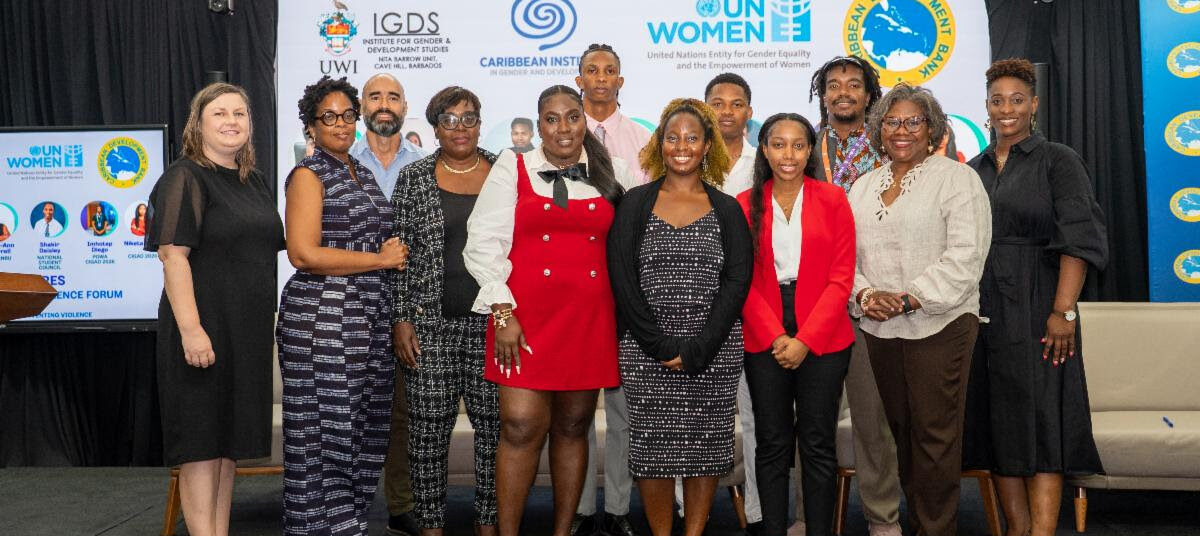
Against a backdrop of rising concerns over interconnected violence plaguing communities across the Caribbean, regional and international institutions have joined forces to center youth voices and gender justice in long-term violence prevention efforts. The Caribbean Futures High-Level Anti-Violence Forum, hosted as a core component of the 16th Caribbean Institute in Gender and Development (CIGAD), brought together a diverse cross-section of stakeholders—from grassroots youth advocates and senior government policymakers to leading academic researchers and gender equality specialists—for three days of collaborative dialogue and strategy-building.
Organized through a partnership between the Caribbean Development Bank (CDB), UN Women Caribbean, and The University of the West Indies (UWI) Cave Hill Campus, the event departed from traditional top-down policy discussions by prioritizing intergenerational dialogue. Young advocates sat side-by-side with established decision-makers to unpack the overlapping drivers of violence in the region, linking gang activity, gender-based violence, and displacement linked to climate change as interconnected issues that demand integrated, context-specific solutions. Rather than relying on imported frameworks that do not align with Caribbean cultural and social realities, participants centered locally rooted strategies shaped by the communities most affected by violence.
Dr. Maria Ziegler, Senior Gender Specialist at CDB, emphasized that effective violence prevention goes far beyond law enforcement interventions. It targets the underlying attitudes, beliefs, and social norms that normalize violence in homes, schools, public spaces, and intimate relationships. “Violence prevention transforms the attitudes, beliefs, and behaviours that normalise violence in homes, schools, communities, and relationships. It promotes positive masculinities, empowers girls and young women, and engages boys and men as allies in creating safer, more equitable societies for everyone,” Ziegler explained.
Sharon Carter-Burke, Communications and Advocacy Analyst at the UN Women Multi-Country Office for the Caribbean, outlined UN Women’s ongoing work to address harmful gender norms that harm all genders. Through the Foundations Violence Prevention Programme, a youth-centered, participatory curriculum, the organization works to shift the cultural and social attitudes that perpetuate gender-based discrimination, inequality, and violence. “UN Women not only promotes the rights, empowerment, and safety of all women and girls, but we are working with partners to disrupt the gender norms that also harm men and boys,” Carter-Burke noted.
Beyond policy dialogue, the forum also marked the completion of the in-person training segment for 16th CIGAD participants. Supplementary programming included an interactive theatre presentation that challenged harmful conceptions of masculinity and a youth-led roundtable that put young voices directly in conversation with top decision-makers. These activities demonstrated how collaborative research, open dialogue, and cross-sector partnership can strengthen the impact of regional violence prevention work.
a consensus emerged among participants that sustainable, lasting change requires buy-in and contribution from every sector of society. Attendees reinforced that progress cannot be achieved without bridging generational divides, uniting the experience of long-time practitioners with the fresh perspectives of young leaders, and aligning the efforts of governments, community groups, and regional institutions. Discussions also made clear that gender justice and youth empowerment are inextricably linked, and must be advanced in tandem to create meaningful, lasting change.
Organizers expect that the cross-sector partnerships forged during the forum will continue long after the event concluded, creating a sustained foundation for greater collaboration between youth organizations, national governments, and regional development institutions on violence prevention initiatives across the Caribbean.
CIGAD, which is jointly funded by CDB and UN Women, works to advance gender-responsive development across the entire Caribbean region. The initiative also aligns with CDB’s 10-year Strategic Plan, which sets out a goal of integrating gender equality into all levels of decision-making across the public, private, and civil society sectors in the Bank’s Borrowing Member Countries.