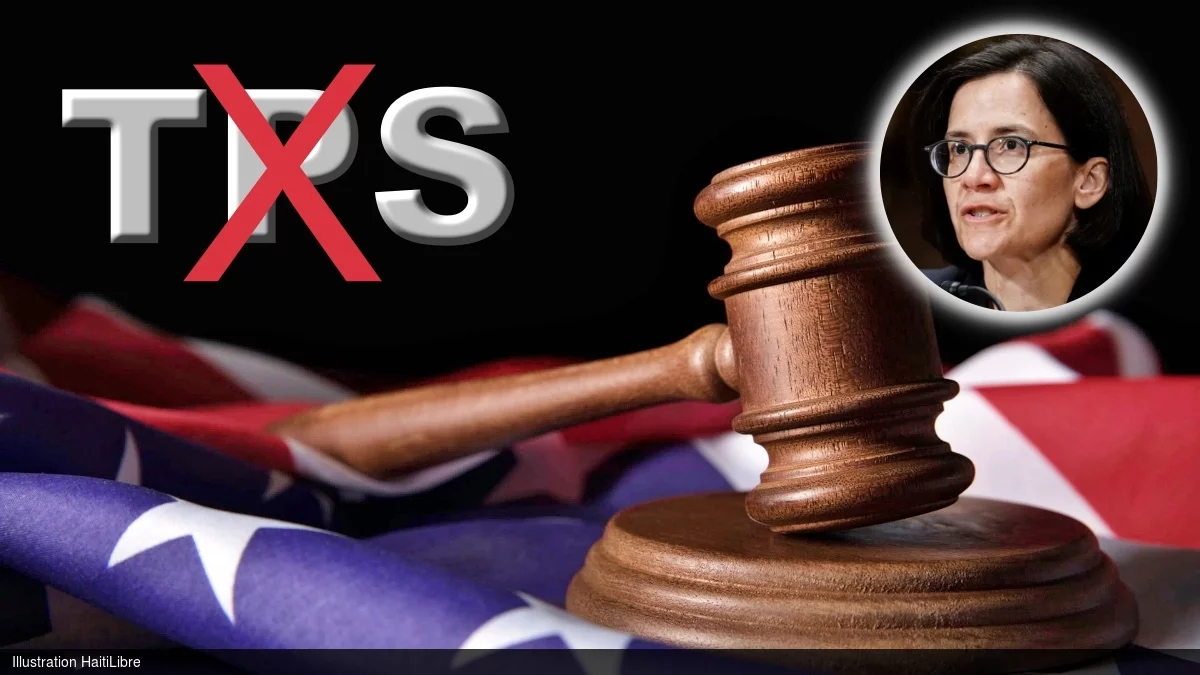
In a landmark legal development that closes one chapter of a months-long high-stakes immigration battle, U.S. Federal Judge Ana C. Reyes issued a two-page court order on August 5, 2026, officially lifting the judicial stay that had blocked the Trump administration’s plan to terminate Temporary Protected Status for hundreds of thousands of Haitian migrants living in the United States.
The temporary court injunction had been in place to pause the effectiveness of Homeland Security Secretary Kristi Noem’s order to end Haiti’s TPS designation while legal challenges worked through the judicial system. With Wednesday’s ruling, that stay is now formally dissolved, clearing the way for the termination of deportation protections that have been in place for Haitian nationals who fled their home country in recent years to escape widespread political instability and repeated devastating natural disasters.
Reyes’ ruling comes just over five weeks after the U.S. Supreme Court overturned its own earlier ruling from earlier this year, which had originally blocked the administration’s TPS termination plan. The high court’s June decision left the exact timeline for the official end of protections unclear, creating widespread uncertainty among the roughly 350,000 Haitian migrants who relied on TPS to live and work legally in the U.S. That uncertainty is now resolved, with deportation proceedings able to move forward for most program beneficiaries.
Notably, the termination of TPS will not impact all Haitian migrants covered by the program: beneficiaries who have already applied for alternative forms of legal status, such as asylum or other permanent immigration pathways, will retain protection while those applications are processed.
In comments following the ruling, Homeland Security Secretary Markwaye Mullin confirmed that immigration enforcement actions would begin immediately. “We are pursuing them right now,” Mullin said. “These people can either deport voluntarily, or we will arrest and deport them. It’s that simple.”
Deportations will send migrants back to Haiti, a nation the U.S. State Department has repeatedly characterized as dangerously unstable and unsafe for returnees, a fact that has amplified criticism of the administration’s decision.
While the TPS blockade is lifted, the underlying legal challenge against the termination is far from over. Haitian plaintiffs in the case have long argued that the administration’s move to end TPS was driven by intentional racial discrimination against Haitian migrants. Judge Reyes has previously concluded that the policy was likely motivated by anti-Haitian racial bias, but the Supreme Court ruled that the evidence presented by plaintiffs up to that point did not sufficiently support that finding.
Plaintiffs’ legal teams are now moving forward with plans to gather additional evidence to bolster their equal protection claim under U.S. law. In a court filing last month, the migrants’ legal team noted that the current ruling does not bar plaintiffs from collecting the new evidence needed to prove their claim of discriminatory treatment, leaving the door open for future legal challenges to the TPS termination.