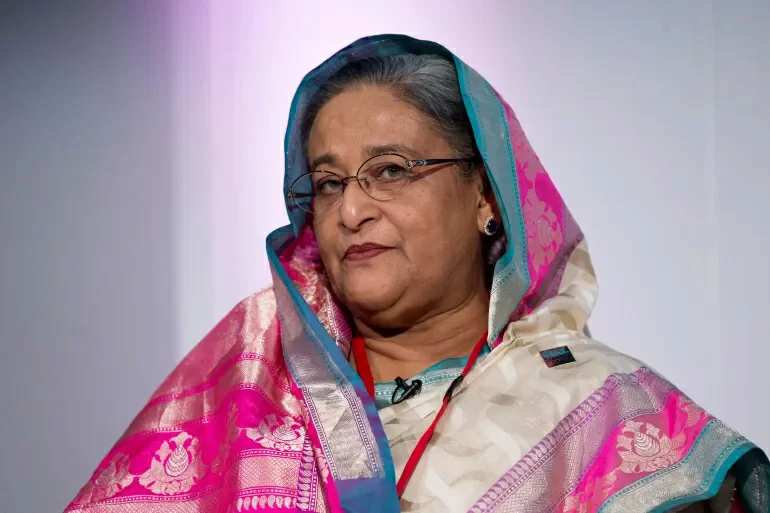
In a dramatic announcement that sends ripples across South Asian geopolitics, 78-year-old ousted Bangladeshi prime minister Sheikh Hasina has confirmed she intends to return to her home country in December 2026, after two years of exile in India — even as a death sentence hangs over her head for charges of crimes against humanity.
Hasina shared her decision in a pre-recorded video address to an event hosted by the South Asia Foreign Correspondents’ Club, where she appeared alongside her son Sajeeb Wazed Joy and other senior leaders of her party, the Awami League. In defiant remarks, the long-serving former leader framed her planned return as a matter of democratic duty to the Bangladeshi people. “I can be detained, I can be sent to prison. But fear must not dictate my obligation to the people,” she stated, adding that the exact date of her arrival has not yet been finalized. Hasina also used the platform to call for an immediate end to the current government’s ban on the Awami League, which has been in place since she was ousted from power.
The path to Hasina’s planned return traces back to the 2024 mass political upheaval that removed her from office. After weeks of student-led pro-democracy protests that were met with brutal violent crackdowns, a popular revolution unseated Hasina’s government, forcing her to flee the country by helicopter for neighboring India, where she has remained in exile ever since. In her absence, Bangladeshi courts have convicted her on multiple grave charges, including inciting mass violence, ordering extrajudicial killings, and failing to prevent crimes against humanity, resulting in a mandatory death sentence.
Hasina’s announcement comes at a delicate moment for bilateral relations between Bangladesh and India. The current Bangladeshi government, led by Prime Minister Tarique Rahman, has repeatedly formally requested India extradite Hasina to face her sentence, but New Delhi has maintained that the case is proceeding through its domestic legal channels, and has declined to comment publicly on Hasina’s return plans. Recent diplomatic shifts have seen relations between Dhaka and New Delhi improve, with Rahman receiving an official invitation to attend the upcoming BRICS summit in September, marking a key step in the new government’s international outreach. Notably, India’s Ministry of External Affairs moved quickly to distance itself from Hasina’s announcement just ahead of her address, with a spokesperson clarifying that the Indian government has no involvement in Hasina’s return plans and does not endorse any views expressed at the event.
Bangladesh has remained in a state of political and social flux since the 2024 revolution. Rahman’s new administration has prioritized stabilizing domestic governance and rebuilding strained international partnerships, but underlying political tensions between rival factions and ongoing debates over human rights standards continue to challenge efforts to unify the country. Beyond the political turmoil, Bangladesh also grapples with the persistent, escalating impacts of climate change, including more frequent and severe flooding and cyclone events that have deepened the nation’s structural vulnerability. To address these growing climate risks, the current government has expanded investments in disaster risk management systems and strengthened international collaboration to reduce the human and economic toll of extreme weather events.