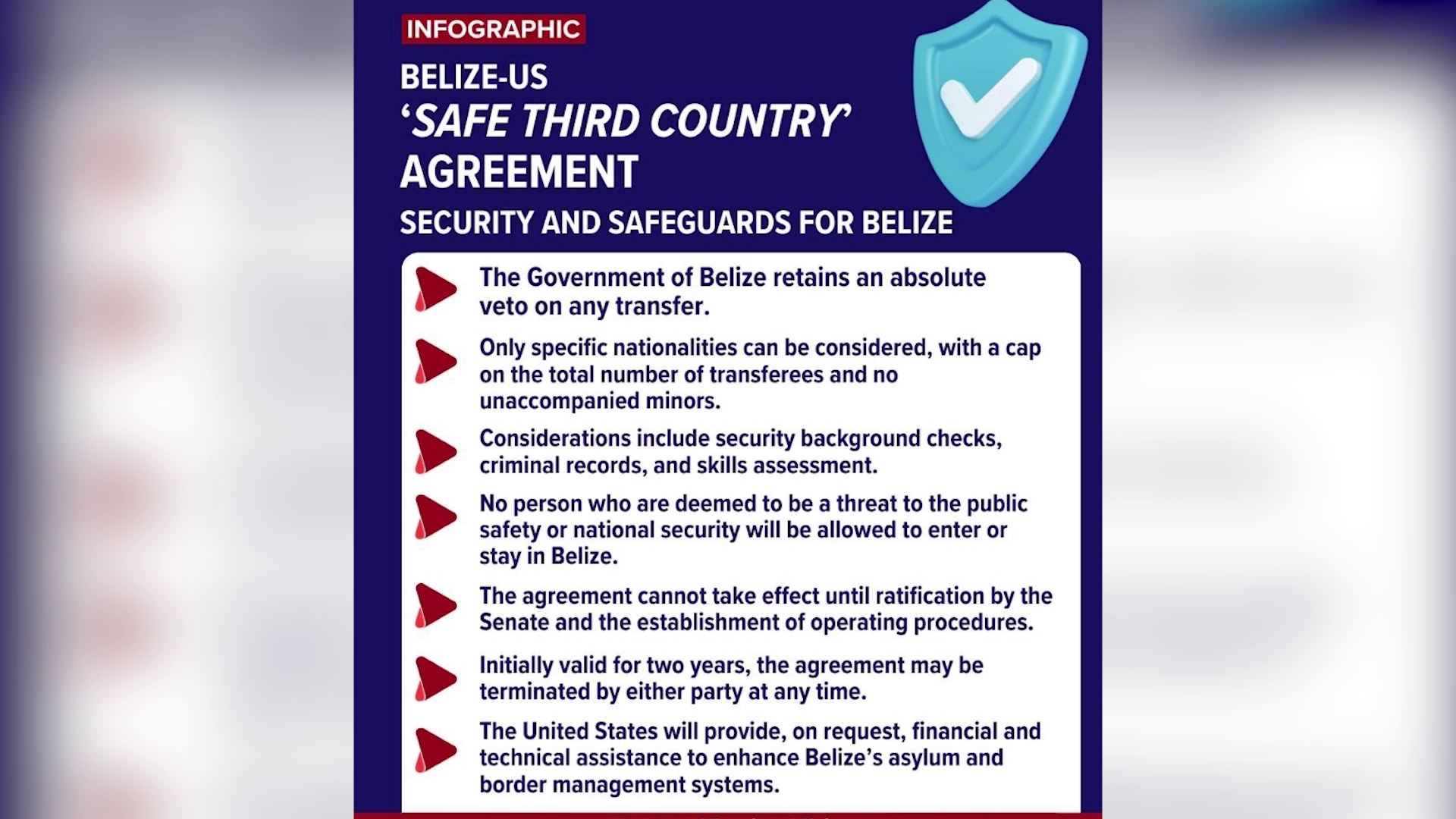
In a development that has pulled a controversial bilateral migration agreement back into the public spotlight, Belize has received eight additional foreign nationals transferred under its Safe Third Country arrangement with the United States. The new arrivals, which include four Haitian citizens and four nationals from other Central American countries, have reignited public debate around the policy, with the most prominent criticism centering on unaddressed concerns over whether any transferred individuals could have a criminal history.
Both the Government of Belize and the U.S. Embassy in Belize have moved quickly to push back against these concerns, issuing clear assurances that every person accepted into the program goes through rigorous multi-layered security vetting before any transfer is finalized. Foreign Affairs Minister Francis Fonseca defended the framework in an interview with local reporters, emphasizing that the entire screening process is conducted with extreme care, and that the agreement operates fully within the bounds of Belize’s existing national asylum and refugee infrastructure.
Fonseca laid out the gradual rollout of the program to date, noting that the first transfer involved a single Haitian individual, with the eight new arrivals marking the latest group to enter the country under the pact. He framed the agreement as a complementary addition to Belize’s long-standing amnesty and refugee processing systems, pointing out that the Central American nation already accepts hundreds of people seeking refuge and protection from across the region every year. “So far it has been going very well,” Fonseca said of the program’s implementation.
When questioned about support structures for the program, Fonseca confirmed that the United Nations Refugee Agency provides backing for asylum seekers transferred under the Safe Third Country agreement. Reporters also raised questions about support for Belizean citizens who are deported back to the country with no local family or social ties, a situation that has been documented in previous cases. Fonseca clarified that the government already maintains dedicated programming for this group, with support delivered through the Ministry of Human Development and the national refugee department, matching the assistance framework offered to transferred asylum seekers.
A government spokesperson reiterated that every transfer request is subject to a rigorous individual case review, and Belizean authorities retain full authority to reject any application that fails to meet the country’s established security and eligibility requirements. This news report is a transcript of an evening television newscast, with Kriol language statements transcribed using a standardized spelling system for publication.