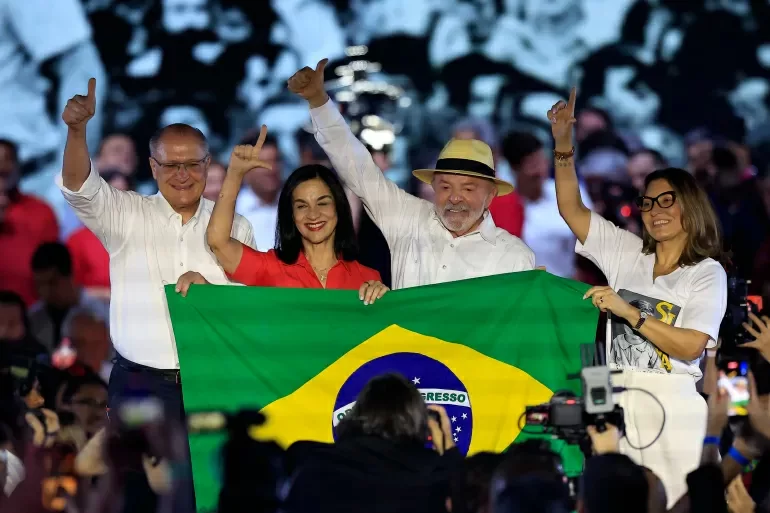
Brazil’s sitting President Luiz Inacio Lula da Silva has officially kicked off his campaign for a fourth presidential term, launching his bid at a raucous Workers’ Party rally packed with thousands of supporters in São Paulo. Venue floors were filled with the party’s signature red flags, and attendees chanted Lula’s name throughout the opening event, underscoring the intense energy of his campaign ahead of the national vote.
At 80 years old, Lula is no stranger to national presidential races: this marks his seventh bid for the nation’s highest office, after previously holding two terms from 2003 to 2010 and returning to power in the 2022 election. Instead of centering his opening campaign speech on domestic policy achievements, Lula focused heavily on Brazil’s standing in an increasingly unstable global order, leaning into a narrative of protecting national sovereignty amid shifting great power dynamics.
In his address, Lula called for increased defense spending, and pledged to protect Brazil’s vast reserves of rare earth elements and other critical strategic minerals from foreign control. “I want this country to be prepared, so that no one can ever invade it,” Lula told the crowd, adding that major global powers including China, the United States, and France will not be granted access to Brazil’s mineral resources unless they fully respect the nation’s sovereign rights.
Lula’s rhetoric comes amid growing diplomatic and trade tensions between Brazil and the United States. In July, Washington imposed two separate rounds of tariffs on Brazilian imports, citing claims of unfair trade practices that the Brazilian government has flatly rejected.
Another key flashpoint in the 2026 race is the political ties between the Bolsonaro family and former U.S. President Donald Trump. Lula’s leading challenger is Senator Flavio Bolsonaro, the eldest son of former Brazilian President Jair Bolsonaro, who maintains close political and personal links to Trump. Lula has labeled Flavio Bolsonaro a “traitor to the nation,” a claim the senator has denied outright.
Political analyst Leonardo Paz notes that framing the campaign around national sovereignty is a strategically shrewd move for Lula. “This narrative allows him to position an external enemy as a scapegoat for many of Brazil’s ongoing domestic problems,” Paz explained.
Recent polling puts Lula in a narrow lead ahead of a projected second-round runoff, with 48% of planned votes against Flavio Bolsonaro’s 43%. Still, the nation remains deeply politically polarized between the two rival camps, with little middle ground between their supporters.
While Lula can point to solid domestic gains during his current term, including steady economic growth, high employment rates, and expanded social programs that have lifted millions of low-income Brazilians out of poverty, the incumbent still faces significant domestic headwinds. Persistently high cost of living and growing concerns over the country’s fiscal deficit remain top voter priorities, while public safety has also emerged as a key campaign issue, particularly in regions heavily impacted by organized criminal activity.
Corruption investigations also hang over both leading campaigns: Flavio Bolsonaro is currently under investigation over allegations of financial misconduct, and one of Lula’s own sons is also facing separate corruption suspicions. Addressing widespread speculation about his health and fitness for office at 80, Lula pushed back against concerns, telling supporters he is in “excellent condition” thanks to a regular routine of walking and strength training, claiming he is even fitter now than he was during his first presidential run in 2002.