Santo Domingo, Dominican Republic – A new research led by experts from the Technological Institute of Santo Domingo (INTEC) has drawn urgent attention to the steep economic costs of letting mangrove ecosystems decline across the country’s coastlines, projecting annual losses could reach as high as US$75 million if degradation continues. The findings, which underscore the underrecognized economic importance of these coastal habitats for the Dominican Republic’s tourism-driven economy, were officially published in the peer-reviewed academic journal *Ocean & Coastal Management*.
To reach their conclusions, the research team conducted a comprehensive analysis of overlapping economic and environmental datasets spanning 28 years, from 1995 through 2023. Their statistical analysis confirmed a clear correlation: ongoing mangrove degradation correlates directly with slower national GDP growth, declining numbers of international tourist arrivals, and slowed investment and development of tourism infrastructure along the country’s coasts.
Lead researchers emphasized that the $75 million annual loss estimate is intentionally conservative. This figure is calculated based only on the direct economic contributions of the Dominican Republic’s coastal and marine ecosystems, which collectively generate roughly US$1.8 billion in annual economic activity for the nation. The current projection does not account for the wide range of additional unpriced ecosystem services that mangroves provide, including long-term carbon sequestration, natural storm surge protection during hurricane season, habitat support for commercial and artisanal fisheries, and the conservation of critical regional biodiversity.
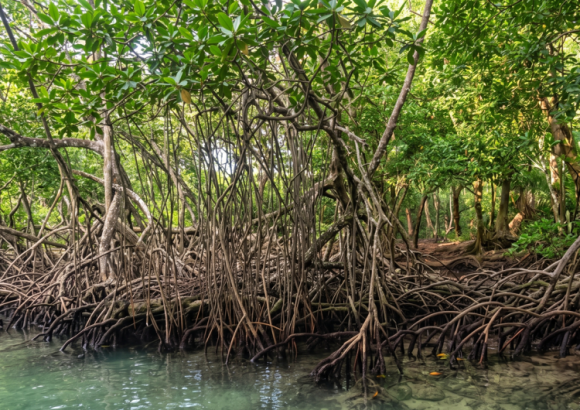
Study authors frame mangroves as far more than just a natural wilderness feature: they act as cost-effective, vital natural infrastructure that delivers multiple overlapping benefits for coastal communities and the national economy. These root-dense coastal forests slow coastal erosion, protect the sandy beaches and adjacent coral reefs that draw millions of visitors each year, and maintain the scenic coastal landscapes that form the core of the Dominican Republic’s $10 billion-plus tourism sector. Given these far-reaching benefits, the research team argues that expanding mangrove conservation and restoration efforts should not be viewed as a purely environmental obligation, but rather a high-return investment in the country’s long-term economic resilience against climate shocks and industry decline.
The research, which received funding from the Dominican Republic’s National Fund for Innovation and Scientific and Technological Development (Fondocyt), puts forward three core policy recommendations to reverse current degradation trends: strengthen legal and on-the-ground protections for existing mangrove habitats, integrate ecosystem conservation into long-term coastal tourism planning, and adopt targeted policy incentives that encourage private and public investment in coastal ecosystem conservation across the country.