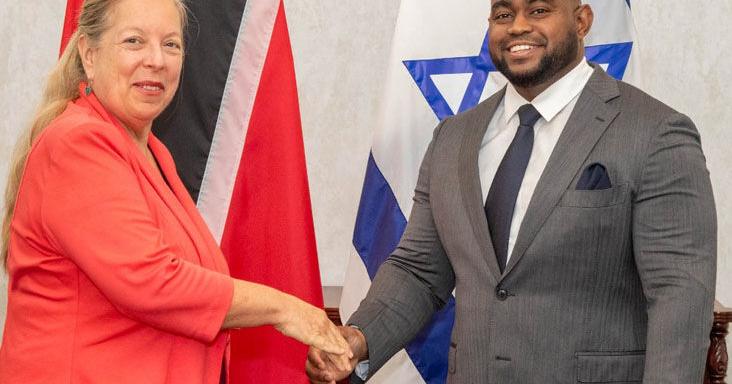
In a landmark diplomatic milestone, Trinidad and Tobago (T&T) recently hosted its first-ever visit from the head of Israel’s International Development Cooperation Agency (MASHAV), kicking off formal bilateral discussions on a range of targeted development projects spanning cybersecurity, smart city infrastructure, sustainable agriculture, and public healthcare.
The visit, which took place across two days of high-level meetings with T&T government ministers and senior officials, marked a renewed commitment between the two nations to deepen their long-standing diplomatic and development ties. Ambassador Eynat Shlein, Director General of MASHAV, confirmed after the talks that T&T has been identified as a critical strategic partner for regional development efforts, particularly for Small Island Developing States (SIDS) that face disproportionate climate and food security challenges.
Addressing widespread public speculation about the scope of the discussions, Shlein emphasized that all proposed cooperation frameworks are rooted in the United Nations Sustainable Development Goals (SDGs), a multilateral agreement that T&T has formally joined. Meetings covered cooperation in 10 core priority areas: national security, development planning, digital technology, public healthcare, foreign affairs, infrastructure, education, agriculture, climate resilience, and food security.
A core focus of the talks centered on addressing shared global challenges that hit SIDS particularly hard: local and regional security stability, long-term food security, and climate change adaptation. Shlein noted that Israel’s global reputation as a global innovation and startup hub remains intact decades after it earned that title, and the country aims to leverage that innovative ecosystem to build collaborative government platforms that drive inclusive growth across T&T.
Following the visit, MASHAV will initiate follow-up engagements with T&T authorities to assess specific partnership opportunities, working within the agency’s existing mandate to design flexible, tailored cooperation frameworks. Shlein highlighted that MASHAV’s core approach centers on capacity building: to date, more than 350,000 professionals from across the globe, including a number of participants from T&T, have completed MASHAV training programs across multiple development sectors.
Shlein stressed that the overarching purpose of her historic visit was to listen first to T&T’s top policy priorities and development objectives, rather than pushing pre-determined projects. “This is not aid, but partnership,” she clarified in a post-meeting telephone interview, adding that both nations stand to gain valuable insights from working together. “We’re always interested in hearing from the Government what their priorities are, and then we offer various partnerships in this regard.”
The MASHAV delegation’s mission also prioritizes inclusive sustainable development, including strengthening marginalized vulnerable groups and expanding women’s participation as a foundation of resilient, self-sustaining communities. To ensure proposed partnerships align with local needs, the team held meetings with dozens of T&T state agencies to gain on-the-ground insight into the needs of the country’s population.
Shlein pointed to food and water security as two particularly high-potential areas for expanded cooperation, noting that the Covid-19 pandemic and ongoing global geopolitical conflicts have exposed critical supply chain vulnerabilities across the Caribbean and Latin America, a region already marked by high economic and climate vulnerability.
As a UN member state with decades of specialized experience in arid-region sustainable development, Israel has proven expertise to share with the region, Shlein said. She emphasized that long-term water security requires urgent, sustained action across the Caribbean, including expanded domestic rainwater harvesting and widespread wastewater recycling for agricultural use.
On climate resilience, Shlein noted that climate change-driven extreme weather, from catastrophic flooding that destroys staple crops to prolonged drought, has already severely disrupted regional food production, requiring coordinated action at both the community and national government levels. For decades, Israel has led global innovation in food security, from cutting-edge research and development in grain and livestock production to high-yield intensive cropping systems.
“We’re here to share the things that we know,” Shlein said, adding that Israel’s development model prioritizes collaborative partnerships with host governments, local communities, and non-governmental organizations to ensure projects deliver tangible, long-term benefits to local populations.