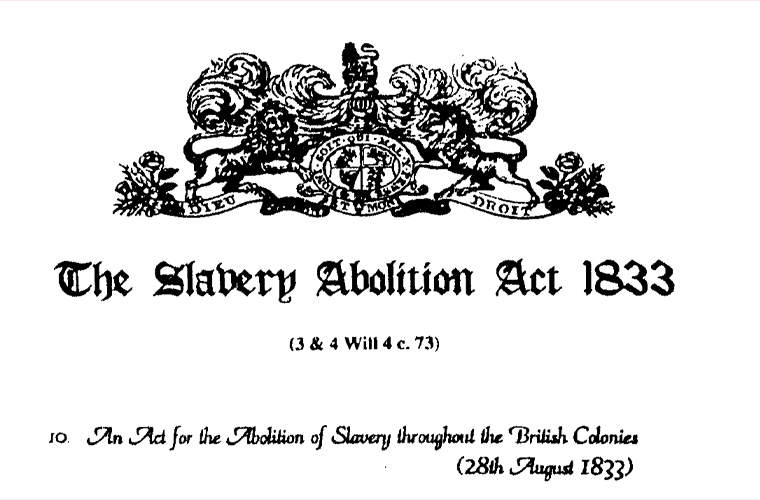
The journey toward ending chattel slavery across the British Empire began with a landmark piece of legislation 190 years ago: the Imperial Act of Emancipation, signed into law on August 28, 1833, which outlined a phased process to abolish the institution of slavery across all British colonial holdings. Grenada’s local legislative assembly followed suit, approving its own emancipation framework in March 1834, setting in motion a process that would reshape the Caribbean nation forever.
On the eve of formal emancipation in 1834, official records show that 23,600 enslaved people were held in captivity across Grenada, its smaller sister islands Carriacou and Petite Martinique, forced to labor on 430 separate slave plantations spread across the territory. Of these holdings, Dumfries estate on Carriacou held the largest number of enslaved people at 437, while Grenada’s largest plantation by land size—Grand Anse, spanning 1,237 acres—only held 134 enslaved workers.
To compensate enslavers for the loss of their forced labor force, the British government disbursed roughly £616,255 to Grenadian slave owners, a sum that equals more than £67 million in 2024 currency. A little-noticed 2018 fact released by HM Treasury revealed a little-known long-term consequence of this compensation: British taxpayers continued paying down the £20 million national loan the government took out to fund these slave owner payouts well into the 21st century.
Contrary to popular narratives of immediate full freedom, the 1833 act mandated a transitional apprenticeship period for most newly freed people. Field hands were required to continue working for their former enslavers for six additional years, while all other enslaved workers faced a four-year apprenticeship term. Only 3,747 children under the age of six were granted immediate, unconditional freedom on Emancipation Day with no required apprenticeship. The transitional system, framed by policymakers as a preparation for full self-determination, was cut short when all apprenticeships were formally ended on August 1, 1838, marking the date that all enslaved people in Grenada finally gained complete freedom from forced servitude.
This emancipation process came after more than a century of systematic forced migration of African people to Grenada as part of the transatlantic slave trade. Between 1709 and 1808, an estimated 129,000 captive African people were brought to Grenada’s Carenage harbor, with 19,000 dying from neglect, disease, and abuse during the brutal Middle Passage crossing from West Africa. The last group of African people to arrive in Grenada came much later, in 1863, when 120 recaptive and already liberated Africans were brought to the island as indentured laborers aboard the ship *Barbara Campbell*, departing from St. Helena.
Roughly 13 percent of all captive Africans brought to Grenada originated from the Windward Coast of West Africa, according to historical trade data. Many cultural traces of these African origins endure in Grenadian society to this day, shaped by centuries of ancestral preservation. One of the most distinct cultural continuities is visible in Grenadian surnames: unlike many former slaveholding societies where formerly enslaved people adopted the family names of their enslavers, most surnames in modern Grenada derive from the first names of male enslaved ancestors, a detail explored in the local historical work *Marking an ‘X’: Exploring the History of Grenada’s Surnames*.
The ancestral celebration of Saraka, practiced in rural villages including La Poterie in St. Andrew Parish and River Sallee in St. Patrick Parish, was introduced by the last group of Africans who arrived as indentured laborers after formal abolition. On Carriacou, the traditional Big Drum dance—also called the African Nation Dance—honors the ancestral roots of nine distinct West African ethnic groups, including the Akan (Kromanti), Kongo, Igbo, Mandinka, Moko, Temne, and Arada peoples. The iconic Caribbean stilt-walking masquerade tradition of Moko Jumbie, a staple of Grenadian cultural celebrations today, also traces its origins to captive West Africans who brought the performance practice with them to the Caribbean.
Memorialization of slavery and abolition has been a core part of Grenadian public life for nearly a century. In 1933, two stone pillars were erected at the lower end of St. George’s Cemetery to honor William Wilberforce, one of the most prominent British leaders of the 19th century abolitionist movement. Following the dedication, the cemetery was officially renamed Wilberforce Cemetery in his honor, and it remains a key historical site today. In 2017, a new commemorative plaque marking emancipation was installed in St. George’s Market Square, expanding the nation’s public memorialization of this pivotal history.
A key note from the article’s contributors frames modern language around this history: contemporary scholars and activists prefer the term “enslaved people” over “slaves” to center the humanity of those held in captivity, emphasizing that enslavement was a violent, forced condition imposed by European enslavers, not an inherent identity of the people subjected to it.