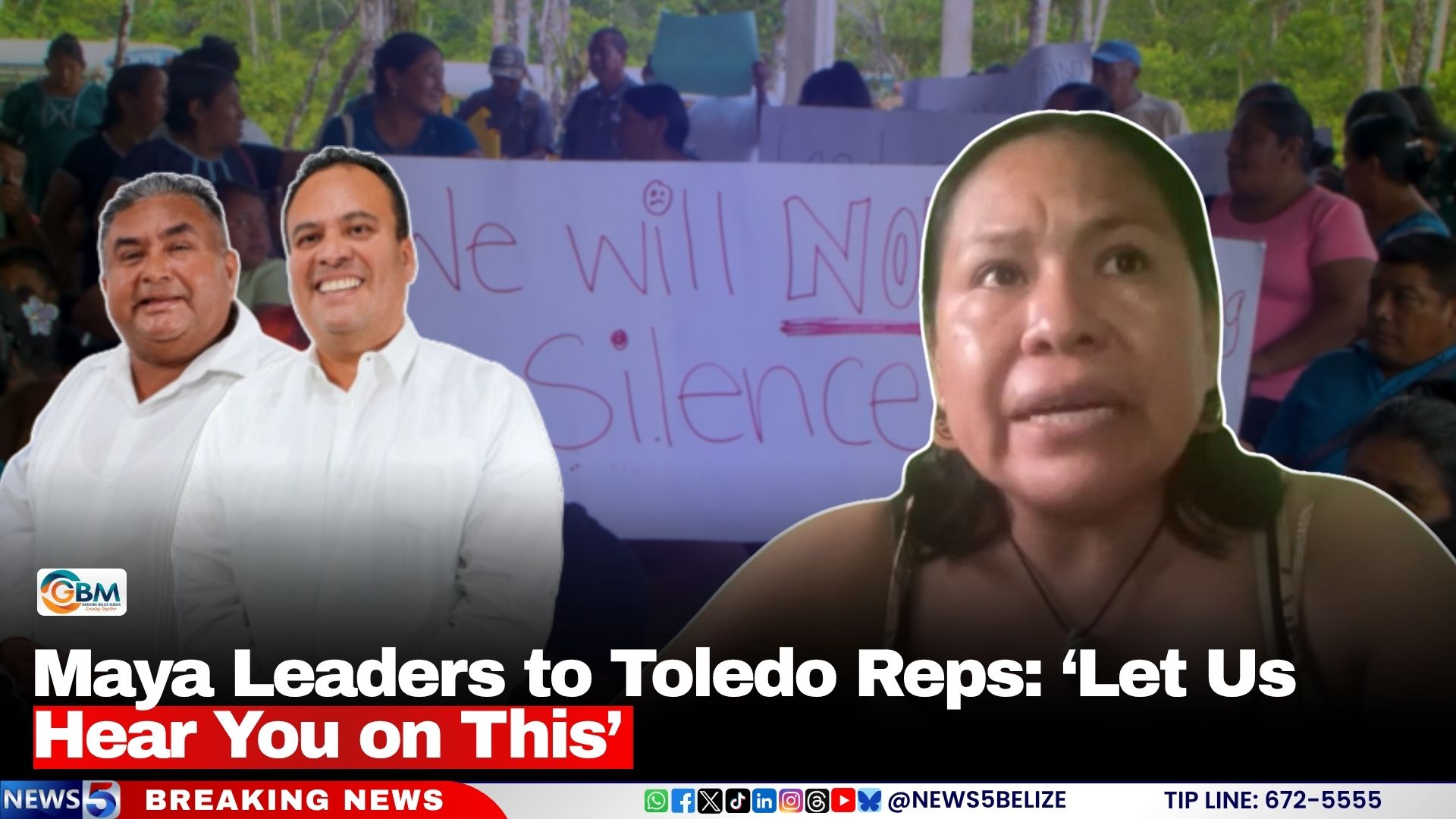
Three decades of unresolved tension over Maya customary land rights in Belize boiled over this week, as the Maya Leaders Alliance (MLA) issued a direct public challenge to two local elected representatives and senior government ministers to break their silence on pending legislation tied to the issue.
In a sharp rebuke delivered July 31, MLA spokesperson Cristina Coc called out Dr. Osmond Martinez, the Toledo East Area Representative, and Oscar Requena, the Toledo West Area Representative—both of whom also hold cabinet positions as ministers—to publicly outline their positions on the draft land rights law. The demand comes after years of back-and-forth between the MLA, the Belizean government, and regional courts over formal recognition of the Maya community’s customary land claims.
Coc criticized the current public discourse around the legislation, arguing that legal and technical teams have dominated all discussion while the elected officials tasked with drafting and passing the law have stayed entirely out of the conversation. “We’re hearing the legal minds speak, but we’re not hearing the politicians. We’re not hearing the ones that actually write law,” Coc said in her statement. “We call on the leaders, we call on our area representative, we call on Minister Martinez, we call on Minister Requena, let us hear you on this.”
The MLA also accused the Belizean government of negotiating in bad faith across the 30-year history of the dispute. Most recently, that tension came to a head last week, when the Caribbean Court of Justice (CCJ) declined to hear an application for clarification the Alliance submitted, after the government refused to support the request.
For its part, the Government of Belize has pushed back against the criticism, stating that it is continuing to work on draft legislation that will implement the CCJ’s existing consent order on the issue, while also balancing the competing interests of all stakeholders impacted by formal recognition of Maya customary land rights. The long-running dispute remains one of the most high-profile indigenous rights issues in Central America, with the Maya community seeking formal legal protection for territories they have inhabited and governed according to custom for centuries.