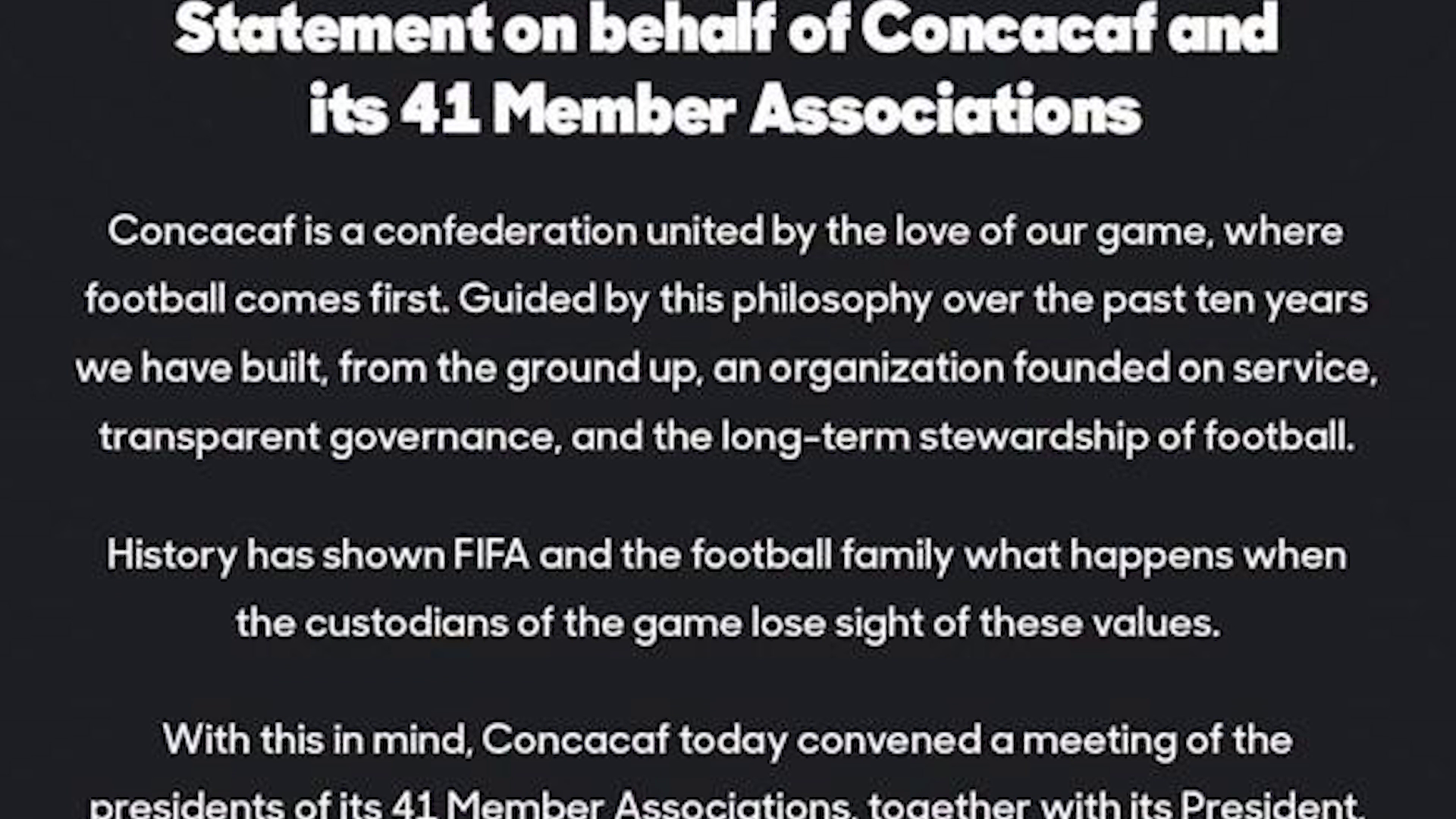
A high-stakes power clash is roiling the upper ranks of global football, with the Confederation of North, Central America and Caribbean Association Football (CONCACAF) taking an uncompromising stand against a controversial FIFA initiative led by association president Gianni Infantino. On July 30, 2026, CONCACAF and its 41 member national associations formally announced their rejection of a proposal that would open the FIFA World Cup to ownership stakes from private investors.
The regional confederation has raised sharp red flags over the plan, warning that it poses major threats to transparency, sound governance, and the sovereign control of football’s most prestigious global tournament. After a meeting of member nations held the same day, the bloc made its official opposition public through a formal press release. News Five reached out to Sergio Chuc, president of the Football Federation of Belize, to unpack what the opposition means for Belize and the broader CONCACAF region.
Chuc emphasized that FIFA’s existing financial standing is more than robust enough to fund World Cup operations without turning to outside private capital. “The organization is strong enough. There are enough reserves to put this same offer to all members without having to raise funds from any equity funds out there or mutual funds,” Chuc explained. He also added that even CONCACAF representatives who hold seats on FIFA’s governing board were kept in the dark about the proposal, a departure from the confederation’s standard collaborative processes. “We were quite surprised and that is not the channel the CONCACAF follows. Over the last decade we have worked tirelessly to change the CONCACAF image and don’t go back to those dark days. We have set certain standards and values that our members follow, our council follow and we at CONCACAF would not operate that way,” Chuc said.
CONCACAF’s formal rejection is not the only pushback Infantino’s plan has faced: European football’s governing body UEFA has already issued a threat to boycott the upcoming World Cup should FIFA move forward with implementing the private investment scheme. The growing coalition of opposition underscores deep divisions within global football’s leadership over the future direction of the sport’s marquee event, as regional blocs push back against what they see as a threat to the governance norms they have worked to build in recent decades.