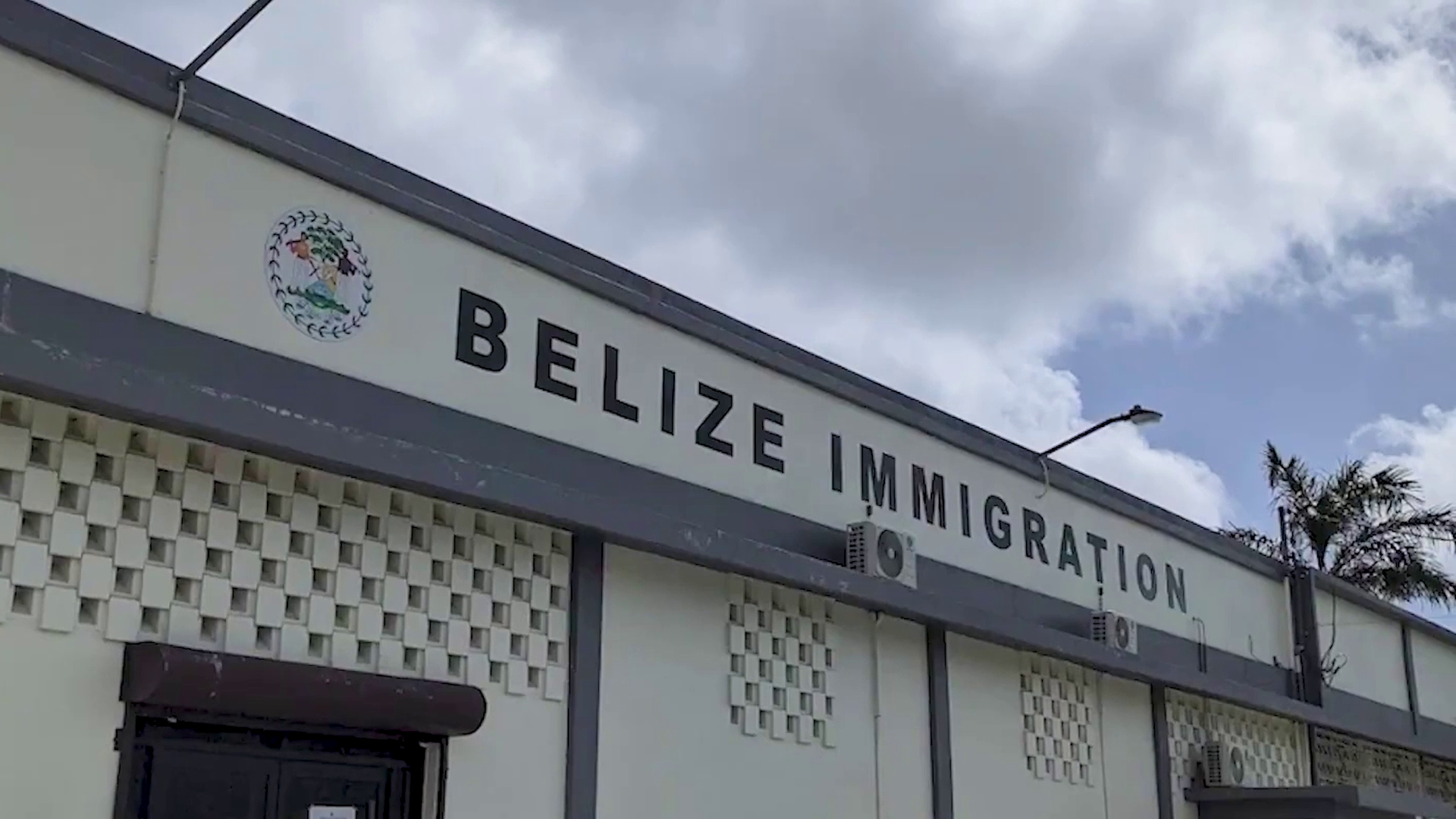
Nearly two years from now, in July 2026, a public finance scandal is unfolding in Belize’s core administrative hub of Belize City, where the national immigration agency has become the center of a major audit probe launched by the country’s top auditing body after more than $150,000 in public funds was discovered unaccounted for.
The Office of the Auditor General of Belize has formally assembled and deployed a specialized auditing team to conduct a full review of the Immigration Department’s financial records, with the core goal of tracing the whereabouts of the missing funds and unpacking exactly how the public money disappeared. The case has already been linked to Jason Flowers, a former employee of the immigration agency, who is currently the subject of an active arrest warrant. According to local law enforcement estimates, Flowers has fled Belize and is believed to be hiding in the United States, where he remains at large.
What makes this probe broader than a single suspect case, however, is that auditing officials are not limiting their investigation to Flowers alone. The team is actively examining whether additional individuals within or connected to the department may have been involved in the disappearance of the funds, expanding the scope of the inquiry beyond an initial single-person focus.
In a press interview, Auditor General Maria Rodriquez outlined the framework of the ongoing investigation. “We have selected a specialized team to deploy to the department, and the team is already on-site working to finalize their findings,” Rodriquez stated. “There was already an internal investigation conducted by the department prior to our involvement, and we are building on that work to move our own probe forward. We have established our independent scope for the audit, and progress so far has proceeded as planned. Right now, the team is awaiting access to critical financial records that form the foundation of any investigation – as I always note, the entire process starts with having full access to the required documentation.”
When asked to share a formal timeline for the completion of the audit and the release of findings, Rodriquez explained that timelines for such probes are inherently flexible. “When we typically estimate these investigations, we often reference a two to three month window, but the actual timeline is heavily dependent on how quickly we can gain full access to all requested records,” she noted. Delays in document production could push back the final release of conclusions, she added.
This report is a transcribed version of an evening television news broadcast, with original Kriol language commentary adjusted to standard English spelling for published digital distribution.